🎧 Listen to this story
Narrated by Rasalgethi · 6,803 characters
A Simple Idea That Became a Four-Year Commitment
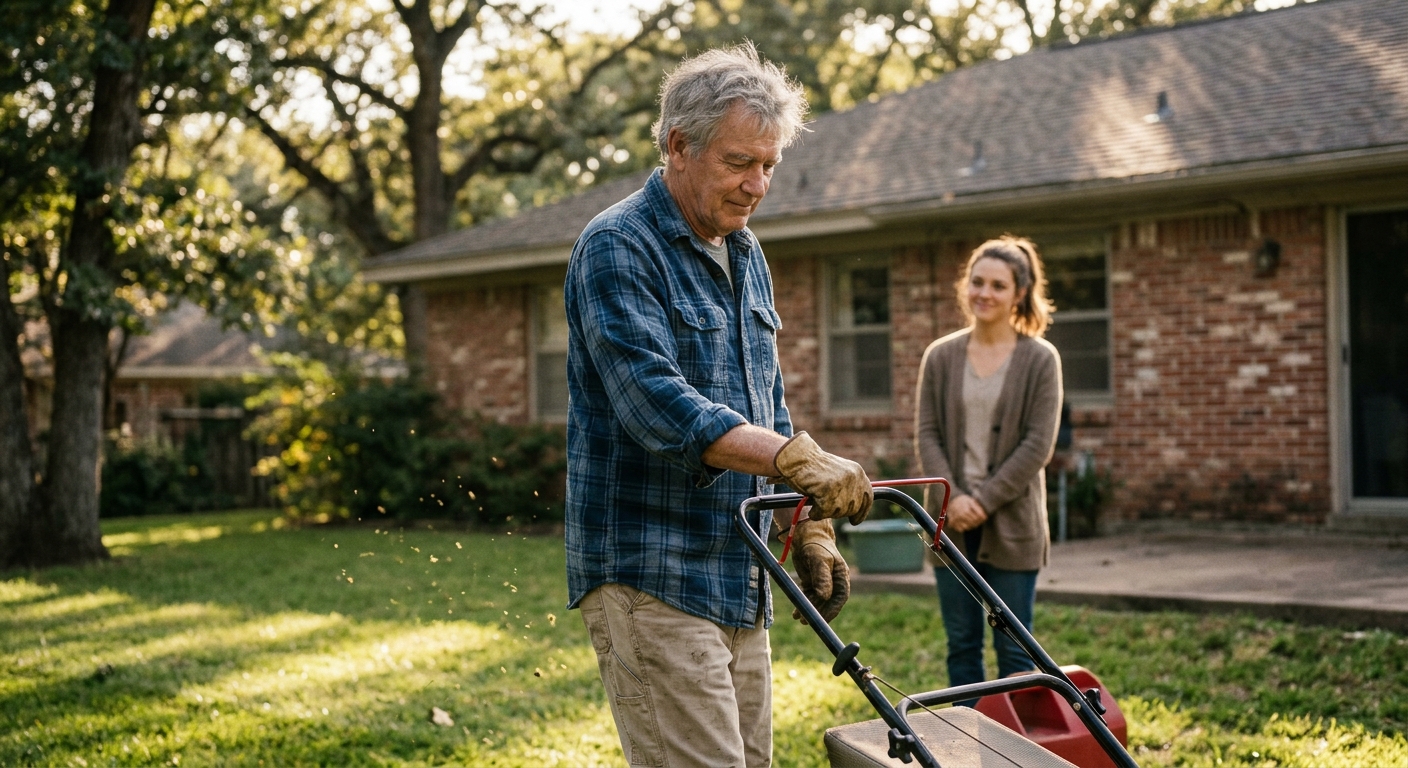
Most college students spend their weekends sleeping in, catching up on coursework, or hanging out with friends. For Caleb Anderson, a business major at a mid-sized state university in Ohio, weekends looked a little different. Every Saturday morning, rain or shine, he loaded a lawn mower into the back of his pickup truck and drove to the first address on his list.
Not a client. Not a paying customer. A veteran.
What started as a single afternoon of cutting grass for an elderly neighbor who had served in Vietnam grew into a structured, weekly operation that eventually served over 60 veterans across three counties. Over four years, Caleb logged more than 800 volunteer hours, never once accepting payment, and never once talking about it publicly, until a local journalist spotted him on a Saturday morning and asked what he was doing.
“I just figured someone should,” Caleb said, shrugging. “These guys gave everything. The least I can do is show up.”
How It All Started: One Conversation, One Neighbor
The story begins the summer before Caleb’s freshman year. His neighbor, 74-year-old Harold Meyers, a Vietnam veteran who walked with a cane due to shrapnel injuries sustained during the Tet Offensive, was struggling to keep up with his yard. Caleb noticed the grass getting long and knocked on Harold’s door.
“Harold tried to hand me a twenty,” Caleb recalled. “I told him to keep it. We ended up sitting on his porch for three hours talking about his time in the service. I left that afternoon feeling like I had learned more in those three hours than I had in twelve years of school.”
The two became close. Harold introduced Caleb to friends from his veterans group, and Caleb started showing up for more of them. Word spread quietly through the community, the way good things often do, without fanfare, just through trust and gratitude.
Building Something Bigger Than a Mowing Route
By the end of his freshman year, Caleb was visiting eight veterans regularly. By sophomore year, that number had climbed to over two dozen. He began keeping a spreadsheet to track addresses, lawn sizes, and any special needs each veteran had, whether that meant bringing extra water for a veteran with diabetes, or knowing to knock loudly for one who had significant hearing loss.
He also started recruiting. A few friends joined him on Saturdays. A local hardware store donated fuel and equipment maintenance. A campus veterans organization began co-sponsoring the effort, which they eventually named Salute & Serve.
But even as the operation grew, Caleb kept its spirit personal. He knew each veteran by name. He knew their branches, their tours, their stories. He knew which ones would want to talk and which ones simply appreciated a wave and a clean yard.
What the Veterans Say
Ask the veterans about Caleb, and you will hear a consistent theme: it is not really about the lawn.
“My grandson lives in Arizona. My daughter is busy, she has her own life,” said 81-year-old Korean War veteran Raymond Cho. “When Caleb pulls up on Saturday, I know someone remembered me. That means more than any grass he cuts.”
Dorothy Ellis, the widow of an Army sergeant who passed away in 2019, said Caleb began visiting her after her husband’s death, even though she was not a veteran herself. “He said that serving the family of a veteran counted too,” she said, her voice catching. “I don’t have words for that kind of heart.”
For many of the older veterans, especially those living alone, Caleb’s weekly visits became a meaningful anchor. A face they could count on. A small but steady reminder that their service had not been forgotten.
The Challenges Nobody Talks About
It would be easy to frame this story as purely feel-good, and in many ways, it is. But the reality of four years of consistent service also included real sacrifice and difficulty.
Caleb worked a part-time job to cover his own gas and equipment costs during years when donations were thin. There were Saturdays when he was exhausted from exams, or sick, or dealing with personal struggles, and he still showed up. There were lawns with steep hills in brutal summer heat, and early winter mornings when he helped veterans clear leaves before the first frost.
“People always say, ‘Oh, that’s so nice of you,'” Caleb said. “But honestly, there were plenty of times I didn’t feel like going. The difference is I had made a promise, even if nobody ever asked me to make one. That kept me going.”
7 Things Caleb’s Story Teaches All of Us
- Start with one person. Caleb didn’t set out to build a program. He helped one neighbor. Scale comes from consistency, not grand plans.
- Show up even when it’s inconvenient. The value of reliability is enormous, especially for people who feel forgotten.
- Listen as much as you serve. Many of the veterans Caleb helped said the conversations mattered as much as the yard work.
- Let others join without losing the heart of it. Caleb grew his effort but kept it personal. He never let it become a logo without a soul.
- Service changes the giver too. Caleb credits the veterans for his own growth in empathy, discipline, and perspective.
- Don’t wait for a formal structure. You don’t need a nonprofit, a website, or a committee. You need a lawn mower and a neighbor.
- Gratitude is a verb. Saying thank you to veterans is meaningful. Showing up every Saturday for four years is something else entirely.
The Ripple Effect
Since the local news story ran, Caleb has been contacted by students in nine other states who want to start similar programs in their own communities. He has consulted with two campus veteran support organizations on how to structure volunteer efforts in ways that are sustainable and genuinely relationship-based rather than performative.
He graduated last spring with a degree in business and a minor in nonprofit management. His senior capstone project was, unsurprisingly, a replicable model for student-led veteran service programs. His professor gave him the highest grade in the class and wrote in his feedback: “This is not an academic exercise. This is a life already being lived.”
A Final Word From Caleb
When asked what he hopes people take away from his story, Caleb paused for a long moment before answering.
“I hope they don’t think of it as some big heroic thing,” he said. “Because it wasn’t. It was just Saturdays. It was just showing up. Anyone can do that. The question is whether you decide to.”
Harold Meyers, the neighbor who started it all, still sits on his porch most Saturday mornings. These days, he watches a small crew of college students fanning out across the neighborhood, mowers humming, voices calling out greetings to old men and women who look up from their chairs and smile.
The grass gets cut. But something else grows.