
🎧 Listen to this story
Narrated by Orus · 8,906 characters
The Library Was the Only Place No One Could Take From Her
When Marisol Vega was nine years old, her family was evicted from their apartment for the third time in two years. The landlord changed the locks on a Tuesday morning while Marisol was at school, and by the time she came home, her mother was sitting on the curb with two garbage bags of clothes and a look Marisol would spend the next two decades trying to forget.
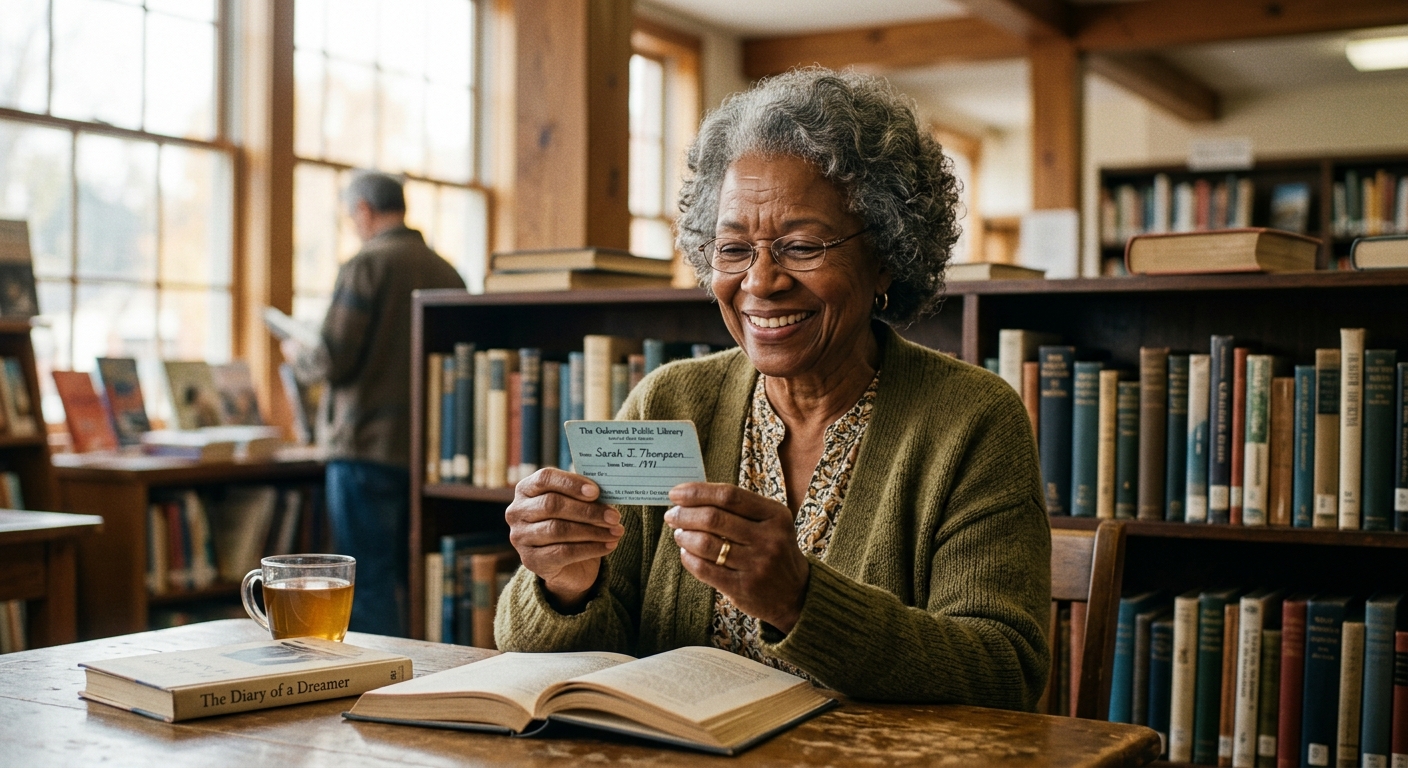
They slept at her aunt’s apartment that night, crammed into a single bedroom with five other people. Marisol did not cry. Instead, she tucked the one thing she had rescued from the apartment into the waistband of her jeans: her library card. It was laminated, slightly bent, and already soft at the edges from being held so many times. To anyone else, it was nothing. To Marisol, it was everything.
‘That library card was proof that I existed somewhere in a system that kept trying to erase me,’ she says now, sitting in the sunlit office of the nonprofit literacy organization she founded in Phoenix, Arizona. ‘The library didn’t care where I slept the night before. It just let me in.’
Growing Up on the Margins
Marisol grew up in a working-class neighborhood in Tucson, the daughter of a mother who worked two jobs and a father who was largely absent. Money was never just tight. It was a constant, grinding emergency. There were months when dinner was rice and canned beans for five nights in a row. There were winters when the heat was shut off and the family slept in the same bed to stay warm.
School was complicated for Marisol. She was bright, her teachers would say so, but inconsistent attendance due to family upheaval meant she was always playing catch-up. She never had a quiet place to study at home. Homework was done at kitchen tables in other people’s apartments, or not done at all.
But the library was different. The Tucson branch near her school was open until eight in the evening, and Marisol discovered it the way most children discover something life-changing: by accident. A friend dared her to go in. She never really left.
What She Found Between the Shelves
At first, Marisol was drawn to fiction. She devoured novels with the focused desperation of someone who had found water in a desert. She read about girls who ran away and girls who stayed and girls who built entire worlds from scratch. She read about places she had never seen and people who lived nothing like her, and something in her chest began to shift.
‘Reading showed me that my story wasn’t finished,’ she explains. ‘The best books are always about people in impossible situations who find a way through. I started to think, well, maybe that could be me.’
By middle school, she had graduated to nonfiction. She read biographies of scientists, entrepreneurs, and activists. She taught herself basic economics from a paperback she found in the adult section. She checked out books on how to write a business plan years before she fully understood what a business plan was. The librarians, particularly a woman named Gloria Reyes who worked the afternoon shift, began to notice her.
The Woman Who Saw Her
Gloria Reyes was in her fifties, with reading glasses she kept on a beaded chain around her neck and a habit of setting aside books she thought certain patrons would enjoy. She started doing this for Marisol when the girl was eleven.
‘She would leave books at the front desk with little sticky notes that said things like, thought of you, or, this one will make you think,’ Marisol recalls. ‘Nobody had ever done that for me before. Nobody had ever paid that kind of attention.’
Gloria was the first adult outside of her family who treated Marisol’s ambitions as real and achievable, not as cute daydreams to be gently managed. When Marisol told her she wanted to go to college, Gloria did not hesitate. She pulled out a notebook and wrote down the names of three scholarship programs she thought Marisol should research. She helped her navigate the library’s computer system to find them.
‘She didn’t do it for me,’ Marisol says. ‘She taught me how to do it myself. That’s the whole philosophy behind everything I do now.’
The Long Road to a Diploma
High school was not easy. Marisol worked part-time at a grocery store from the age of fifteen, handing most of her paycheck to her mother. She graduated near the top of her class, but just barely managing the balance between work, family responsibility, and academics. She applied to seven colleges and was accepted by four.
Paying for it was another matter entirely. She assembled her first year of tuition from a patchwork of sources: a need-based grant, two local scholarships she found through the library’s database, a federal loan, and the money she had saved working weekends. She enrolled in the University of Arizona and studied business and public policy.
She struggled. She worked. She cried in bathroom stalls between classes when the weight of it all became too heavy. She called her mother every Sunday, sometimes just to hear a familiar voice. And she kept going.
Graduation Day
When Marisol walked across the stage to receive her diploma, her mother was in the audience with her aunts and three younger cousins. Her mother wept openly. Marisol held the diploma in both hands and thought about a nine-year-old girl sitting on a curb with a bent library card tucked into her jeans.
‘I didn’t just graduate for me,’ she says. ‘I graduated for every version of myself that could have given up and didn’t.’
Building Something That Lasts
After several years working in nonprofit management and community development, Marisol founded Read Forward, a literacy and college access program specifically designed for children in housing-insecure families. The organization now serves more than 400 students annually across three Arizona counties.
The program provides:
- Free tutoring and academic mentorship for students in grades 4 through 12
- Access to a rotating library of books that students can keep permanently
- Workshops on college applications, financial aid, and scholarship searches
- One-on-one coaching for first-generation college applicants
- Emergency resource connections for families facing housing or food insecurity
The model is intentional. Marisol designed it to replicate what the library gave her: a stable, welcoming, judgment-free space where a child’s potential is taken seriously regardless of her address or her family’s bank balance.
What the Research Confirms
Marisol’s instincts are backed by data. Studies consistently show that access to books and reading-rich environments in childhood is one of the most reliable predictors of long-term educational attainment. Children from low-income households are significantly less likely to have books in the home, and that gap compounds over time. Programs like Read Forward work not because they are charitable, but because they are corrective: they supply what poverty systematically removes.
What She Wants You to Know
Marisol is careful about how she tells her own story. She does not frame it as a bootstrap narrative, the idea that grit alone is enough and that anyone can escape poverty if they simply want it badly enough. She finds that framing both dishonest and damaging.
‘I had help,’ she says plainly. ‘I had Gloria. I had a library that was publicly funded and kept open in my neighborhood. I had teachers who passed me instead of failing me when my attendance was bad. I had a mother who held everything together with nothing. A lot of kids have less than I had, and they don’t make it out, and that’s not a failure of their character. That’s a failure of the systems around them.’
What she wants people to take from her story is not inspiration in the passive sense. She wants action.
‘If you have money, donate to your public library. Advocate for it politically. If you have time, mentor a kid who reminds you of someone who needed more support than they got. If you have expertise, give it. The library gave me everything it had. The least I can do is pass that forward.’
A Letter She Never Sent
Gloria Reyes retired from the Tucson Public Library system in 2019. Marisol attended her retirement party and gave a speech that made most of the room cry. She has never been able to fully articulate what Gloria’s small, consistent acts of attention meant to her over the years, so she keeps trying, in speeches and interviews and quiet moments of reflection.
She wrote Gloria a letter once, years ago, and never sent it. She still has it. The last line reads: ‘You saw me before I could see myself, and that is the most powerful thing one person can do for another.’
She thinks about that line a lot when she walks through the rooms of Read Forward’s offices and sees the kids bent over books, foreheads furrowed in concentration, pencils moving, worlds opening.
She wants to be, for them, what Gloria was for her.
She thinks she is getting there.