🎧 Listen to this story
Narrated by Aoede · 7,571 characters
The Street Nobody Talked About
On the surface, Maplewood Terrace looked like any other residential street in Columbus, Ohio. Neat lawns. Modest houses. Cars parked in tidy rows. But behind every closed door was the same quiet truth: nobody knew their neighbors. Not really. People waved from driveways, maybe. Exchanged tight smiles at the mailbox. But actual conversation? Connection? That had slowly dissolved over the years, replaced by the hum of streaming services and the blue glow of phone screens.
Maria Delgado had lived on Maplewood Terrace for six years before she realized she did not know the first name of the woman who lived directly across the street from her. Six years. Two kids raised in that house. A divorce survived. A pandemic endured. And not once had she crossed that twenty-foot stretch of asphalt to properly introduce herself.
“That moment hit me like a truck,” Maria recalled. “I was watching my neighbor carry groceries inside and I thought, if she collapsed right now, I wouldn’t even know who to call. I didn’t know her name. I didn’t know if she had family nearby. Nothing. We were strangers who happened to sleep thirty feet apart.”
The Idea That Started With a Sticky Note
Maria is not an event planner. She is a dental hygienist who likes crossword puzzles and makes, by her own admission, mediocre lasagna. She had never organized anything larger than her daughter’s birthday party. But the weight of that realization, that she and her neighbors were living in proximity without community, would not leave her alone.
She scribbled a note to herself one Tuesday evening: Block party. This summer. Actually do it.
She stuck it to her refrigerator and stared at it for three days before she acted. Then she bought a stack of index cards, wrote the same simple message on each one, and walked down both sides of Maplewood Terrace slipping them into mailboxes.
The message read: “Hi, I’m Maria, your neighbor at number 14. I’m hosting a block party on July 19th from 4pm until whenever. Bring a dish if you want, bring nothing if you want. Just come. I’d really love to finally meet you.”
She mailed 23 cards. She expected maybe six people to show up.
What Happened on July 19th
The morning of the party, Maria was nervous in the way you get nervous before a first date. She had borrowed folding tables from her church. She had made three batches of her mediocre lasagna and a fourth batch she felt better about. She had strung lights between two oak trees and borrowed her son’s Bluetooth speaker.
By 4:15, nobody had arrived.
“I was standing in my driveway pretending to adjust the tablecloth for the fourth time,” she laughed. “I kept thinking, this is the most embarrassing thing I’ve ever done.”
Then Gerald from number 31 walked over carrying a Tupperware container of jerk chicken. Then the Okafor family from number 8 arrived with their three kids and a pot of egusi soup. Then came Linda, the woman from across the street whose name Maria finally learned, holding a bottle of wine and looking just as nervous as Maria felt.
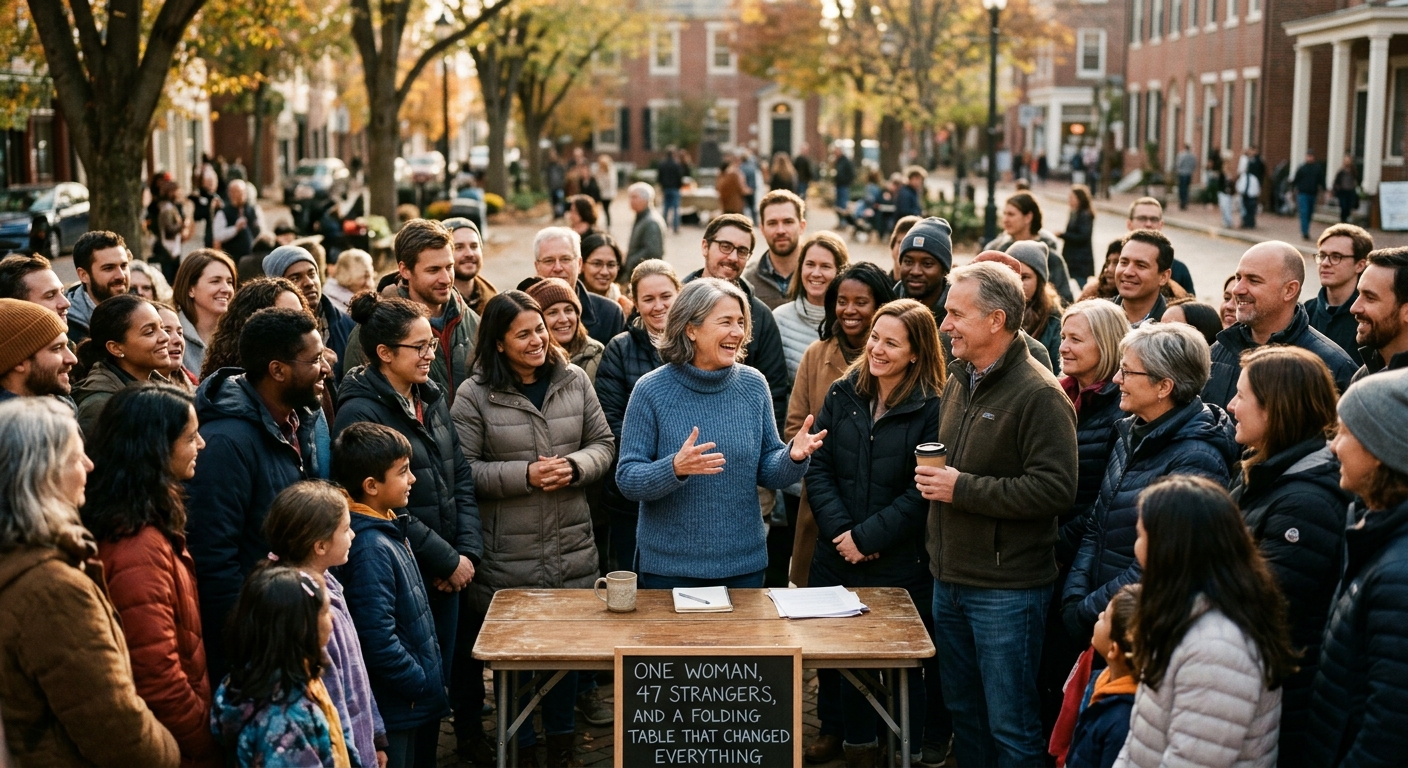
By 5 o’clock, 47 people were standing in the middle of Maplewood Terrace, eating off paper plates and talking. Actually talking.
The Conversations Nobody Expected to Have
What Maria did not anticipate was how quickly the surface-level small talk gave way to something real. Here is a small picture of what unfolded that evening, in fragments she later shared:
- Gerald, 71, had not had a home-cooked meal with other people since his wife passed two years earlier. He stayed until 9pm and helped Maria fold the tables at the end of the night.
- The Okafor children found out that two kids from number 17 went to the same school. They had ridden the same bus for a year without ever speaking.
- Linda mentioned she had been struggling since losing her job. Three neighbors independently offered leads, contacts, and references before the night was over.
- A retired teacher named Doug discovered that a young man from number 22 was studying engineering and offered to tutor him for free.
- Two families realized they had been parking in each other’s unmarked spots for years, harboring quiet resentment, and laughed about it over chips and guacamole.
“It sounds small when I list it out like that,” Maria said. “But it wasn’t small to the people living it. Gerald cried a little when he said goodbye. That doesn’t feel small.”
What One Block Party Actually Builds
Community researchers have a term for what Maria created almost by accident: social infrastructure. It refers to the physical and social conditions that bring people together and foster connection. Porches. Parks. Shared meals. Studies consistently show that neighborhoods with stronger social ties have lower rates of depression, faster emergency response through neighbor-to-neighbor awareness, and even better physical health outcomes.
Maria had no research in mind when she wrote those index cards. She just felt lonely on a street full of people, and suspected she was not the only one.
She was right.
“Every single person I talked to that night said some version of the same thing,” she noted. “They said, ‘I’ve been hoping someone would do this.’ They had been waiting, just like I had been waiting. We were all waiting for someone else to go first.”
The Street That Came Back to Life
That was two summers ago. Maplewood Terrace has since held four more gatherings. There is now a neighborhood group chat, born from that first party, where people share lost-pet alerts, spare zucchini from gardens, and recommendations for plumbers. Gerald has been invited to Sunday dinner at three different households. Linda got a job through a contact she made at that first event. Doug is still tutoring the engineering student, who just finished his sophomore year.
None of this required a grant. No committee. No formal organizing structure. It started with a woman who felt the ache of disconnection strongly enough to do something uncomfortable about it.
What Maria Wants Other People to Know
When asked what advice she would give to anyone considering doing something similar, Maria did not hesitate. She offered this:
- You do not need a reason or a occasion. You can just want connection. That is enough of a reason.
- Lower the barrier to showing up. No RSVPs. No potluck requirements. Make it easy for people to say yes.
- Expect awkwardness and go anyway. The first fifteen minutes of any gathering feel weird. Push through it. It always loosens up.
- One person really is enough to start. You do not need a co-organizer or a committee. You need a folding table and the willingness to stand next to it.
- People are lonelier than they look. Behind every closed door is a person who probably wants to connect and is just waiting, like you were, for an invitation.
The Folding Table Is Still in Her Garage
Maria keeps the folding table she borrowed from her church. She bought it from them for fifteen dollars when they were replacing their inventory. It leans against the wall in her garage, next to her daughter’s old bike and a box of holiday decorations.
She says she keeps it there on purpose, visible, as a reminder that the tools for building community do not have to be expensive or complicated. Sometimes all it takes is a surface to set things on, a little food, and the courage to leave your own front door.
The woman across the street, Linda, waves at Maria every morning now. Real waves, the kind that mean something. They know each other’s coffee orders and bad days and middle names.
Twenty feet of asphalt crossed. A whole neighborhood changed.