🎧 Listen to this story
Narrated by Schedar · 9,460 characters
A Community on the Edge
Drive through the Riverside Heights neighborhood on the east side of Bridgeport, Connecticut, and you will notice things that public health researchers call ‘social determinants of health.’ Corner stores outnumber grocery stores four to one. The closest full-service gym is a $45-a-month membership facility twelve miles away. Fast food chains anchor every other block. And for the roughly 14,000 residents who call this neighborhood home, many of them working two jobs just to keep the lights on, the idea of investing in personal wellness feels less like a lifestyle choice and more like a cruel joke.
That was the reality Marisol Vega came home to in 2019, after spending eight years working as a certified health coach for a corporate wellness company in New York City. She had spent nearly a decade helping executives reduce their stress levels and optimize their sleep schedules. And when her mother suffered a preventable stroke back in Riverside Heights, Marisol packed up her apartment and came home with a question burning in her chest: why does wellness only reach the people who can already afford it?
What she built in the years that followed would eventually serve over 3,000 residents, draw national media attention, and become a model replicated in seven other cities across the United States.
What ‘Community Wellness’ Actually Looked Like Before
Before the program launched, ‘wellness resources’ in Riverside Heights meant one thing: pamphlets. The local health clinic handed out folded paper guides on nutrition and exercise. Churches sometimes hosted blood pressure screenings. A few community centers ran occasional yoga classes that were poorly attended, not because people weren’t interested, but because the classes were scheduled during work hours and required pre-registration online, a barrier for residents without reliable internet access.
Marisol spent her first three months in the neighborhood not building anything. She listened. She sat in on community meetings. She joined the WhatsApp groups. She helped neighbors carry groceries. And what she consistently heard was not apathy about health, it was exhaustion. People wanted to feel better. They just had no roadmap that fit their actual lives.
‘Nobody here is lazy. They are tired. There is a difference, and once you understand that difference, everything about how you design a wellness program has to change.’ – Marisol Vega
Building the Blueprint: The Riverside Wellness Collective
The Riverside Wellness Collective launched in the spring of 2020, which, given the timing, required an immediate pivot. What was planned as a series of in-person community gatherings became a hybrid model that would ultimately prove more accessible than the original design.
The program was structured around four core pillars:
- Movement Without Membership: Free outdoor fitness sessions held in three neighborhood parks, scheduled at 6:00 AM, 12:00 PM, and 7:00 PM to accommodate shift workers. Certified trainers, many of them recruited from within the community itself, led sessions ranging from low-impact walking groups to bodyweight strength training.
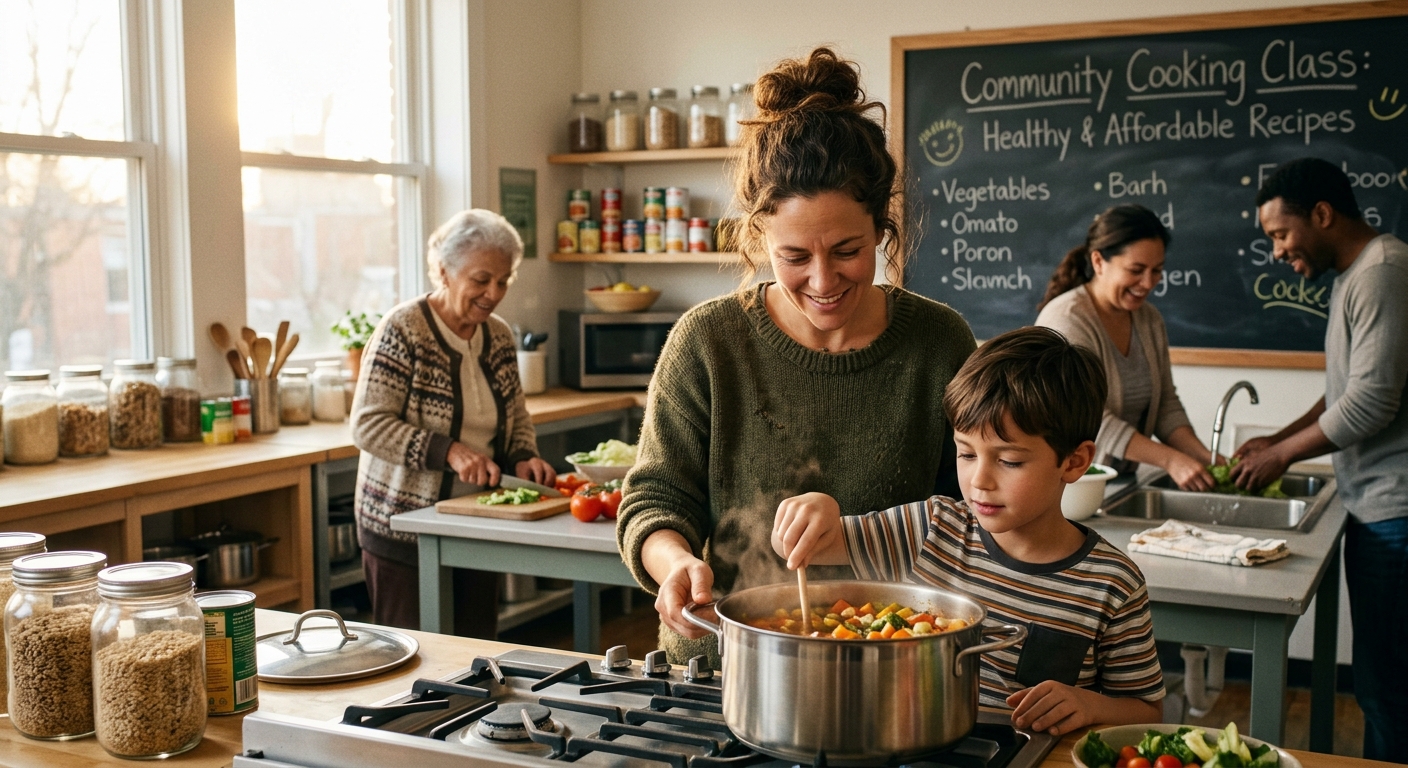
- Nourishment on a Real Budget: Weekly cooking workshops held in church kitchens and community center halls. Participants learned to prepare nutritious meals using ingredients available at local corner stores, priced within the constraints of a SNAP budget. Recipes were distributed in English, Spanish, and Haitian Creole.
- Mental Wellness Without Stigma: This pillar was the most delicate to build. Marisol partnered with licensed therapists who offered free drop-in ‘wellness conversations,’ deliberately avoiding clinical language that carried stigma in many of the community’s cultural contexts. Group sessions focused on stress, grief, and community connection were held weekly.
- Health Literacy and Navigation: Volunteers trained as ‘health navigators’ helped residents understand their insurance options, schedule preventive screenings, and advocate for themselves in medical settings. This pillar, though the least visible, may have had the most direct impact on long-term health outcomes.
The Numbers That Tell Only Part of the Story
By 2022, two years into the program’s operation, a partnership with a local university’s public health department produced a formal impact assessment. The findings were striking:
- Participants reported a 34% reduction in perceived stress levels after six months of engagement.
- Emergency room visits among active program participants dropped by 22% compared to a matched control group in a neighboring zip code.
- Over 400 residents received preventive health screenings they had not previously accessed.
- The cooking workshops led to measurable dietary improvements, with participants reporting a significant increase in vegetable consumption and a reduction in processed food reliance.
- Fourteen community members who began as participants completed certification programs and became paid wellness coaches within the collective.
But Marisol is quick to point out that the numbers miss the texture of what actually changed. ‘A spreadsheet cannot tell you about the 60-year-old man who started coming to the 6 AM walks because he was lonely after his wife died,’ she said in a 2023 interview. ‘It cannot tell you that he now leads the Wednesday group and has become the person everyone else leans on. That is wellness too.’
Funding a Free Program: The Unglamorous Reality
One of the most frequent questions Marisol receives from community organizers in other cities is simple: how do you pay for it?
The honest answer is: messily, creatively, and constantly.
The Collective’s early funding came from a combination of small local grants, in-kind donations from neighborhood businesses, and a crowdfunding campaign that raised just over $18,000. A pivotal moment came when a regional hospital system, recognizing that preventive community wellness reduced their own costs downstream, became a sustaining sponsor. Later, federal Community Development Block Grant funding and a partnership with a national health nonprofit provided more stable support.
‘Free for participants does not mean free to operate,’ Marisol explains. ‘It means someone else is carrying the cost because they understand the value. Our job was to prove the value relentlessly until the right partners showed up.’
The program now operates on an annual budget of approximately $380,000, employs six part-time staff members, and deploys over 40 trained community volunteers. Every single service remains free at the point of access.
The Ripple Effects Nobody Predicted
Something happens when a community begins to invest in its own health collectively. It is not just physical. Researchers who study social cohesion have a term for it: community efficacy, the shared belief that collective action can change local conditions. The Riverside Wellness Collective did not set out to build community efficacy. But that is precisely what it cultivated.
Residents who met in morning fitness groups began organizing together on other neighborhood issues, from advocating for a community garden on a vacant lot to pressuring the city to improve street lighting near the park where evening sessions were held. Two participants ran for local office. A block association that had been dormant for years reactivated.
‘We came for the yoga,’ one longtime participant, a home health aide named Denise, put it simply. ‘We stayed because we found each other.’
What Other Communities Can Learn From Riverside Heights
The Collective’s model has since been adapted in neighborhoods in Detroit, Albuquerque, Baltimore, and four other cities. While each local context requires its own customization, the core lessons transfer cleanly:
- Meet people in time, not just in space. Accessibility is not only about location. Scheduling matters enormously for working families.
- Hire from within. Wellness coaches who look like, live like, and share the cultural background of participants create trust that outside professionals often cannot.
- Name things carefully. Language around mental health, nutrition, and fitness carries cultural weight. Design your messaging with the community, not for it.
- Document everything. Funders need data. Collect it rigorously from the start, even when resources are thin.
- Celebrate loudly. Small wins, a resident completing their first 5K, someone getting their first mammogram at 55, deserve public recognition. Celebration is itself a wellness intervention.
A Movement Still in Motion
Marisol Vega still lives in Riverside Heights. On Tuesday and Thursday mornings, she is at the park before the sun is fully up, setting out cones for the 6 AM group. She has turned down three offers to return to corporate wellness consulting. She is working on a guide for community organizers that will be distributed free of charge.
When asked what drives her, she does not talk about metrics or replication models. She talks about her mother, who walks in the Wednesday morning group now, blood pressure controlled, laughing with neighbors she has known for thirty years but somehow never spoken to before the Collective brought them to the same patch of grass at the same time.
‘Wellness is not a product,’ Marisol says. ‘It is what happens when people feel like they matter. My job is just to build the conditions for that feeling to exist.’
In Riverside Heights, those conditions now exist. And they are free.