🎧 Listen to this story
Narrated by Schedar · 8,440 characters
A New Kind of Doctor’s Visit
Imagine walking into your doctor’s office feeling exhausted, anxious, and disconnected. You expect a blood pressure check, maybe a referral, perhaps a prescription slip. Instead, your doctor leans forward and says, ‘I think what you need is people.’
This is not a scene from a feel-good movie. It is happening right now in the United Kingdom, parts of Australia, Japan, and several Scandinavian countries, where a quiet revolution in medicine is rewriting the rules of what it means to treat a patient. The movement is called social prescribing, and it may be the most human thing modern healthcare has done in decades.
What Is Social Prescribing, Exactly?
Social prescribing is a healthcare approach where doctors, nurses, and other medical professionals refer patients to community-based activities and social programs rather than, or in addition to, clinical treatments. These referrals might include:
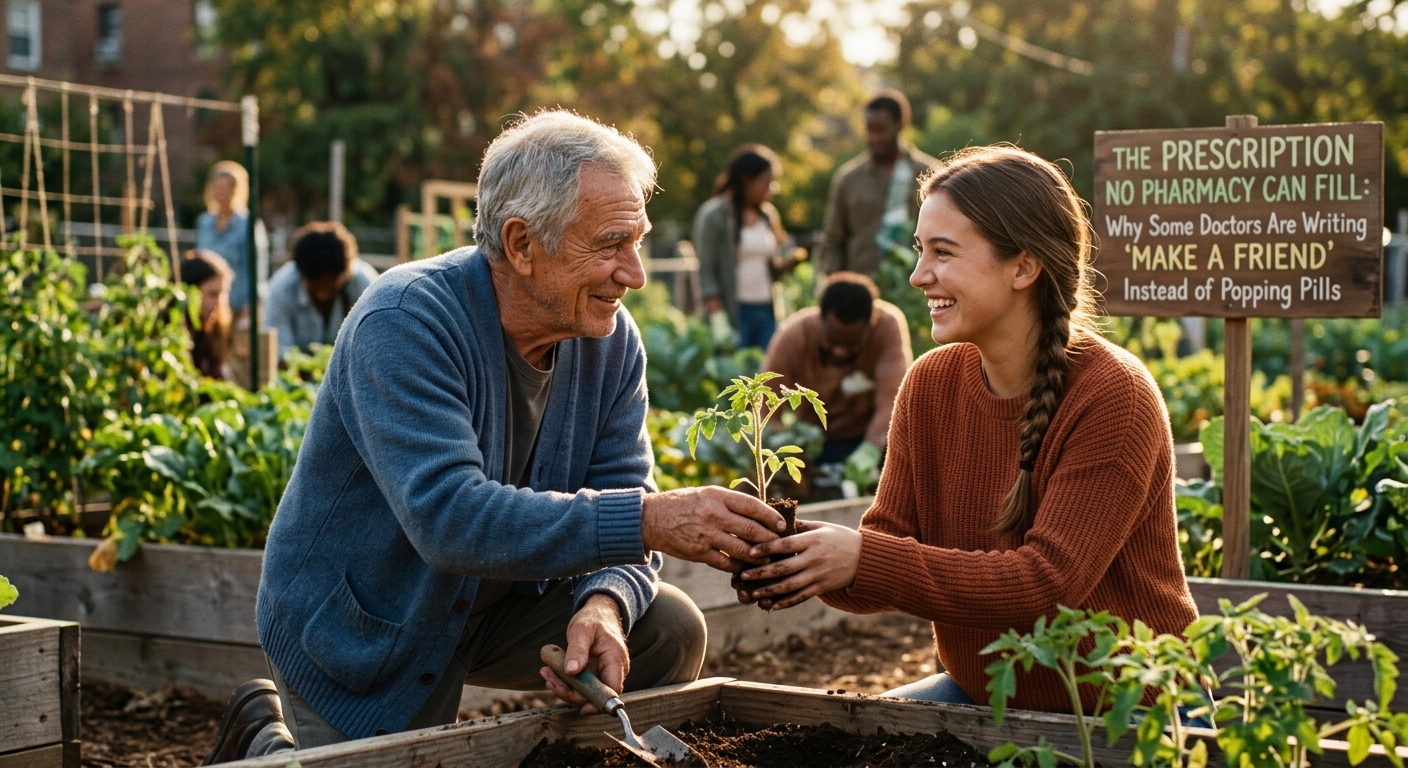
- Joining a community garden or cooking class
- Participating in a local choir or art group
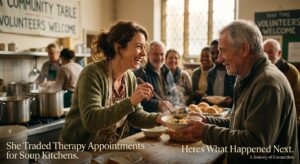
- Volunteering at a food bank or animal shelter
- Attending walking groups or nature therapy programs
- Being matched with a befriending service that pairs isolated individuals with trained companions
A key figure in this process is the link worker or social prescribing navigator, a non-clinical staff member who connects patients with local resources and checks in on their progress. Think of them as a personal guide through the landscape of community.
The Science Behind the Human Need for Connection
This is not soft medicine or wishful thinking. The research behind social prescribing is substantial and, frankly, a little startling.
A landmark 2015 meta-analysis led by researcher Julianne Holt-Lunstad found that social isolation carries a mortality risk comparable to smoking 15 cigarettes a day. That is not a metaphor. Loneliness measurably increases inflammation, disrupts sleep, raises cortisol levels, and weakens immune function. In other words, being chronically alone is a physiological condition, not just an emotional one.
Studies have also found that:
- People with strong social ties have a 50% greater likelihood of survival compared to those with weaker ties
- Loneliness increases the risk of dementia by up to 40%
- Social isolation is linked to higher rates of depression, anxiety, heart disease, and even certain cancers
- Patients who report feeling connected to others recover faster from surgery and illness
These numbers caught the attention of policymakers and physicians who realized they had been treating symptoms while ignoring one of the most significant underlying causes of poor health: the erosion of human community.
How the UK Became a World Leader in Social Prescribing
In 2018, the United Kingdom made headlines by appointing the world’s first Minister for Loneliness, a direct response to a report estimating that over nine million people in the country often or always feel lonely. Two years later, social prescribing was formally integrated into the National Health Service’s Long Term Plan, with a commitment to hire thousands of link workers across the country.
The results have been striking. NHS data has shown reductions in GP appointments among patients connected to social prescribing programs. Patients have reported feeling more hopeful, more capable, and more in control of their own wellbeing. Some have reduced or eliminated medications for anxiety and mild depression entirely, under medical supervision, after finding community.
Dr. Michael Dixon, a general practitioner and longtime advocate for this approach, has described his experience in interviews with striking simplicity: ‘I used to see patients week after week, prescribing the same medications, and nothing was changing. When I started asking about their lives, their loneliness, who they talked to, everything started to shift.’
Japan’s Loneliness Crisis and Its Response
Japan has one of the most severe loneliness crises in the world. The phenomenon of kodawari, or isolated elderly individuals who die alone and are not discovered for days or weeks, became a national conversation years ago. The country also gave us the term hikikomori, referring to individuals, often young, who withdraw completely from social life for months or years at a time.
In 2021, Japan followed the UK’s lead and appointed its own Minister of Loneliness. Local programs have since emerged pairing elderly residents with young volunteers, creating intergenerational community spaces, and training convenience store workers (who often have daily contact with isolated seniors buying meals) to notice warning signs and connect people to support.
It is a grassroots, human-centered approach that acknowledges something profound: that no pill dissolves grief, and no prescription treats the ache of feeling invisible.
What This Looks Like in Real Life
Consider Margaret, a 71-year-old retired schoolteacher in Bristol, England. After her husband passed away, she saw her GP regularly with complaints of fatigue, poor sleep, and low mood. She was started on a low-dose antidepressant, but something felt incomplete.
Her doctor referred her to a link worker, who connected her with a local watercolor painting group that met twice a week at a community center. Within three months, Margaret had made two close friends, had reduced her medication with her doctor’s guidance, and had a reason to get dressed every Tuesday and Thursday morning.
‘It sounds small,’ she told her GP at a follow-up visit. ‘But it was everything.’
Stories like Margaret’s are not anomalies. They are being documented across social prescribing programs worldwide, and the consistency of the outcomes is telling researchers something important: the human body and mind were built for togetherness, and when we deny that need, we pay for it in health.
The Critics and the Caveats
It would be unfair to present social prescribing as a cure-all without acknowledging its limitations. Critics have raised valid concerns:
- Social prescribing should complement, not replace, clinical care for serious conditions
- Link worker programs require sustained funding that is not always available
- The quality of community programs varies significantly by region, leaving rural or under-resourced areas behind
- Some patients, particularly those with severe depression or social anxiety, may need clinical support before they are able to engage with community programs
Advocates are largely in agreement on these points. The goal is not to dismiss medication or therapy, but to acknowledge that a prescription pad cannot fix a broken social fabric. The most effective approach is integrative, treating the whole person and recognizing that health exists in relationship, not in isolation.
7 Lessons We Can Take From This Movement
- Community is not a luxury. It is as essential to your health as clean water and sleep.
- Ask better questions. ‘Who do you spend time with?’ may be as important as ‘How is your blood pressure?’
- Small connections count. A weekly painting class, a walking group, a volunteer shift. These are not trivial. They are medicine.
- Loneliness is a public health issue. It deserves the same urgency we give to obesity, smoking, or diabetes.
- Age is not a barrier to connection. Social prescribing has been effective across all age groups, from isolated teenagers to elderly adults living alone.
- Belonging can be prescribed. We do not have to wait for cultural change. Individuals, doctors, and communities can act now.
- The most healing conversations are often not clinical. Sometimes the most powerful thing a doctor can do is listen to a person’s life, not just their symptoms.
What You Can Do Right Now
You do not have to live in the UK or Japan to take the lessons of social prescribing to heart. If you are feeling persistently low, fatigued, or disconnected, consider talking to your doctor not just about physical symptoms, but about your social life. Ask whether your community has link workers, wellbeing coordinators, or social prescribing programs.
And if you are simply looking to enrich your own life, consider this your informal prescription: find one group, one activity, one cause that connects you to other people. Show up, even when it feels awkward. Stay longer than you think you need to.
The research is clear. The doctors writing these unconventional prescriptions are onto something ancient and true: we heal in community. We always have.