🎧 Listen to this story
Narrated by Iapetus · 7,113 characters
The Route Never Really Ended
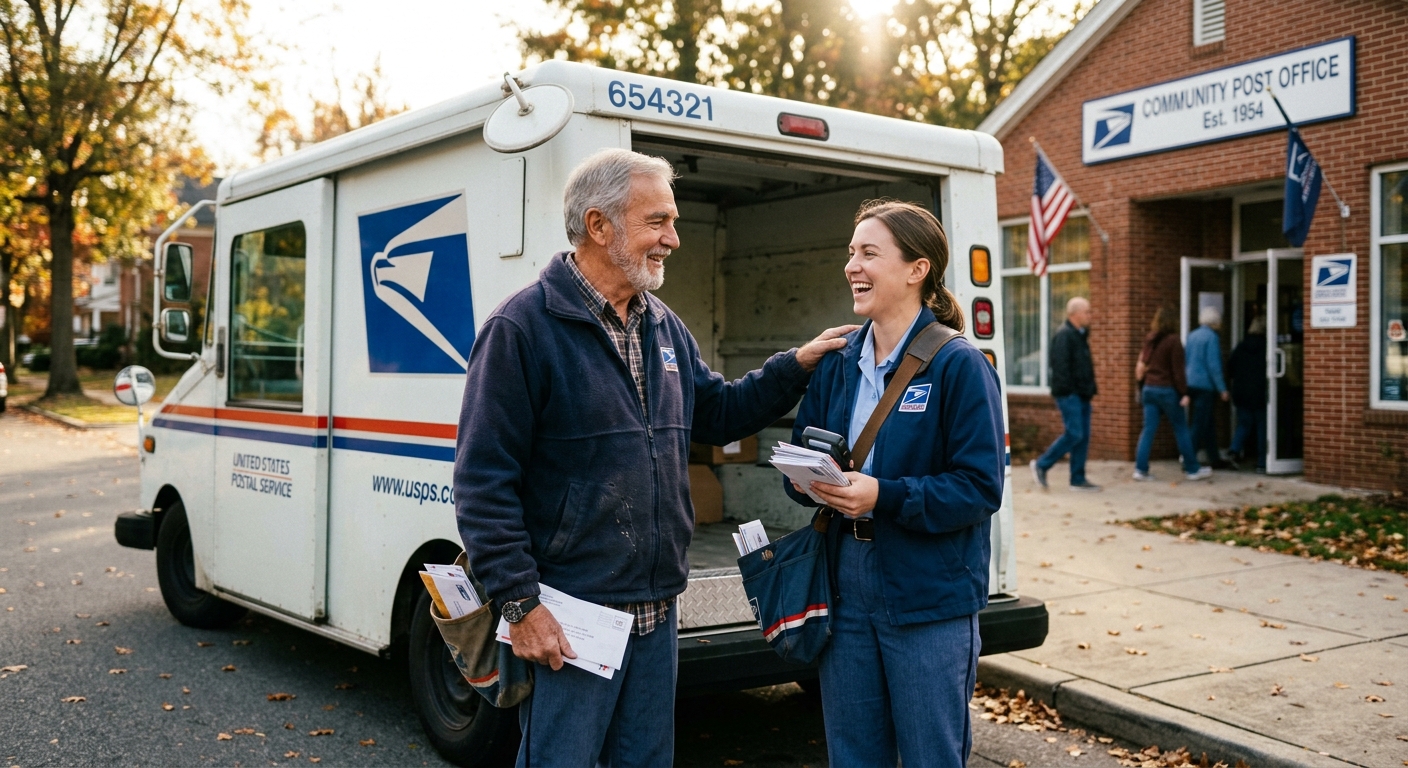
For 34 years, Gerald Moss walked the same 2.3-mile stretch of Elm Creek Road in rural Bardstown, Kentucky. He knew which mailboxes leaned to the left after a storm, which dogs would bark and which ones would wag, and, most importantly, he knew the people. He knew that Marvella Hutchins took her blood pressure medication with orange juice every morning and that old Ray Kowalski kept a lawn chair by the front door just so he could wave at whoever passed by.
When Gerald retired in the spring of 2019, the post office threw him a party with a sheet cake and a card signed by everyone in the building. His route was reassigned to a younger carrier named Damon, who was efficient and friendly and perfectly capable. And Gerald went home, sat in his armchair, and felt a quiet that he had not been prepared for.
Within three weeks, he was back on Elm Creek Road. Not in a postal uniform, and not carrying mail. He was carrying lunch.
A Quiet Realization That Changed Everything
Gerald does not frame what he does as heroic. Sit with him long enough and he will talk your ear off about his tomato garden, his late wife Diane, and the proper way to make a Kentucky burgoo. But press him a little and he will tell you the truth about why he started.
‘I realized I was probably the only person some of those folks had seen all week,’ he said during a conversation at his kitchen table, a pot of soup already simmering on the stove. ‘When I stopped coming, nobody replaced that. Damon does a great job, but he has twice the stops I had. He cannot stop and chat. I could. And now I can do it every single day.’
Gerald identified 14 elderly residents along his former route who lived alone, had limited mobility, or had lost a spouse in recent years. He cross-referenced this with his own memory, with a few gentle conversations with neighbors, and with the local senior center director, Patrice Odom, who had been quietly worrying about the same people for years.
Together, they built a simple system. Gerald cooks or collects meals five days a week and delivers them personally, staying long enough for a proper hello and a check-in. No clipboard. No intake form. Just a knock on the door and a warm container of food.
What the Deliveries Actually Look Like
A Tuesday in March offers a good window into Gerald’s routine. He is up at 6:30 a.m., reviewing what he cooked the day before and what he needs to pick up from the senior center, which donates meals twice a week. By 9 a.m., his car, a battered 2009 Civic with a backseat permanently lined with insulated bags, is loaded and ready.
His first stop is Marvella, 81, who had a hip replacement last autumn and lives alone since her daughter moved to Tennessee. Gerald knocks twice, waits, and does not rush. When Marvella opens the door, she is already smiling. They talk for eleven minutes about a reality television show she has been watching and a bird that built a nest in her gutter. Gerald makes a mental note to ask his neighbor about clearing that gutter before the next rain.
His second stop is Ray, now 88, whose lawn chair is still by the front door even in winter. Ray does not eat much anymore, but he eats what Gerald brings. ‘Because I made it,’ Gerald says simply.
By 1 p.m., he has visited all 14 stops. He has helped one resident find a phone number she had lost, carried a recycling bin to the curb for another, and listened to a 20-minute story about a fishing trip from 1987. He does not consider any of this extra. It is all part of the same errand.
The Ripple Effect Nobody Planned For
What began as one retired man filling a gap has grown into something that surprised even Gerald. Three of his former postal colleagues now help him on Thursdays. A local church contributes ingredients once a month. A high school student named Brianna started riding along on Fridays as part of a community service requirement and has not stopped coming even though the semester ended.
Patrice Odom has documented measurable changes in several of the residents Gerald visits. Two who had been flagged for signs of depression showed noticeable improvement at their follow-up appointments. One man, who had not left his home in four months, accepted Gerald’s invitation to a small cookout last summer and has since rejoined a local veterans’ group.
‘Connection is a health intervention,’ Patrice said. ‘We just do not fund it the way we fund medication. Gerald is doing something that a whole system has failed to do, and he is doing it with soup and conversation.’
What We Can Learn From Gerald’s Example
Gerald’s story is not a call for everyone to start a meal delivery program. It is something more personal and more transferable than that. Here are the principles that seem to guide everything he does:
- Know your neighbors by name. Gerald’s ability to help came directly from decades of showing up consistently. Familiarity is its own form of care.
- Retirement is not an ending. The skills and relationships built over a career do not expire when the job does. They can become the foundation for something new.
- Small and consistent beats grand and occasional. Gerald does not host fundraising galas. He shows up on Tuesday with soup. That Tuesday, repeated, is what changed lives.
- Ask what is missing, not just what is wanted. Gerald did not survey the residents. He noticed a gap and stepped into it without waiting for permission or a committee to approve it.
- Let others join without making it about the joining. He did not recruit volunteers. They came because the work was visible and meaningful. He simply did not turn them away.
The Meals Are Good, But That Is Not the Point
Gerald will be the first to admit that his cooking is ‘nothing fancy.’ He does a good chicken and rice, a decent vegetable soup, and a cornbread that Marvella has requested three times. He is not a chef, and the senior center meals he distributes were not prepared by one either.
But ask any of the 14 residents what Gerald brings them, and the food is rarely the first thing they mention. They mention that he remembered a birthday. That he did not look at his phone once while they were talking. That he noticed a burnt-out porch light and came back the next day with a replacement bulb.
‘He makes you feel like you still matter,’ said Dorothy Simms, 76, who has lived alone on Elm Creek Road since her husband passed in 2021. ‘A lot of people your age start to feel like the world forgot where you live. Gerald never forgot.’
A Final Thought From the Man Himself
Before Gerald’s Tuesday route wraps up, he stops at the end of Elm Creek Road and sits in his car for a moment. It is the same spot where he used to lean against his mail cart and eat a sandwich at noon for three decades. He still stops here. Old habits, he says.
When asked if he plans to keep doing this, he looks genuinely puzzled by the question, the way someone might look if you asked whether they planned to keep breathing.
‘These are my people,’ he said. ‘You do not stop showing up for your people.’
He started the car, checked his mirrors, and drove back the way he came.