🎧 Listen to this story
Narrated by Iapetus · 6,990 characters
The Woman Who Never Said No
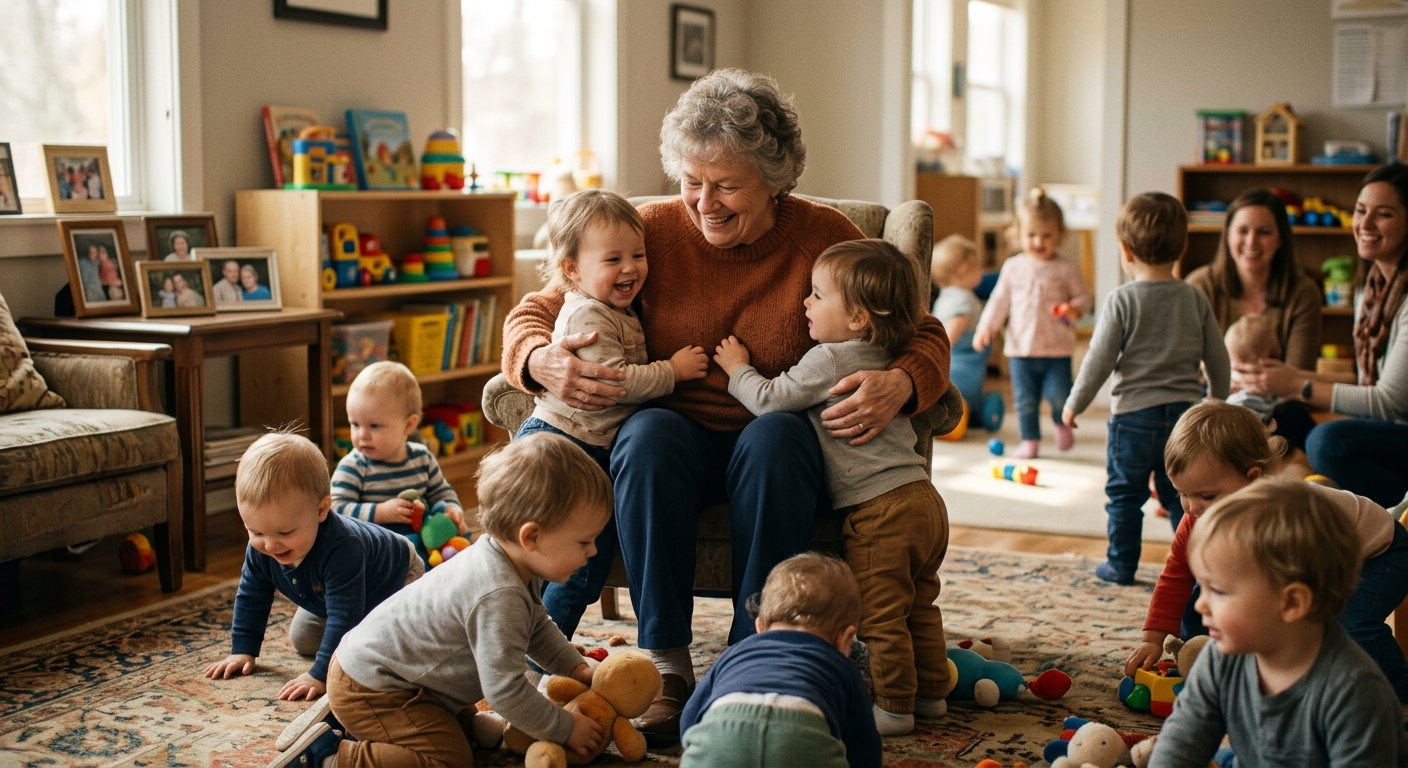
There is a small house in a quiet neighborhood where, for the past 35 years, the lights have almost never gone out before midnight. Where the refrigerator has always been stocked with formula. Where the sound of a newborn’s cry is not a source of panic, but a signal that the work of love is beginning again.
That house belongs to Clara Mwangi, a retired nurse who has, by official county records, fostered more than 600 newborn babies over the course of her life. Alone. Without a partner. Without a large staff or a nonprofit budget behind her. Just one woman, two hands, and a conviction that every child deserves to feel held.
“People always ask me how I did it,” Clara says, sitting at her kitchen table with a cup of tea going cold beside her. “I never thought of it as something remarkable. A baby needed someone. I was someone. That was the whole equation.”
How It Started: A Borrowed Bassinet and a Three-Day-Old Stranger
Clara did not set out to become a legend. In 1989, she was a 32-year-old nurse working in a neonatal ward when a social worker approached her with a situation that had no clean solution. A newborn had been surrendered at the hospital. The foster family lined up for him had fallen through. Could Clara take the baby for a weekend?
She borrowed a bassinet from a neighbor. She bought formula on the way home. She slept in two-hour intervals for three nights. And on the fourth morning, when the social worker came to collect the baby, Clara Mwangi cried in a way she had not cried since her own mother passed.
“I realized I hadn’t just been caring for a baby,” she explains. “I had been given a purpose I didn’t know I was missing.”
She submitted her foster care application the following week. She has never looked back.
What 35 Years of Newborn Care Actually Looks Like
It is easy to romanticize fostering. The reality, Clara is quick to point out, is something far more gritty and demanding than any highlight reel could capture. Newborns, especially those born into difficult circumstances, often arrive with complex medical needs, withdrawal symptoms, or the deep biological hunger for consistent human contact that has been, for whatever reason, interrupted.
Clara describes her approach with the precision of someone who has refined a system over decades:
- Skin-to-skin contact from the first hour: Clara believes in the power of warmth as medicine. Every baby that comes through her door is held against her chest within the first hour of arrival.
- Routine as a form of reassurance: Newborns, she explains, cannot understand words. But they understand consistency. The same sounds, the same smells, the same voice at the same intervals, this is how trust is built before language exists.
- No screens, no shortcuts: Clara has never used a baby monitor as a substitute for presence. “A monitor tells you when something is wrong. Being there tells the baby everything is right.”
- Documenting each child: She keeps a journal for every baby, notes on their first smile, the way they held her finger, the sounds they made. She gives these journals to adoptive families when the children leave.
- Letting go with intention: “Goodbye is not the end of love,” she says. “It is love doing its final job.”
The Hardest Part Nobody Talks About
Ask any foster carer about the emotional cost of the work, and most will pause before answering. Clara does not pause. She has been asked enough times that she has found the words.
“The hardest part is not the sleepless nights. It is not the medical scares or the paperwork or the court dates. The hardest part is that the world does not see what happens in the quiet. They see the number, 600 babies, and they think that is the story. But the story is every single one of those 600 individual moments of saying goodbye and choosing to open your door again anyway.”
She has experienced grief more times than most people experience it in a lifetime. She has also, she says, experienced more joy. The two are not separate things in her world. They are the same thing, viewed from different angles.
What the Children Left Behind, And What They Gave Her
Over 35 years, Clara has received letters, drawings, and photographs from adoptive families across the country. A handful of the children she fostered, now adults, have come to find her in person. One young man drove four hours to knock on her door and say thank you for a season of his life he does not remember but was told, by a journal entry in faded blue ink, was filled with warmth.
“He stood on my porch and he said, ‘I just needed you to know that I turned out okay,'” Clara recalls. “I told him I never had any doubt.”
She keeps a corkboard in her hallway covered in photos. Hundreds of faces at different ages. Birthday parties. Graduations. First days of school. She does not know all their names at this point. But she knows every single face.
7 Things We Can Learn From Clara Mwangi
Clara’s life is not just a feel-good story. It is a masterclass in what sustained, intentional compassion actually looks like. Here is what her 35 years of quiet service teaches the rest of us:
- Purpose does not always announce itself loudly. Clara did not have a calling. She had a borrowed bassinet and a weekend. Purpose often looks like that at the start.
- Consistency is a form of love. You do not need grand gestures. Showing up, again and again, is the gesture.
- Community is built through small yeses. Every social worker, neighbor, and adoptive family in Clara’s orbit became part of something larger because she kept saying yes.
- Grief and joy are not opposites. They are companions on any meaningful journey. Clara holds both, and she is richer for it.
- Documentation is an act of dignity. Those journals she writes for each baby are not sentimental extras. They are a declaration that this child’s earliest days mattered and were witnessed.
- The work does not require a crowd. Clara did this largely alone. You do not need a movement to make a difference. Sometimes you just need to answer the door.
- Goodbyes are not failures. In a culture that prizes permanence, Clara has redefined what it means to love well by showing that loving briefly can be just as profound.
A Legacy Written in Journals and Goodbye Kisses
Clara Mwangi is 67 years old now. She still fosters. She still keeps the formula in the refrigerator. She still writes in journals with the same blue ink she has used for decades. She says she will keep going as long as her body allows, and after that, she hopes the story of what is possible in one ordinary house will inspire someone else to borrow a bassinet and say yes.
“Love is not a resource you run out of,” she says, finally taking a sip of her cold tea. “It is a resource that grows the more you spend it. I have spent a lot. And I have never felt poorer for it.”
Six hundred babies. Thirty-five years. One woman. And a legacy that will ripple forward in ways none of us, including Clara, will ever fully be able to count.