🎧 Listen to this story
Narrated by Schedar · 7,290 characters
The Quiet Revolution Happening in Plant Biology
For decades, the idea that plants might experience something resembling pain was filed away with flat-earth theories and perpetual motion machines. It was fringe. It was unscientific. It was the kind of thing people said at dinner parties to make vegans uncomfortable.
But something has shifted. Over the past ten years, a growing body of peer-reviewed research has forced even the most skeptical botanists to sit up and pay attention. Plants, it turns out, are not the silent, passive organisms we assumed them to be. They communicate. They respond. And according to some researchers, they may even suffer.
This is not a story about mysticism or pseudoscience. This is a story about what happens when careful, rigorous science follows the evidence wherever it leads, even when that destination feels deeply uncomfortable.
What Researchers Actually Found
In 2019, a team at the University of Tel Aviv made headlines with a study that recorded ultrasonic sounds emitted by tomato and tobacco plants when they were stressed. The plants were either cut or deprived of water, and the result was startling: they produced airborne sounds in the 20 to 100 kilohertz range, frequencies well beyond human hearing.
The sounds were not random noise. They were patterned. Distinct. And the plants produced significantly more of them under stress than when left undisturbed.
Lead researcher Itzhak Khait described the findings carefully, noting that the team was not claiming plants feel pain in the way animals do. But the study raised a question that has become impossible to ignore: if plants emit distress signals when damaged, what exactly is happening inside them?
The Electrical Signals Inside a Leaf
Part of the answer lies in something called a systemic potential, or more specifically, action potentials and variation potentials. These are electrical signals that travel through plant tissue in response to injury or environmental stress. They look, at least structurally, surprisingly similar to nerve impulses in animals.
When a caterpillar starts chewing on a leaf, the plant does not just sit there. Within minutes, electrical signals travel from the damaged area to other parts of the plant. The plant then begins producing chemical compounds, including jasmonic acid, that make its leaves taste bitter and harder to digest. The caterpillar, essentially, gets punished for its meal.
This is not instinct in any simple sense. It is a coordinated biological response to a threat. And it happens fast.
What About Something Like a Nervous System?
Here is where the science gets genuinely strange. Plants do not have brains. They do not have neurons. But they do have something that some researchers are beginning to describe as a decentralized information-processing network.
Professor Stefano Mancuso at the University of Florence has spent years studying what he calls plant neurobiology. He argues that plants process information through their root systems and vascular networks in ways that parallel, without replicating, the functions of an animal nervous system.
His work is controversial. Many in the scientific community push back hard on the language of neurobiology when applied to plants, arguing it overreaches and anthropomorphizes. But even his critics tend to agree on the underlying data: plants integrate information from their environment and respond in coordinated, adaptive ways that we do not yet fully understand.
Seven Things Science Has Confirmed About Plant Responses
- Plants release chemicals when cut: Damaged plants emit volatile organic compounds that can signal neighboring plants of potential threats.
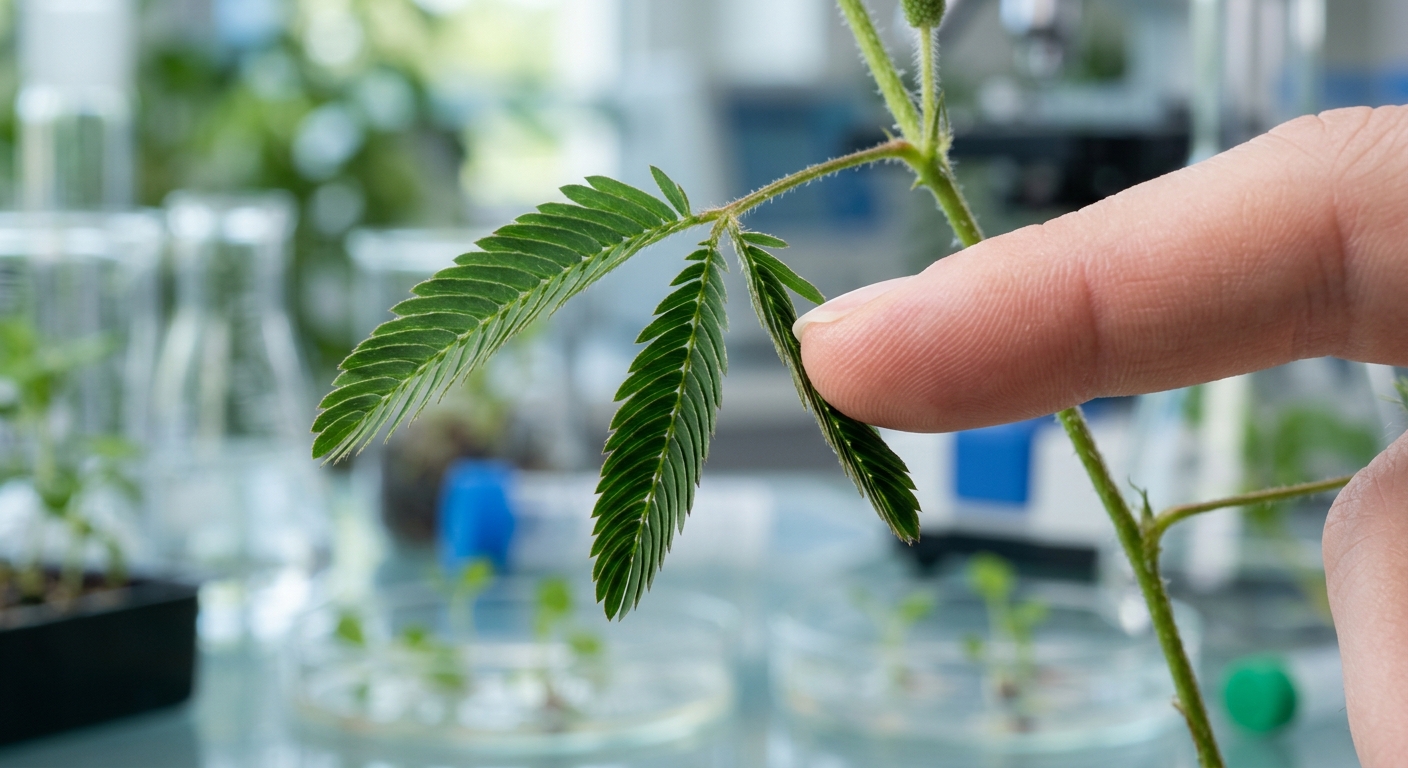
- They remember: Mimosa pudica plants that were repeatedly dropped learned to stop closing their leaves, suggesting a basic form of memory without a brain.
- They can hear: Studies show some plants grow their roots toward the sound of running water, even when no moisture is present in the soil.
- They respond to anesthesia: When exposed to the same anesthetic gases used in human surgery, plants lose their electrical signaling and become unresponsive. Remove the gas, and they recover.
- They communicate underground: Through fungal networks in the soil, sometimes called the wood wide web, trees share nutrients and send chemical warnings to one another.
- They distinguish touch: Plants can differentiate between wind, an insect walking, and a predator chewing, and respond differently to each.
- They prioritize survival: When resources are scarce, plants will sacrifice older leaves to protect new growth, a decision that looks, from the outside, like triage.
The Pain Question: Where Does the Evidence Actually Land?
So do plants feel pain? The honest scientific answer right now is: we do not know, and the question may be harder to answer than it first appears.
Pain, as we understand it in animals, involves two components. The first is nociception, which is the ability to detect and respond to harmful stimuli. The second is the subjective experience of suffering, the felt sense that something is wrong. Plants almost certainly have the first. Whether they have anything resembling the second is a question that cuts right to the heart of consciousness itself.
Monica Gagliano, an evolutionary ecologist at the University of Sydney, has published research suggesting that plants exhibit behaviors that, in animals, we would associate with learning and experience. She is careful about her language, but she argues that dismissing the possibility of some form of plant experience requires us to be very certain about what consciousness is and where it lives. And we are not that certain.
Why This Matters Beyond the Laboratory
The implications of this research stretch far beyond academia. If plants have some form of stress response that carries biological weight, it raises ethical questions about agriculture, land clearing, and even gardening that most of us have never thought to ask.
It also invites a deeper shift in how we see the living world. For most of human history, the line between sentient and non-sentient life has been drawn between animals and everything else. These findings suggest that line may be less sharp than we believed, and that the living world is far more active, responsive, and interconnected than our categories have allowed.
That is not a comfortable thought. But comfort has never been a good reason to stop asking questions.
A Different Way of Paying Attention
None of this means you need to feel guilty about mowing your lawn or making a salad. The researchers involved in this work are not, for the most part, arguing for plant rights. What they are arguing for is a more honest and curious relationship with the natural world.
When we assume that something cannot feel, cannot communicate, or cannot respond in meaningful ways, we tend to stop paying attention to it. And the history of science is littered with the consequences of that kind of inattention.
Plants have been here for 450 million years. They have survived mass extinctions, colonized bare rock, and built the oxygen-rich atmosphere that made animal life possible. Maybe they deserve a second look. Maybe the quiet of a forest is not emptiness. Maybe it is just a frequency we have not learned to hear yet.