
🎧 Listen to this story
Narrated by Callirrhoe · 8,052 characters
The Lie I Told Myself for Years
For most of my adult life, I wore self-sufficiency like a suit of armor. I told myself it was a strength. I could handle anything. I did not need anyone. I had built a career, raised a child largely on my own after my divorce, kept a tidy apartment, maintained friendships, showed up to every obligation with a smile pressed on my face like a freshly ironed shirt. From the outside, I looked like someone who had it together.
From the inside, I was drowning.
The exhaustion was bone-deep. The anxiety had become so normalized that I stopped recognizing it as anxiety and just called it “being busy” or “being responsible.” Every night I went to bed with a mental checklist of everything I had not yet accomplished. Every morning I woke up already behind. And through all of it, the one thought that never once crossed my mind was: maybe I should ask someone for help.
That was not weakness talking. That was something far more stubborn than weakness. That was pride, and fear, and years of conditioning that whispered: people who need help are people who failed.
Where That Story Came From
I did not invent this belief in a vacuum. It was handed to me, piece by piece, over decades.
My father worked two jobs my entire childhood and never once complained. My mother stretched a modest income into meals that somehow always felt generous. The unspoken rule in our house was simple: you push through. You do not burden other people with your problems. You figure it out.
There is beauty in that kind of resilience, and I genuinely honor it. But there is also a shadow side that nobody talked about. The message I absorbed was not just “be strong.” It was “needing help means you are not strong enough.” And I carried that message into every relationship, every job, every hard season of my life.
Even when a friend would offer to watch my daughter so I could sleep, I would decline. Even when a colleague offered to cover for me during a particularly rough week, I would wave them off. Even when my doctor gently suggested therapy after my divorce, I smiled and said I was fine.
I was not fine.
The Moment Everything Changed
It happened on an ordinary Tuesday. I was sitting in my car in a grocery store parking lot. I had gone there to buy pasta and a bottle of wine and I had been sitting, engine off, for twenty-two minutes because I genuinely did not have the energy to walk through those sliding doors. I was not sad in the dramatic way. I was just… empty. Like a phone that had been running apps in the background for so long that it had simply died without warning.
I called my best friend. I did not plan to. My hands just did it.
When she picked up, I said the words I had been avoiding for years: “I am not okay and I do not know what to do.”
The silence that followed lasted maybe three seconds. Then she said, “Okay. Stay there. I am coming.”
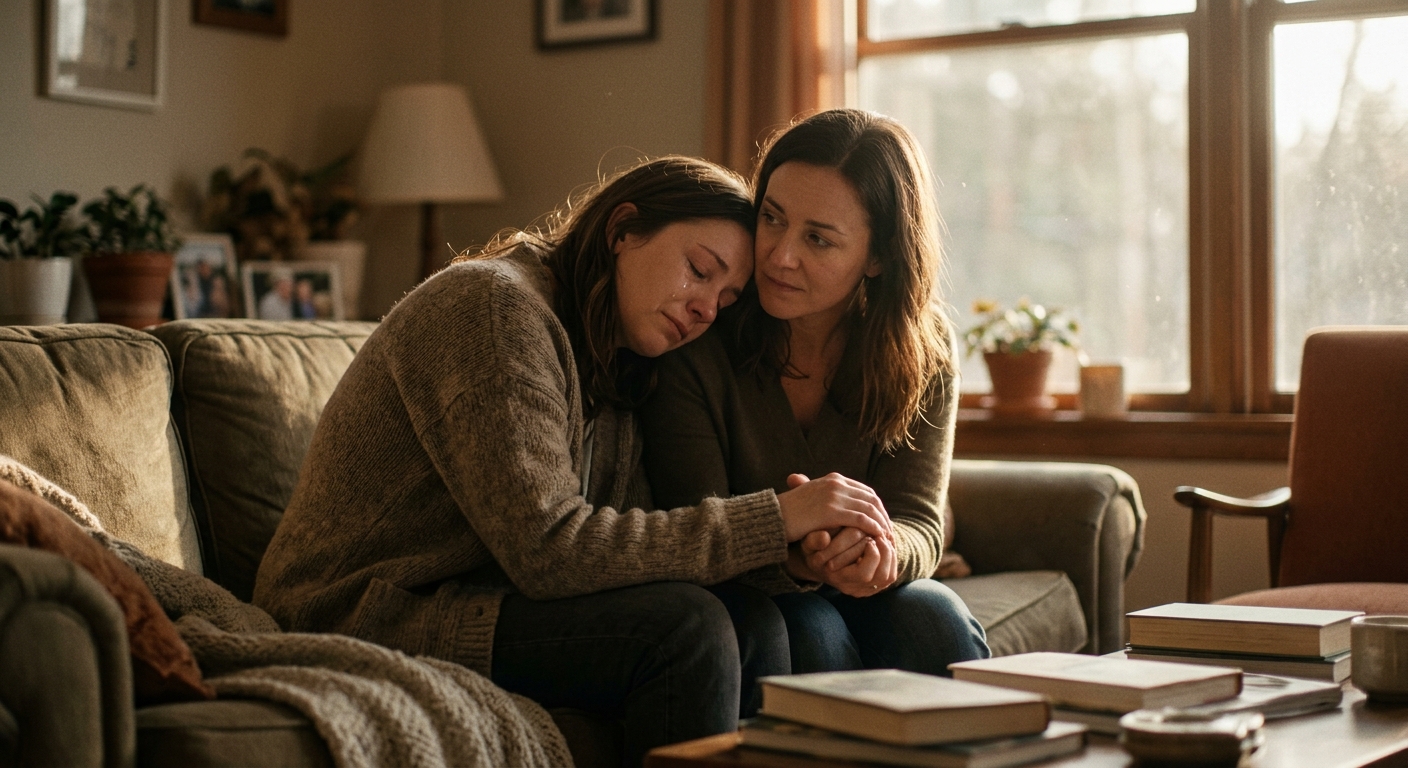
She drove twenty minutes to sit with me in that parking lot. We did not solve anything that night. We just talked. She listened. And when she hugged me before we finally went inside the store together, something in me cracked open in the best possible way.
What I Learned When I Started Letting People In
Asking for help that night was not the end of the story. It was the beginning of a completely different way of living. Here is what that journey taught me:
1. Asking for Help Is a Skill, Not a Personality Trait
I had always assumed that some people were naturally good at accepting support and others were not, and that I was simply one of the latter. What I discovered is that learning to ask for help is a practice, one that feels uncomfortable and even physically difficult at first, but becomes more natural over time. Like any skill, it gets easier when you do it repeatedly and when the results remind you that it was worth the discomfort.
2. People Want to Help. We Just Do Not Let Them.
This one genuinely surprised me. When I started opening up, the response from the people in my life was not pity or judgment. It was relief. My sister told me she had been worried about me for years and had not known how to bring it up. My colleague said she had suspected I was struggling and had felt helpless because I always seemed so closed off. By keeping everyone at arm’s length, I had not just been protecting myself. I had been denying the people who loved me the chance to show up for me.
3. Vulnerability Deepens Connection
There is a version of connection that stays on the surface, pleasant and uncomplicated, built on shared jokes and small talk. And then there is the deeper kind, the kind that forms when you let someone see you at your most uncertain and they stay anyway. Every relationship in my life that has truly mattered has been built on moments of vulnerability. I just had not been allowing those moments to happen.
4. Needing Help Is Not the Same as Being Helpless
This distinction changed everything for me. Being helpless means having no agency, no ability to act, no resources. Needing help means being human. Every single person who has ever accomplished anything meaningful did so with support from others, whether that was a mentor, a community, a partner, or simply someone who believed in them on a hard day. The myth of the lone self-made person is just that: a myth.
5. Therapy Is Not a Last Resort
After that parking lot night, I finally made the appointment I had been avoiding for years. Sitting across from a therapist for the first time felt awkward and strange, like wearing shoes on the wrong feet. But within a few sessions, I began to understand patterns in my own thinking that I had never been able to see before. Therapy did not fix me, because I was not broken. It helped me understand myself more clearly. I wish I had started sooner, and I am grateful every day that I eventually started at all.
The Bravery Nobody Talks About
We celebrate a very specific kind of bravery in our culture. The bravery of going it alone. The bravery of not needing anyone. The bravery of pushing through without complaint. These things have their place, but we have spent so much time celebrating independence that we have failed to recognize the courage it takes to do the opposite.
It takes real courage to say: I am struggling and I need support. It takes courage because it means accepting that you are not invincible. It means trusting someone else with your vulnerability. It means risking the possibility, however small, that they might not show up for you. And it means confronting the stories you have told yourself for years about what you are supposed to be.
The bravest thing I ever did was not something dramatic or external. It was sitting in a parking lot, picking up a phone, and saying three honest words to someone I trusted.
If You Are Sitting in Your Own Parking Lot Right Now
Maybe you are not literally in a parking lot. But maybe you know the feeling. The quiet exhaustion. The performance of fine-ness. The slow erosion that happens when you carry too much for too long without letting anyone help you carry it.
If that is where you are, here is what I want you to know:
- Asking for help will not make you a burden. The people who love you have likely been waiting for permission to show up.
- You do not need to have it all figured out before you reach out. You can reach out in the middle of the confusion.
- The right therapist, counselor, or support group can be life-changing. Not because they fix you, but because they help you see yourself clearly.
- One honest conversation can shift the entire direction of your life.
- The armor is heavy. You are allowed to put it down.
Asking for help was the bravest thing I ever did, not because I was courageous in that moment, but because I did it even though I was afraid. I did it even though every old story in me was screaming not to. I did it because I was out of options, and that turned out to be exactly the right time.
It turns out strength was never about how much I could carry alone. Real strength, it seems, was learning when to finally share the weight.