🎧 Listen to this story
Narrated by Leda · 7,764 characters
The Shelf of Good Intentions
There is a corner of my bedroom that I have privately nicknamed “the graveyard of good intentions.” It is a tall, narrow bookshelf wedged between the window and the closet door, and for years it has held the same rotating cast of characters: half-finished journals, a yoga mat I have not unrolled since 2019, a Rosetta Stone box still wrapped in its original cellophane, and books. So many books. Books I bought at airport terminals during optimistic layovers. Books gifted by well-meaning relatives at Christmas. Books I ordered at 2 a.m. after a glass of wine and a YouTube rabbit hole convinced me I was finally ready to change my life.
And for nearly a decade, one book sat at the very end of the second shelf, spine faded, cover slightly warped from a long-ago spill, completely and totally ignored.
I cannot even tell you why I bought it in the first place. I think a coworker mentioned it at a lunch I barely remember. I think I was going through something vague and uncomfortable at the time, the kind of low-level dissatisfaction that does not qualify as a crisis but hums quietly underneath everything you do. I bought the book, brought it home, placed it on the shelf, and promptly forgot it existed for ten years.
Then, last winter, something shifted.
The Night I Finally Picked It Up
It was a Tuesday in February. Outside, the kind of cold that discourages any ambition. I had just ended a phone call with my mother that left me feeling hollowed out, the way some conversations do, and I was standing in my bedroom doing that thing where you look around the room as if the walls might offer advice.
My eyes landed on the shelf. On the book.
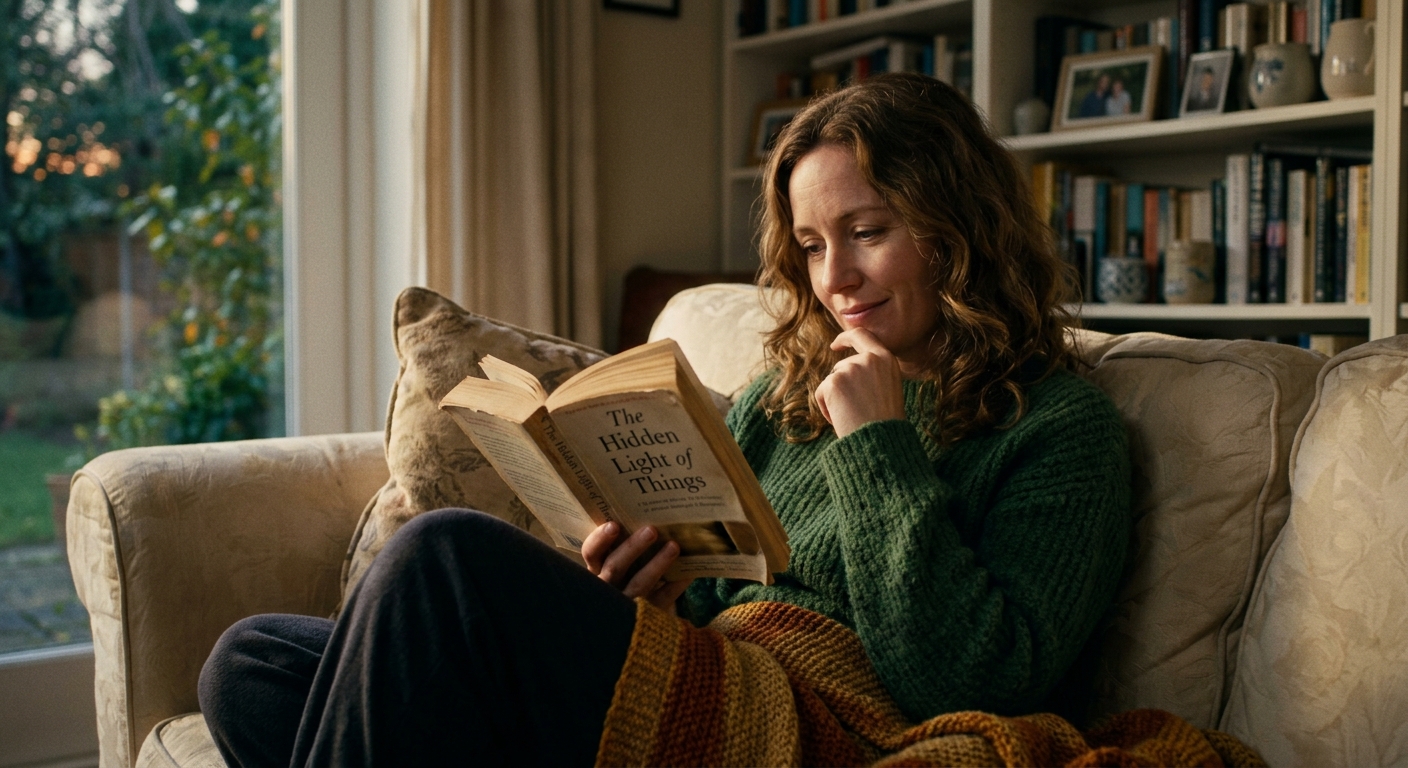
I do not know why that night was different from any other. Maybe I was tired enough to stop being defensive. Maybe the particular shade of desperation I was feeling happened to match the shade the book had been written for. I picked it up, cleared off a space on my bed, and started reading.
I did not put it down until 1:30 in the morning.
What the Book Actually Said
I am deliberately choosing not to name the book here, not because I am being coy, but because I have come to believe that the specific title matters far less than the experience of encountering the right words at the right moment. What I will tell you is that it was not a self-help book in the glossy, bullet-pointed sense of the genre. It was quieter than that. More honest. It was written by someone who had clearly sat with their own failures for a long time before deciding to write about them.
The book asked a question on its very first page that I had to reread three times before I could move on. The question was something close to this: What would you do with your life if you stopped waiting to feel ready?
Ten years earlier, that sentence would have slid right off me. I would have nodded politely, as you do at a motivational poster in a dentist’s office, and turned the page. But that February night, with snow ticking against the window and my phone face-down on the nightstand, the question landed differently. It lodged somewhere behind my sternum and refused to move.
Why Timing Is Everything
Here is what I have come to understand about books, and maybe about all meaningful things: readiness is not something you manufacture. You cannot force yourself into the emotional state that makes a piece of wisdom actually penetrate. You can read the same sentence a hundred times and feel nothing, and then read it once on the right night and feel everything.
Psychologists sometimes call this concept “teachable moments,” the idea that human beings are only truly receptive to certain lessons when their circumstances have primed them for it. Life has to crack you open a little before the light can get in, as the famous Leonard Cohen line goes. And my life, in that particular February, had developed some significant cracks.
I had spent the previous year making a series of cautious, responsible, utterly joyless decisions. I had talked myself out of a career change I had been fantasizing about for three years. I had declined an invitation to travel with friends because it seemed “impractical.” I had become, without fully noticing, someone who used the word “realistic” as a synonym for “afraid.”
The book did not flatter me. It did not tell me I was brave or special or that my dreams were valid. It did something more useful: it described, with uncomfortable precision, the psychology of a person who keeps their life on permanent hold, and it did so without judgment. It simply said: here is the pattern, here is what it costs you, and here is what it looks like when someone chooses differently.
The Changes That Followed (They Were Not Dramatic)
I want to be careful here, because this is the part of the story where it would be easy to reach for cinematic language. To tell you I woke up the next morning transformed, that I quit my job, booked a one-way ticket, and found myself. None of that happened.
What happened was quieter and, I think, more durable.
- I made a list. Not a vision board or a five-year plan, just a simple, honest list of the things I had been postponing and the reasons I had given myself for postponing them. Seeing them written down was clarifying in a way that thinking about them never was.
- I made one phone call I had been dreading for two years. A professional conversation I had been rehearsing and avoiding in equal measure. I made it the morning after finishing the book. It went fine. It was almost anticlimactic.
- I started saying yes to smaller things. Not life-altering leaps, but small yeses that had previously defaulted to nos. A dinner with a person I found intimidating. A class I was afraid of being bad at. A conversation I had been scripting instead of just having.
- I reread it. About three months later, I picked the book up again and found an entirely different set of sentences underlined in my own handwriting, passages I had apparently highlighted in that first reading that I had no memory of. My subconscious had been working on them in the background.
The Shelf Looks Different Now
I still have the graveyard of good intentions in my bedroom. I have not become a person who finishes every book she starts or who always makes the courageous choice or who has dissolved her relationship with procrastination entirely. That would be a lie, and one of the things the book cured me of, at least partially, is the habit of performing transformation instead of living it.
But something real did shift. A gear caught somewhere inside the machinery of how I make decisions, and the sound it makes now is different. Less grinding. More intentional.
I sometimes think about the ten years that book spent on my shelf, patient and silent, waiting. I used to feel guilty about that, the waste of it, the obliviousness. Now I am not so sure it was wasted at all. Maybe I needed to become exactly the person I was in that February in order to finally be ready to hear what it had to say.
What This Might Mean for You
If you have a shelf like mine, and I suspect you do, I want to offer you this, not as advice but as a small encouragement: do not throw out the books you have not gotten to yet. Do not donate the ones that felt flat when you tried them years ago. The book that bores you at 25 might be the one that saves you at 35. The wisdom that slid off you during one chapter of your life might be precisely what the next chapter requires.
You do not always get to choose when you are ready. But you can choose to keep the door open.
And maybe, on a cold Tuesday night when you are standing in your room looking for something you cannot name, you will reach for a faded spine on a dusty shelf and find that it has been waiting for you all along.