🎧 Listen to this story
Narrated by Leda · 7,679 characters
When the Uniform Comes Off, the Mission Does Not
For 28 years, Marcus DeLeon wore a badge in one of the most underserved neighborhoods in Fresno, California. He answered calls about gang violence, domestic disputes, and drug overdoses. He watched the same kids cycle through the system year after year, and he kept asking himself the same question: what would it take to reach them before the worst happened?
The answer, as it turned out, was a cracked concrete floor, some secondhand weights, and a whole lot of stubbornness.
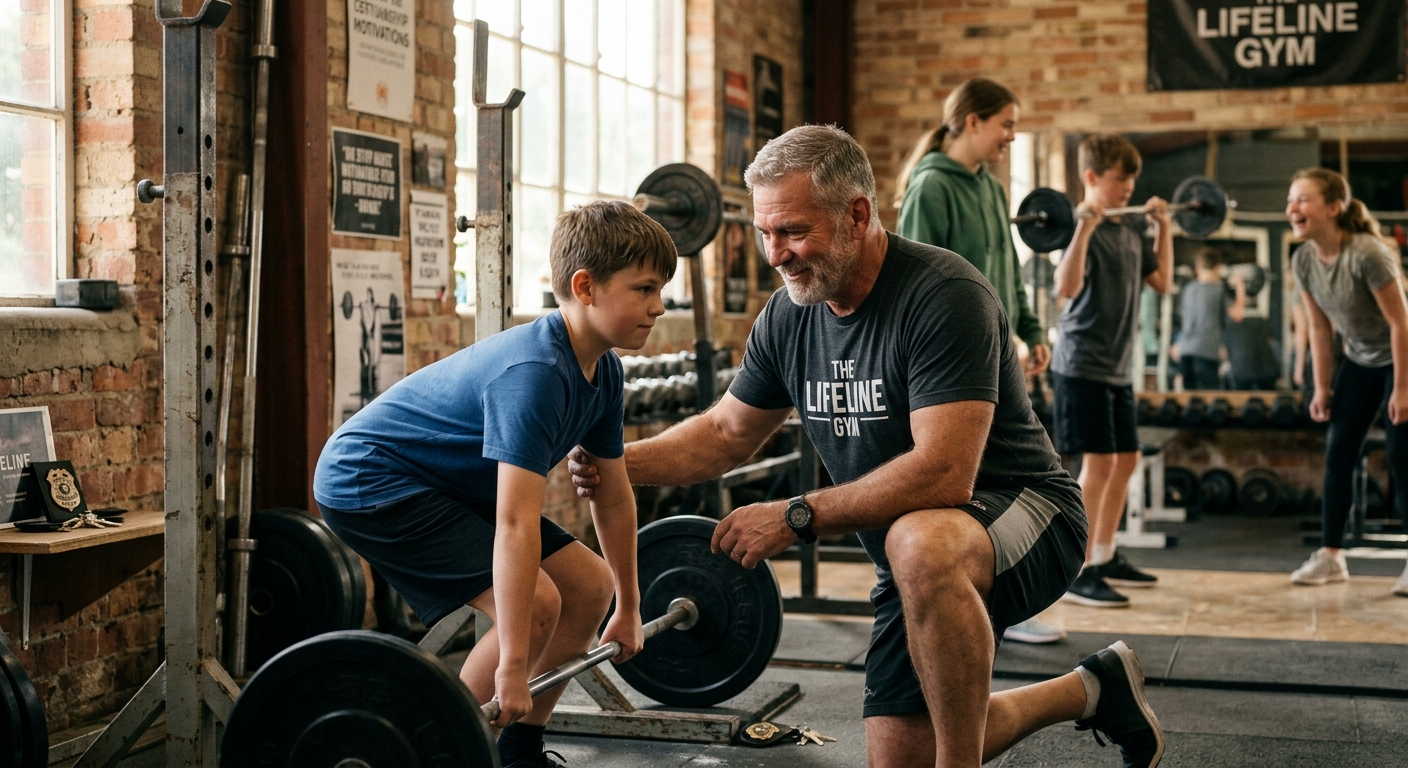
In 2019, just eight months after retiring from the Fresno Police Department, DeLeon opened the doors of Iron Roots Gym, a completely free training facility for at-risk youth between the ages of 12 and 21. No membership fees. No sign-up costs. Just show up, put in the work, and keep coming back.
What started as a 900-square-foot space with donated equipment and a folding table for a front desk has since grown into a community cornerstone that serves over 200 young people every month.
The Moment Everything Changed
DeLeon is not the kind of man who tells his story easily. He leans back in his chair when asked about it, rubs the back of his neck, and takes a long pause before speaking.
“There was a kid,” he begins. “Seventeen years old. I had arrested his older brother twice. I had been called to his house four or five times for different things. And then one night, I got a call that he had been shot two blocks from his own front door.”
He pauses again.
“He survived. But when I went to check on him at the hospital, he looked at me and said, ‘Nobody ever gave me a reason to go anywhere else.’ That hit me somewhere I couldn’t ignore.”
DeLeon went home that night and started writing. Not a report. A business plan.
Building Something From Almost Nothing
The early days of Iron Roots were anything but glamorous. DeLeon used a significant portion of his retirement savings to secure a lease on a vacant commercial unit near the neighborhood he had patrolled for nearly three decades. He reached out to local gyms, sporting goods stores, and fitness equipment suppliers, asking for donations and steep discounts.
Some people hung up on him. Others sent him bags of mismatched dumbbells and rusted barbells. A few surprised him completely.
“One gym owner drove two hours with a truck full of equipment he was replacing,” DeLeon recalls. “He wouldn’t take a dime. Said his dad had grown up tough and someone had given him a chance. That’s the kind of thing that keeps you going when everything feels impossible.”
Local volunteers, including retired athletes, personal trainers, and even a few of DeLeon’s former colleagues from the police force, began showing up to help run sessions. Word spread through schools, churches, and community centers. And then the kids started arriving.
More Than Muscle: What the Gym Actually Teaches
Step inside Iron Roots on any weekday afternoon and you will find something that looks like controlled, purposeful chaos. Teenagers are lifting, stretching, sparring in a small boxing corner, and occasionally arguing about music. But look closer and you will notice something else happening beneath the surface.
There are mentors embedded in every session, not just coaches. Adults who ask questions, who remember names, who follow up. The gym operates on what DeLeon calls a “no invisible kids” policy.
“Every single person who walks through that door gets acknowledged,” he says firmly. “Every one. Because for a lot of these kids, this might be the only place where someone is genuinely glad they showed up.”
The programming at Iron Roots goes well beyond fitness. Current offerings include:
- Strength and conditioning classes designed for all experience levels, with no judgment and no pressure
- Life skills workshops covering topics like financial literacy, conflict resolution, and resume writing
- One-on-one mentorship sessions matched by interest, background, and personal goals
- College and vocational prep support with help navigating applications and scholarship searches
- Mental health check-ins facilitated by a licensed counselor who volunteers every Thursday
DeLeon is quick to credit his team for developing these programs. “I knew how to lift weights and I knew how to talk to people in hard situations. Everything else, I had to learn or find someone who already knew it.”
The Numbers Behind the Impact
Measuring the success of a community program is never straightforward. But the data surrounding Iron Roots tells a quietly remarkable story.
According to a community impact report compiled in partnership with a local nonprofit, of the young people who attended Iron Roots consistently for six months or more over a three-year period, 87 percent remained out of contact with the juvenile justice system. Over 60 percent reported improved grades. And more than 40 members have gone on to pursue post-secondary education or trade apprenticeships since the gym opened.
Perhaps more telling is what the young people themselves say.
“I used to get in trouble because I was bored and angry and I didn’t think anything good was waiting for me,” says 19-year-old Tyreese, who has been a member since he was 14. “Now I come here every day. I help with the younger kids sometimes. Marcus trusts me with that, and that matters more than I can explain.”
What Keeps Marcus Going
Running a free gym is not a sustainable business model by conventional standards. Iron Roots operates on a combination of small business grants, individual donations, and occasional corporate sponsorships that DeLeon pursues with the same methodical persistence he once applied to investigations.
He does not take a salary. He drives a truck with 180,000 miles on it. And he is at the gym almost every single day.
Asked what motivates him to keep going, he thinks for a moment and then smiles, which does not happen quickly but when it does, it changes his whole face.
“I spent almost three decades reacting,” he says. “Showing up after something bad happened. Now I get to show up before. That’s the whole thing for me. That’s everything.”
How You Can Support Programs Like Iron Roots
Iron Roots is not unique in spirit, though it is remarkable in execution. Across the country, community-based programs are working with limited resources to do exactly what DeLeon is doing: intercept young lives before they veer off course. Here are a few ways anyone can support this kind of work, whether locally or nationally:
- Donate gently used fitness equipment to local youth centers or community gyms
- Volunteer your professional skills, whether in finance, health, law, or education, to youth-serving organizations
- Advocate for municipal funding for after-school and community programs in underserved areas
- Share the stories of programs doing this work so they can attract the attention and support they deserve
- Simply show up: many programs need consistent, reliable adult presence more than they need money
A Legacy Built in Reps
Marcus DeLeon never set out to become a symbol of anything. He is a practical man with a practical goal: keep kids alive, keep them engaged, and give them a reason to walk through a door that leads somewhere good.
But in doing that, one rep at a time, one conversation at a time, he has built something that pulses with quiet, stubborn hope. Iron Roots is not just a gym. It is proof that when someone decides to stop waiting for someone else to fix a problem and just starts fixing it, things can actually change.
And somewhere in Fresno, a 14-year-old who has never been asked what their dreams are is about to walk through a cracked concrete doorway and find out that someone is genuinely glad they came.