
🎧 Listen to this story
Narrated by Orus · 7,448 characters
The Diagnosis That Changed Everything
Linda Hargrove was 47 years old when her doctor handed her a printout and said, quietly but firmly, “You have Type 2 diabetes.” She remembers sitting in the parking lot afterward, staring at the steering wheel for a long time. She wasn’t surprised, exactly. Her father had it. Her older brother had it. In her family, diabetes felt less like a disease and more like an inheritance, something passed down alongside the furniture and the holiday recipes.
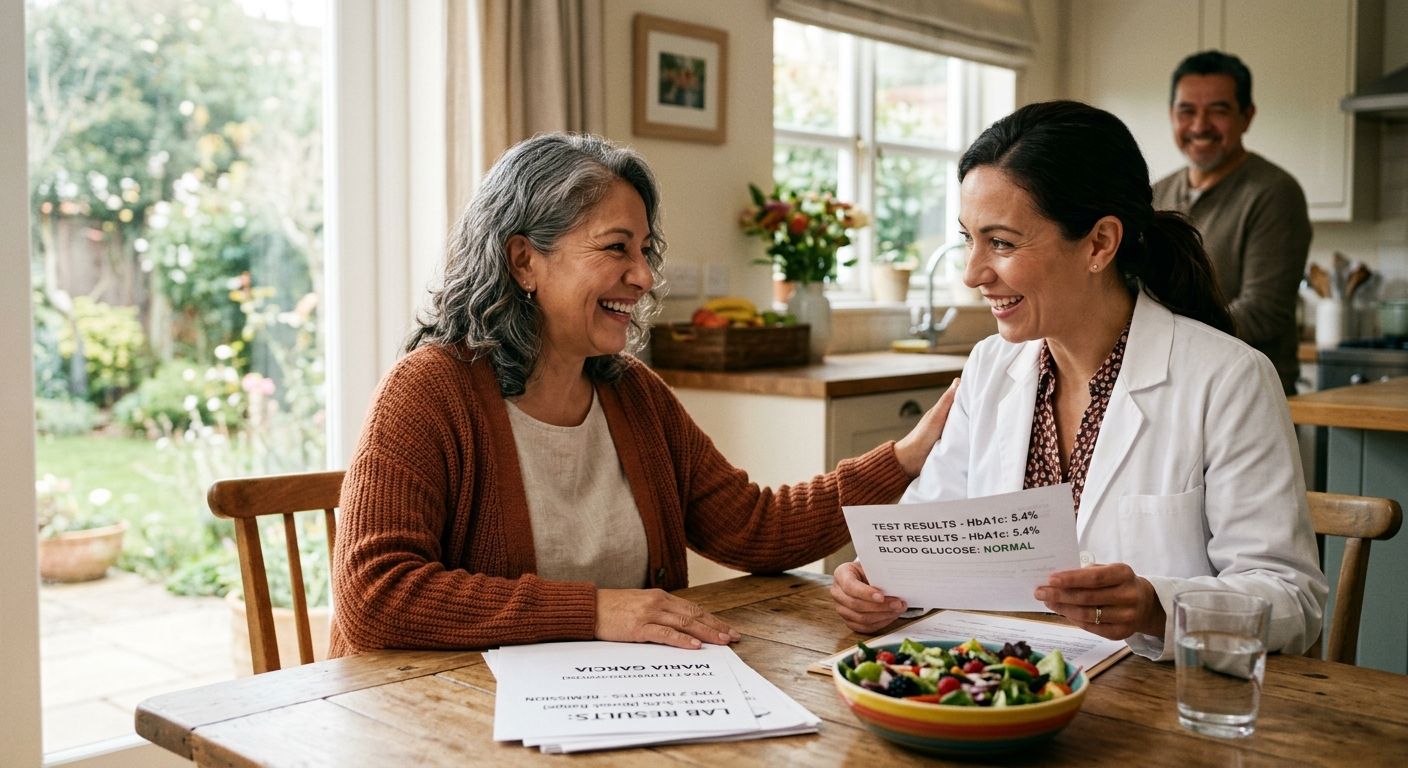
What she didn’t expect was what came next. Not the medication, not the finger pricks, not the fatigue. What she didn’t expect was that eighteen months later, she would walk into that same doctor’s office and watch his face change as he reviewed her bloodwork a second time, then a third, before looking up and saying, “Linda, I honestly don’t know what to say. These numbers are remarkable.”
Her A1C had dropped from 9.2 to 5.4. She was no longer diabetic.
What the Research Actually Says
Before we go further, it’s important to be precise about language. Doctors use the word “remission” rather than “reversal” or “cure” when it comes to Type 2 diabetes. Remission means that blood sugar levels return to a normal range without the need for diabetes medication, sustained for a significant period of time. It does not mean the underlying tendency is gone forever. But for millions of people living with the daily burden of this condition, remission is nothing short of life-changing.
According to research published in journals including The Lancet and studies supported by Diabetes UK, Type 2 diabetes remission is achievable for many patients through significant dietary and lifestyle intervention. The science is not fringe or experimental. It is increasingly mainstream, and yet it still surprises people every single time.
Linda’s Approach: Not a Diet, a Philosophy
Linda is quick to push back against the word “diet.” She has tried diets. She did a cabbage soup diet in her thirties. She tried calorie counting apps twice. She gave up both times within three weeks.
“This wasn’t a diet,” she says. “A diet has a finish line. What I did was decide to understand food differently.”
After her diagnosis, Linda spent several weeks doing what she calls “obsessive research,” reading books, watching documentaries, listening to podcasts, and eventually connecting with a registered dietitian who specialized in metabolic health. Together, they built an approach rooted in three core principles.
1. Focus on Blood Sugar Response, Not Just Calories
Linda stopped thinking about food in terms of calories and started thinking about how each meal would affect her blood sugar. She learned about the glycemic index and, more importantly, the glycemic load of foods. White bread, sugary drinks, and processed snacks became rare exceptions rather than daily habits, not because they were forbidden, but because she understood what they were doing inside her body.
2. Build Every Plate Around Non-Starchy Vegetables
Half of every plate, every meal, became non-starchy vegetables: leafy greens, broccoli, cauliflower, zucchini, peppers, cucumbers. These foods are rich in fiber, which slows glucose absorption and feeds healthy gut bacteria. Linda says this single habit was the hardest to build and the most impactful once it stuck.
3. Protein and Healthy Fat at Every Meal
Linda made sure every meal included a quality protein source and a healthy fat. Eggs, legumes, fish, nuts, and olive oil became her staples. These nutrients help slow digestion, reduce insulin spikes, and keep her full longer, which naturally reduced her tendency to snack on high-sugar foods out of hunger.
What She Gave Up (and What She Didn’t)
People always ask Linda what she gave up. The honest answer is nuanced.
- Sugary beverages: Gone almost completely. She switched to water, herbal tea, and sparkling water with citrus.
- Processed snacks: Replaced with nuts, seeds, hummus, and cut vegetables.
- White refined carbohydrates: Dramatically reduced but not eliminated. She still eats bread occasionally, just whole grain varieties in smaller portions.
- Desserts: She still has them, maybe once or twice a week, and she savors every bite rather than eating them mindlessly in front of the television.
What she did not give up was flavor, joy, or the pleasure of cooking. In fact, Linda says her relationship with food became richer once she started paying attention to it. “I used to eat without thinking. Now every meal feels like a small act of self-respect.”
The Role of Movement and Sleep
Food was the centerpiece of Linda’s transformation, but she is honest that it wasn’t the only factor. She also started walking after dinner every night, just twenty to thirty minutes, something her dietitian described as one of the most effective tools for managing post-meal blood sugar. She also worked on her sleep, aiming for seven to eight hours consistently, after learning that poor sleep directly impairs insulin sensitivity.
“I didn’t run a marathon. I didn’t join a gym on January 1st and burn out by February,” she says with a laugh. “I walked around my neighborhood and went to bed earlier. That’s the unsexy truth.”
The Moment Everything Became Real
About fourteen months into her new way of eating, Linda went in for her regular bloodwork. She had noticed her energy improving. Her afternoon crashes had disappeared. She had lost 34 pounds without ever once counting a calorie. But she had been careful not to get her hopes up too high.
When her doctor called, he asked her to come in rather than just relay results over the phone. She feared the worst. Instead, he showed her a chart of her A1C readings over time, dropping steadily like a ski slope, and told her that by every clinical measure, she was in full remission from Type 2 diabetes.
“I cried in his office,” she says. “Not from relief, exactly. More from disbelief. Nobody in my family had ever done this. I thought this was just who we were.”
What Linda Wants You to Know
Linda shares her story not to position herself as an authority or to suggest her path is the only one. She is clear and consistent about this. Type 2 diabetes is a complex condition influenced by genetics, environment, stress, access to resources, and many other factors. Not everyone will achieve the same results, and not everyone should pursue remission through diet alone without medical supervision.
But she wants people to know that for many, the possibility exists. That food is genuinely powerful medicine. That the conversation is worth having with your doctor, your dietitian, and yourself.
“The thing I wish someone had told me at diagnosis,” she says, “is that this is not necessarily a one-way door. You don’t just get diagnosed and accept that your health will only go in one direction from here. That’s not always true. And for me, it wasn’t true at all.”
A Final Note for Anyone Reading This
If you or someone you love has been diagnosed with Type 2 diabetes, the most important first step is a conversation with a qualified medical professional. Dietary changes that support blood sugar management are well-documented and widely endorsed by health organizations, but they work best as part of a supervised, personalized plan.
What Linda’s story offers is not a prescription. It is something more valuable: proof that change is possible, that the body is resilient, and that sometimes the most powerful thing on your plate is hope.