🎧 Listen to this story
Narrated by Callirrhoe · 7,176 characters
It Started With a Phone Call No Parent Wants to Receive
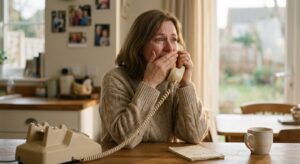
Linda Morrow still remembers the exact moment her world stopped. It was a Tuesday in March 2009 when her 14-year-old son, Caleb, collapsed during soccer practice. The diagnosis came swiftly and brutally: a rare autoimmune condition that was destroying his red blood cells faster than his body could replace them. Caleb needed an emergency blood transfusion, and he needed it within hours.
“The doctor told me that if someone hadn’t donated blood recently, my son might not survive the night,” Linda recalled, her voice steady but her eyes carrying the weight of a memory that never fully fades. “I sat in that hospital waiting room thinking about the stranger who had given blood, maybe weeks before, with no idea they were saving my child’s life. I didn’t even know their name. I still don’t.”
Caleb survived. And Linda Morrow was never quite the same again.
From Gratitude to Action
In the weeks following Caleb’s recovery, Linda found herself restless in a way she couldn’t entirely explain. She had sent thank-you cards, hugged every nurse, cried tears of relief into her husband’s shoulder. But something still felt unfinished. The debt she felt, she realized, wasn’t one she could repay to any single person. It belonged to a community, to a system, to thousands of anonymous donors who showed up with their sleeves rolled up and never knew whose life they were changing.
So she rolled up her own sleeve. And then she started asking others to do the same.
“I called the American Red Cross that spring and said I wanted to organize a blood drive at my church,” she said. “They walked me through everything. That first drive, we had 23 donors show up. It felt like a miracle.”
That was Blood Drive Number One. As of this past October, Linda Morrow has organized 512 blood drives across her community in Asheville, North Carolina, collecting an estimated 15,000 or more units of blood and potentially saving tens of thousands of lives.
Building Something Bigger Than Herself
What began as a single church event quickly grew into something neither Linda nor anyone around her could have predicted. Within the first year, she had organized drives at local schools, firehouses, corporate offices, and community centers. She recruited volunteers, trained coordinators, and learned the logistics of blood collection with the same focus a small business owner might bring to launching a company.
She wasn’t a healthcare professional. She wasn’t a nonprofit executive. She was a mother from Asheville with a minivan, a cell phone, and a reason that would not let her quit.
“People ask me how I stayed motivated after the first fifty drives, or the first hundred,” she said. “But I never once had to dig for motivation. Every single drive, I think about Caleb in that hospital bed. Every single donor who sits down in that chair is doing what that anonymous stranger did for my family. How could I ever stop showing up for that?”
The Numbers Behind the Mission
- 512 blood drives organized since 2009
- Drives held across more than 40 different venues in Asheville and surrounding counties
- An estimated 15,000+ units of blood collected
- Over 200 trained volunteer coordinators working under her guidance
- Partnerships with 12 local businesses who sponsor annual drives
- A dedicated program that targets first-time donors between the ages of 16 and 25
The People Behind the Pints
Ask Linda what she’s most proud of and she won’t point to the numbers. She’ll tell you about Marcus, a 19-year-old college student who donated for the first time at one of her campus drives and has since donated 11 more times. She’ll tell you about the group of six coworkers at a local insurance firm who show up together every eight weeks like clockwork, treating it as a team tradition. She’ll tell you about the elderly woman named Ruth who sat down in a donor chair for the first time at age 72 because her grandson told her about Linda’s story.
“Ruth cried afterward,” Linda said, smiling. “She told me she wished she had started doing it decades ago. I told her she was doing it now, and that’s what matters.”
These are the stories Linda collects instead of trophies. She keeps a journal, a plain spiral-bound notebook that she’s filled twice over, with the names and moments that remind her why each drive is worth the planning, the calls, the setup, and the inevitable logistical headaches.
Caleb’s Role in All of It
Caleb Morrow is now 30 years old. He works as a physical therapist in Charlotte and, unsurprisingly, donates blood as often as his health allows. He grew up watching his mother organize drives from the kitchen table, listening to her make calls, seeing the folding tables and Red Cross signs loaded into the minivan on weekends.
“My mom is the most quietly relentless person I know,” Caleb said in a brief phone interview. “She never talks about it like she’s doing something heroic. To her, it’s just what you do. Someone helped us, so we help others. She made that feel completely normal to me, which I think is the greatest thing she ever taught me.”
He paused, then added: “Also, I donate every chance I get. I kind of don’t have a choice. She would absolutely find out.”
What Linda Wants You to Know
Linda is not naive about the blood supply challenges that persist across the United States. The American Red Cross has declared blood shortages multiple times in recent years, with certain blood types running critically low. She knows the need is vast and that 512 drives, as remarkable as they are, barely scratch the surface of what the country requires.
That’s why she’s turned her attention recently toward education, not just collection. She hosts informational sessions at high schools, debunking myths about donation. She addresses fears about needles, about eligibility, about whether a single pint really makes a difference.
“One unit of blood can save up to three lives,” she tells every crowd. “Three lives. If you walked out your front door and had the chance to save three people today, would you do it? That’s what you’re doing when you donate. You’re just doing it from a really comfortable recliner chair with a juice box afterward.”
The crowd usually laughs. And then they usually sign up.
A Legacy Written in Quiet Heroism
There are no billboards with Linda’s face on them. She hasn’t written a book or launched a foundation with a sleek website. She has a Facebook page for her blood drive network, a laminated schedule she keeps on her refrigerator, and a community that has come to associate her name with showing up and doing good.
That, she would tell you, is more than enough.
“I didn’t save my son,” she said quietly, near the end of our conversation. “Blood donors saved my son. Doctors saved my son. A whole invisible network of people who made choices, big and small, saved my son. All I’ve ever done is try to add myself to that network, and invite as many people as I can to join it.”
She glanced down at her phone, where a notification had just popped up. Drive number 513 was confirmed for next Saturday. Twenty-eight donors had already signed up.
Linda Morrow smiled, and got back to work.