🎧 Listen to this story
Narrated by Aoede · 7,680 characters
A Knock at the Door That Changes Everything
Imagine arriving in a new country with nothing but a few suitcases, a family you are desperately trying to protect, and absolutely no idea what comes next. The language on the street signs is foreign. The food in the grocery store is unfamiliar. The customs, the systems, the unspoken social rules, all of it is a mystery wrapped inside exhaustion and uncertainty.
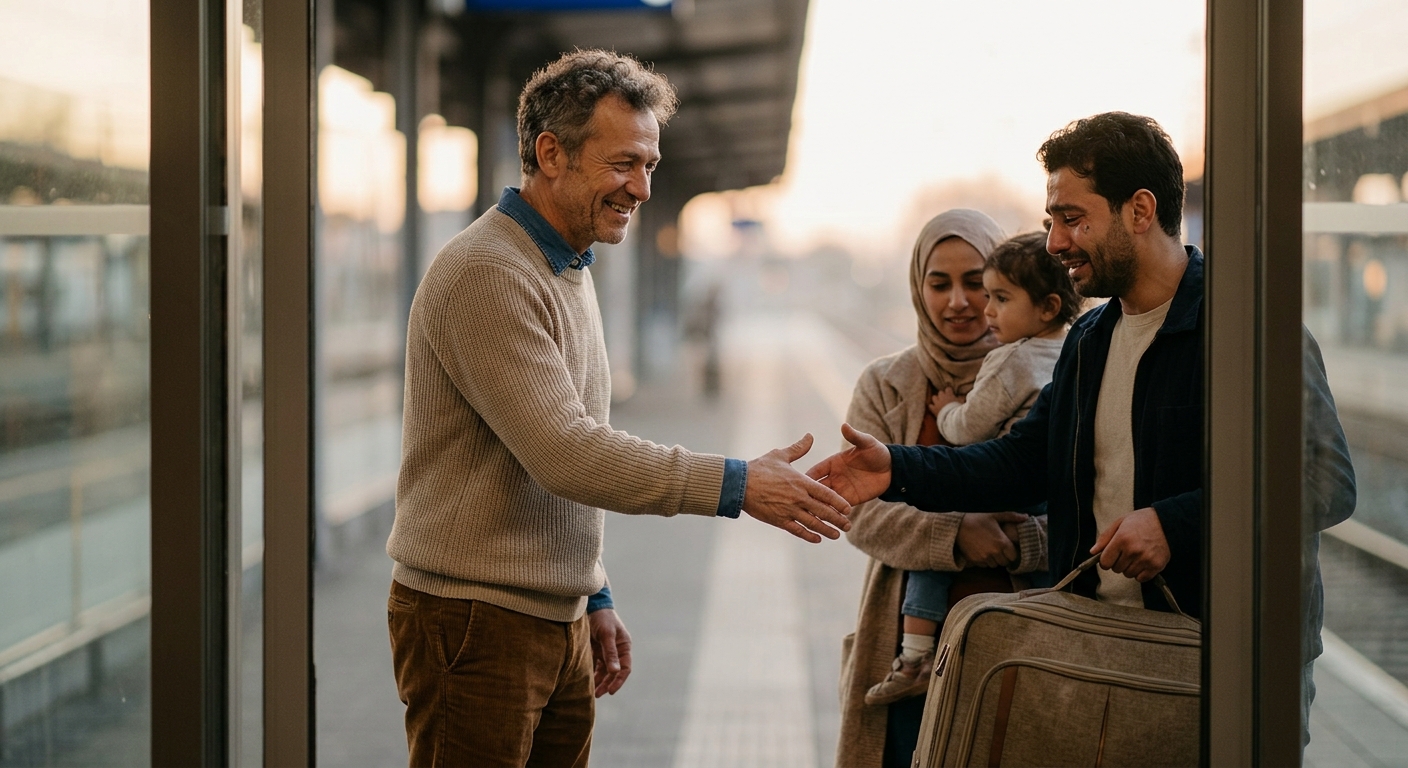
For hundreds of refugee families resettled in Columbus, Ohio over the past eleven years, the very first friendly knock on their door has come from the same person: a retired high school teacher named Gerald Osei-Bonsu, who has made it his personal mission to visit every single new family that arrives through the local resettlement program within their first 72 hours of settling in.
He brings groceries. He brings a hand-drawn map of the neighborhood. And most importantly, he brings himself.
How It All Started: A Chance Encounter That Became a Calling
Gerald, now 67, did not set out to become a one-man welcome committee. He stumbled into it, as so many great acts of service begin, through a moment of ordinary human instinct.
In 2013, he spotted a family standing outside a convenience store near his home, visibly lost and struggling to communicate with a store clerk. The parents looked panicked. Two small children clung to their mother’s coat. Gerald, who speaks English, French, and basic Twi from his own Ghanaian heritage, walked over and offered to help.
It turned out the family had arrived from the Democratic Republic of Congo just four days earlier and had wandered farther from their apartment than they realized. Gerald walked them home. He sat with them for two hours. He wrote down phone numbers, drew directions to the nearest bus stop, and left his own phone number on a sticky note on their refrigerator.
Three weeks later, a caseworker from a local refugee resettlement nonprofit called him to say the family had asked for him specifically when they needed help navigating a medical appointment. That caseworker, Maria Delgado, asked if he might be willing to do something similar for other arriving families.
His answer was immediate: yes.
What the Visits Actually Look Like
Gerald coordinates with the resettlement agency to receive notification whenever a new family arrives. He typically waits 24 to 48 hours before making his first visit, giving families time to sleep, decompress, and simply breathe after the chaos of international travel and processing.
Then he shows up, always with a specific bag he calls his “welcome kit,” which he replenishes with community donations and his own pocket. Inside, families typically find:
- Staple groceries tailored to the family’s region of origin when possible (rice, cooking oil, lentils, canned goods)
- A hand-laminated card with emergency numbers, bus routes, and nearby community services printed in multiple languages
- A small toy or book for any children in the household
- A notepad and pen, because, as Gerald says, “everyone needs to be able to write something down”
- A printed photo of himself with his phone number, so families remember who gave it to them
He does not overwhelm families with information or linger past his welcome. His visits typically last between 45 minutes and two hours, depending on what the family needs. Sometimes he translates for them over the phone with service providers. Sometimes he simply sits quietly while a mother makes tea and a father tries to find words in a language neither of them fully shares yet.
“I am not there to solve everything,” Gerald explained in a conversation with a local nonprofit newsletter last spring. “I am there so they know that someone in this city already sees them as a neighbor. That is the whole point.”
The Ripple Effects Nobody Expected
What Gerald did not anticipate when he started making these visits is how far the ripple would travel.
Families he visited in 2014 and 2015, now settled, English-speaking, and thriving, have come back to volunteer alongside him. A Somali woman named Fadumo, who arrived with her three children in 2016 and received one of Gerald’s first visits that year, now co-coordinates the welcome visits with him every other weekend. Her own “welcome kit” includes Somali tea and a handwritten note in three languages that she wrote herself.
A Syrian family that arrived in 2017 translated Gerald’s neighborhood guide into Arabic. A Congolese teenager who came over at age fourteen now helps Gerald navigate digital communication tools so newer families can video call relatives abroad more easily.
Maria Delgado, the caseworker who first recruited Gerald back in 2013, says the impact on family outcomes has been measurable. “Families who receive an early community visit report lower rates of isolation in their first three months,” she said. “They ask for help sooner. They trust the system a little more, because they have already met one person in it who showed up just to be kind.”
What He Has Learned From Hundreds of Doorsteps
After more than a decade and well over 400 family visits, Gerald has accumulated a kind of quiet wisdom about what it means to truly welcome someone. Here are some of the principles he has come to live by:
1. Presence is the gift
Gerald says people often ask what they should bring or say when visiting someone new to the country. His answer is always the same: your physical presence, without agenda, is the most powerful thing you can offer. “Just being there, in person, says: you are real to me. You are not a case number.”
2. Do not perform helpfulness
He is careful to distinguish between genuine support and what he calls “rescue energy,” the impulse to swoop in and fix everything in a way that can feel patronizing. He follows the lead of each family, asking what they need rather than assuming.
3. Small things carry enormous weight
A toy for a frightened child. A familiar spice in the grocery bag. These are not small gestures to people who have lost nearly everything. Gerald has seen grown men weep at the sight of a bag of dried plantains because it reminded them of home.
4. Your community already has what it needs
Many of the resources Gerald connects families with were not programs or government services. They were neighbors, church groups, and other resettled families who had been waiting to be asked. “Most people want to help,” he says. “They just do not know how to begin.”
A Model Worth Replicating
Gerald’s approach has attracted attention from resettlement agencies in three other cities, who have reached out asking how to build similar volunteer programs. He is always willing to talk, and he always starts with the same advice: find the people in your community who have themselves experienced displacement, immigration, or starting over. They already understand what it means to need a friendly face.
He has no official title. He receives no salary. He drives his own car, buys his own gas, and shows up every single time because, as he puts it simply, “I cannot unknow what I know. I know what it feels like to be a stranger somewhere. I know how much it matters when someone treats you like you already belong.”
The Door Is Always Open
Last month, Gerald made his 412th welcome visit. The family had come from Eritrea: a mother, a father, and a four-year-old girl who hid behind her mother’s legs when he knocked. He sat cross-legged on the floor, unpacked the welcome kit slowly, and slid a small picture book across the floor toward the little girl without saying a word.
She picked it up. She looked at the cover. She looked at him.
Then she sat down beside him and opened the first page.
That, Gerald says, is the whole job.