🎧 Listen to this story
Narrated by Sulafat · 8,158 characters
One Family, One Farm, One Final Morning
By the time the sun crept over the ridge on a Tuesday morning in early March, the Hargrove family had already been awake for hours. Not because the cows needed milking, though they did. Not because the fields needed tending, though they always did. They were awake because today was the day a judge’s order would finalize the foreclosure on 340 acres that had been in the family for four generations.
Dale Hargrove, 61, sat at the kitchen table where his grandfather once sat, drinking coffee he could barely taste. His wife, Patrice, folded and refolded the same dish towel without realizing it. Their daughter, Meg, age 28, stood at the window looking out at the barn her great-grandfather had built with his own hands in 1952.
None of them were prepared for what happened next.
How a Farm Ends Up on the Auction Block
The story of Hargrove Family Farm is not unique, and that is precisely what makes it so heartbreaking. Across the United States, thousands of small family farms disappear every year, swallowed by a combination of factors that no single family can fight alone: rising land taxes, unpredictable weather, fluctuating commodity prices, and mounting debt from equipment repairs and operating loans.
Dale had taken out a loan in 2019 to replace a failing irrigation system. Then the drought of 2021 gutted the harvest. Then input costs soared. Then a processing contract fell through. Each blow came before the family had recovered from the last. By the end of 2023, the bank holding their mortgage had filed for foreclosure, and every appeal had been exhausted.
“We didn’t spend lavishly,” Dale told a local reporter the week before the scheduled auction. “We didn’t make bad decisions. We just ran out of runway. That’s the cruelest part of it.”
A Single Post That Changed Everything
Meg had created a short Facebook post two weeks before the foreclosure date. She hadn’t planned to make it public. She just needed to say the words somewhere, to get them out of her chest and into the world. She wrote about her grandfather’s hands and the smell of the barn in summer and the way the land looked at sunrise. She wrote about what it felt like to watch something irreplaceable disappear.
She pressed post and went to bed.
By morning, the post had been shared 4,400 times.
Within 48 hours, a local farmer named Roy Castellano had organized a fundraiser through a community agriculture support network. A church two towns over dedicated Sunday’s collection to the Hargroves. A retired banker named Gloria Ferris, who had spent years volunteering with a rural lending assistance nonprofit, reached out directly to help renegotiate the terms with the holding institution.
A local radio station picked up the story. Then a regional news outlet. Then, quietly and without fanfare, the donations started arriving: $10 here, $200 there, a $1,000 contribution from an anonymous donor in another state who simply wrote in the memo line, “We have a farm too.”
The Morning of the Foreclosure
Despite the fundraising effort, the timeline was brutally tight. As of the night before the scheduled auction, the family was still approximately $47,000 short of what was needed to halt proceedings. Gloria Ferris had been on the phone until midnight with legal contacts. Roy had called in every favor he had. Meg refreshed the donation page every few minutes until she finally fell asleep, phone in hand.
What happened the next morning has since been described by several attendees as one of the most extraordinary things they have ever witnessed in their communities.
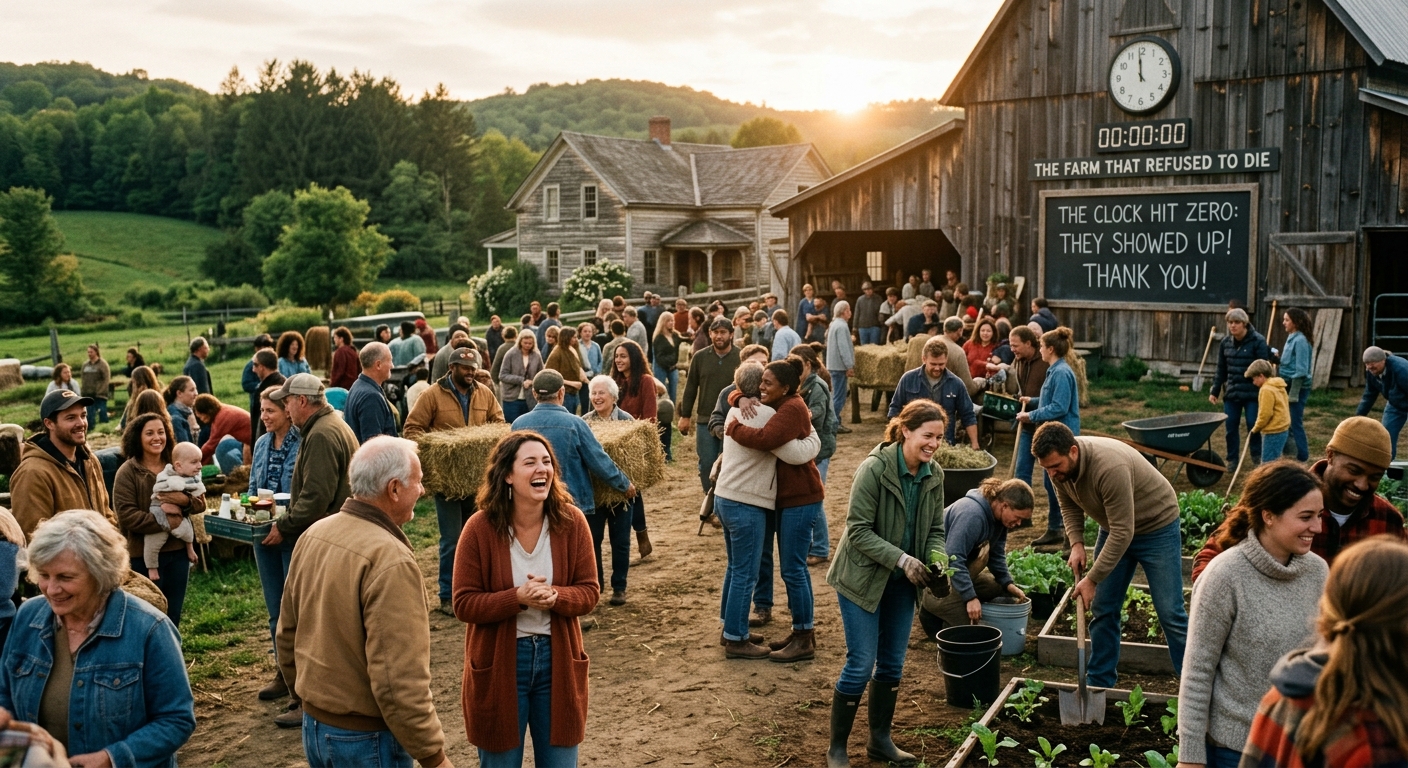
People simply started showing up.
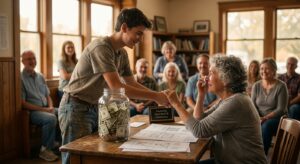
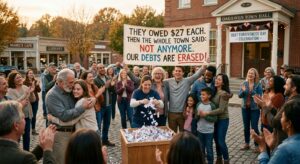
Not online. Not through a payment portal. In person, on the gravel driveway of the Hargrove farm, in pickup trucks and sedans and one elderly woman who came in a church van driven by her grandson. They came with envelopes. They came with cashier’s checks. They came with cash folded inside handwritten notes. One man drove three hours from across the state after seeing the story shared in a farming Facebook group. A group of high school students from a nearby FFA chapter arrived in a caravan, having pooled together money from a bake sale they had organized the previous weekend.
By 9:47 a.m., two hours before the auction was set to begin, Meg stood in the driveway holding a total that exceeded the amount needed to stop the foreclosure.
She did not say anything for a long moment. She just looked out at the crowd gathered in the yard and then back at the barn.
Then she sat down on the porch steps and cried, and the crowd let her.
What the Community Said Afterward
In the days following, several people who contributed shared why they came. Their words reveal something profound about what this moment meant beyond the Hargrove family itself.
- Roy Castellano, local farmer: “When one farm goes under, it doesn’t just affect that family. It affects every farmer around them. It affects the equipment dealer, the grain elevator, the diner where we all have breakfast. We save one farm, we’re really saving a whole web of things.”
- Gloria Ferris, retired banker: “I spent 30 years in finance. I’ve seen the system fail good people. When I have a chance to be part of fixing that, even once, I take it.”
- Anonymous donor, via note left in an envelope: “My family lost our farm when I was 12. I never got over it. I hope this helps someone not have to carry that.”
- FFA student, age 17: “We learned about agriculture policy and rural economics in class. But this made it real. This is somebody’s whole life.”
The Larger Picture: Why This Story Matters
It would be easy to frame what happened to the Hargroves as a feel-good exception, a lucky miracle that most struggling farmers will never experience. And there is truth in that. Most foreclosures happen quietly, without viral posts or crowdfunded rescues. Most families pack their things and drive away, and the land gets absorbed into a larger operation or sits fallow while investors wait.
But what happened at Hargrove Farm also points to something real and actionable. Community-supported agriculture networks, rural legal aid organizations, and farm preservation nonprofits exist in most states and are consistently underfunded and underutilized. The infrastructure for saving family farms is there. What is often missing is the activation, the moment when enough people realize the stakes and choose to show up.
Meg has since started working with a regional farming advocacy group to help other families facing similar situations get connected to resources before they reach the crisis point. “I don’t want anyone to have to wait until foreclosure morning for help to arrive,” she said in a recent interview. “That was almost too late for us. For someone else, it might actually be too late.”
The Farm Today
The Hargroves are still farming. The irrigation system works. The debt has been restructured into manageable payments with the help of a USDA mediation program Gloria connected them with. Last fall’s harvest was the best in five years.
Dale still sits at the kitchen table every morning, in the same chair where his grandfather once sat. He drinks his coffee. He looks out at the land.
Some mornings, Patrice says, he still seems a little stunned that it is all still there.
She doesn’t think he will ever fully get over that Tuesday morning in March, the gravel driveway filling up with strangers, the envelopes in Meg’s hands, the barn still standing in the background like it had been there all along and intended to keep standing for a good while yet.
She doesn’t think any of them will. And she doesn’t think they should.
How You Can Help Families Like the Hargroves
If you want to support family farms in your region, here are some concrete places to start:
- Look up your state’s Farm Service Agency (FSA) office for emergency loan and mediation programs
- Support organizations like the National Family Farm Coalition or Farm Aid
- Join or donate to a local Community Supported Agriculture (CSA) program
- Follow and amplify rural farming advocacy groups on social media
- When you see a story like Meg’s, share it. Sometimes that is the whole difference.