
🎧 Listen to this story
Narrated by Leda · 7,295 characters
The Visit I Almost Cancelled
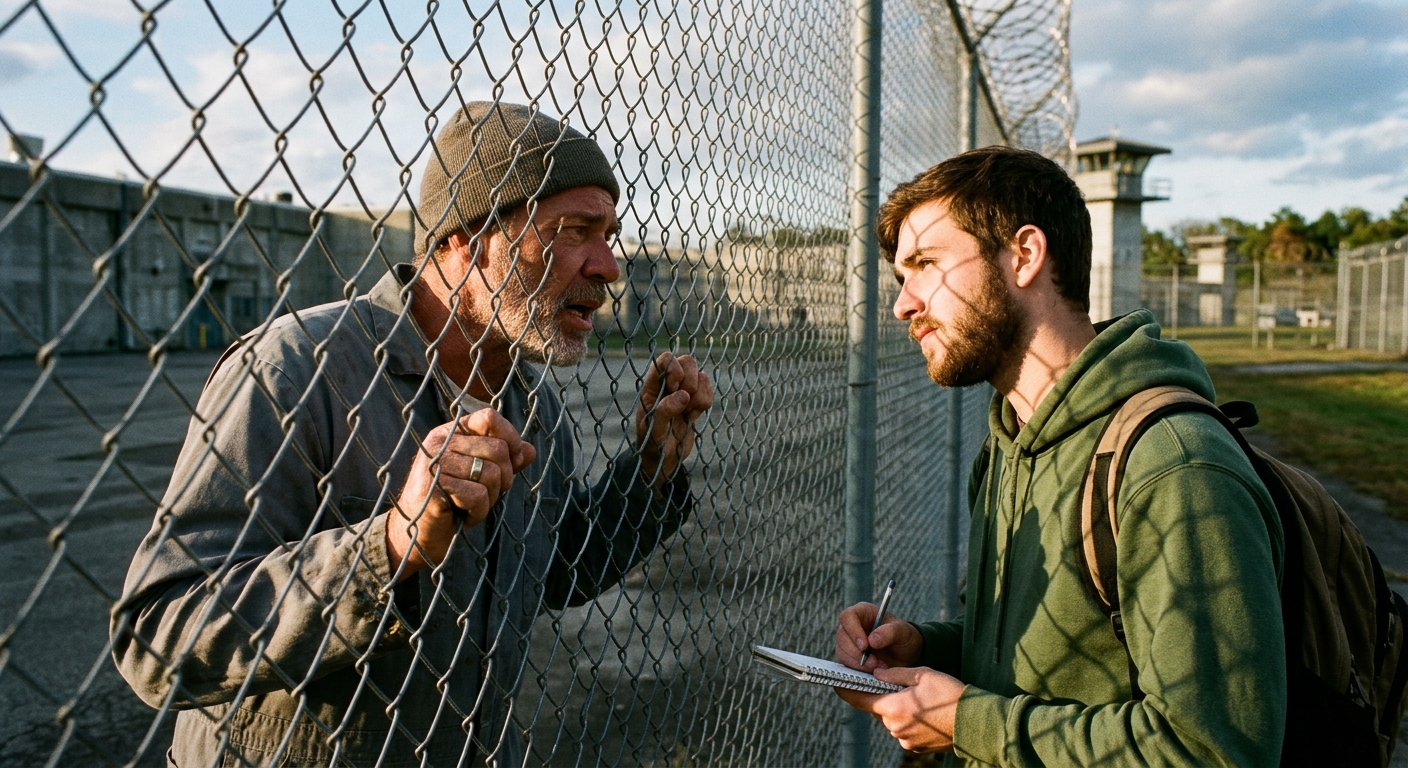
I almost did not go. I had signed up for a volunteer literacy program at a state correctional facility six months earlier, full of good intentions and nervous energy. But on the morning of my first visit, I sat in my car in the parking lot for fifteen minutes, engine running, palms sweating, wondering what I had gotten myself into.
I went in anyway. And nothing has been the same since.
What follows is not a story about redemption in the way movies depict it, with swelling music and a perfectly timed breakthrough. It is quieter than that. More ordinary. And because of that, far more powerful.
Meeting Marcus
The program paired volunteers with inmates who were working toward their GED. I was assigned to a man I will call Marcus, a soft-spoken man in his mid-forties who had already been incarcerated for eleven years and had, as the program coordinator told me quietly, at least six more ahead of him.
I expected to feel sorry for him. I expected him to feel sorry for himself. Neither of those things happened.
In our first session, Marcus pushed aside the workbook I had brought, looked at me directly, and said, “Before we do this, tell me something you are genuinely grateful for today.”
I blinked. I was the volunteer. I was supposed to be asking the questions. I fumbled through an answer about my morning coffee and my daughter laughing at breakfast. He nodded slowly, like I had said something worth savoring.
“Hold onto that,” he said. “That is the whole thing right there.”
What Freedom Actually Means
Over the following months, I met with Marcus almost every week. We worked through grammar exercises and reading comprehension, but what I was really receiving was an education I had never signed up for.
Marcus had a philosophy that he had developed over years of quiet reflection, through reading, journaling, and what he called “the hard work of sitting with yourself when there is nowhere else to go.”
His central belief was simple but startling: freedom is not a location. It is a practice.
“People walk around out there,” he told me one afternoon, gesturing vaguely toward the wall, “and they are imprisoned by things they cannot even name. Regret. Fear of what others think. The feeling that they are always behind, always falling short. That is a cage too. Just one you cannot see.”
He was not romanticizing incarceration. He was clear-eyed and honest about the weight of his circumstances, the loss of time, the grief of missing his children growing up, the daily indignities of institutional life. He did not minimize any of it. But he had made a deliberate choice about what he could and could not control.
The Three Lessons That Stayed With Me
1. Attention Is the Rarest Form of Luxury
Marcus read voraciously, anything the library cart brought him. He described books with a reverence I had not felt since childhood, when stories still had the power to transport completely. He was not distracted while reading. He was fully inside the pages.
“You can read a hundred books,” he said, “or you can read ten and actually live inside them. Most people out there are so busy acquiring experiences they never actually have one.”
I thought about my own phone, sitting in my car because electronics were not permitted inside. I thought about how many meals I had eaten while scrolling, how many sunsets I had photographed instead of watched. Marcus had no phone. No social media. No notifications pulling his attention in seventeen directions. And he was, without question, one of the most present human beings I had ever encountered.
2. Bitterness Is a Choice, and So Is Its Alternative
I asked Marcus once, carefully, whether he was angry. He was quiet for a long moment.
“I was,” he said. “For years. And it ate me alive from the inside. It did not touch anyone I was angry at. It just hollowed me out.”
He described the decision to release his bitterness not as a single moment of forgiveness, but as a daily, sometimes hourly, recommitment. “Some mornings I wake up and the anger is right there waiting,” he admitted. “And I have to choose again. Every single day.”
This was not passive acceptance or defeat. It was active, deliberate work. The kind most of us avoid because it is harder than staying resentful.
3. Your Inner World Is the Only Territory You Truly Own
Perhaps the most profound thing Marcus ever said to me came during a session when I was complaining, somewhat embarrassingly in retrospect, about a conflict with a coworker. He listened patiently, then said:
“They can tell you when to eat, when to sleep, when to walk outside. They cannot tell you what to think about while you are doing it. That space, right there, is yours forever. Most people never even move into it.”
He was talking about the interior life. The cultivation of an inner world rich enough to sustain you regardless of external circumstances. Philosophers have written about this for centuries, from the Stoics to Viktor Frankl. But hearing it from a man who was living it, in conditions most of us cannot imagine, made it land differently.
What I Carried Home
I want to be careful here not to wrap this story too neatly. Marcus is still incarcerated. His situation is not a feel-good footnote. The systemic failures that contribute to mass incarceration are real and serious. Individual resilience does not erase institutional injustice.
And yet, the personal lessons he shared with me were genuine gifts. Things I return to regularly, especially on days when I feel trapped by my own life, by deadlines, by comparison, by the relentless sense that I am not doing enough, being enough, living enough.
On those days, I ask myself what Marcus would say.
He would probably ask me what I was grateful for. He would remind me that the cage I am sitting in is one I built and can dismantle. He would tell me to move into my inner life and stop subletting it to anxiety and distraction.
The Unexpected Gift of Showing Up
I went to that prison to teach a man to read more fluently. I came away having learned to see more clearly.
That is the strange alchemy of genuine human connection across difference. You think you are the one giving, and then you realize, somewhere along the way, that the exchange has been far more equal than you assumed. Perhaps more generous in the direction you least expected.
Marcus passed his GED exam on a Tuesday in October. The program coordinator sent me a brief email with no details, just the result and a single line: “He asked me to tell you.”
I sat with that for a long time. He had thought of me in a moment of personal victory. A man with very little had thought to share something with me.
If that is not a lesson in abundance, I do not know what is.
A Question Worth Sitting With
If someone removed every external distraction from your life, every screen, every obligation, every noise, what would be left? Would you find richness there, or emptiness? Would you know how to simply be with yourself?
Marcus did not choose his circumstances. But he chose, fiercely and repeatedly, what to do with them. He built a life of meaning inside a system designed to strip meaning away.
Most of us have far more room to work with than we use.
That might be the most uncomfortable truth he ever handed me, and the most valuable.