🎧 Listen to this story
Narrated by Kore · 7,351 characters
Nobody Knew Their Neighbors Anymore
In 2019, Maria Delgado moved into a quiet suburb of Columbus, Ohio with her two kids, a handful of boxes, and a nagging feeling that something was missing from the street she now called home. People pulled into their driveways, clicked their garage doors shut, and disappeared. Weekends passed without a single wave exchanged over a fence. Her kids played in the yard alone. She smiled at passersby who mostly looked at their phones.
It wasn’t unfriendly, exactly. It was just… disconnected. And Maria, who had grown up in a tight-knit Puerto Rican neighborhood in Chicago where everyone knew everyone’s grandmother, felt the absence deeply.
“I kept thinking, if something happened to me or my kids, would anyone even notice?” she recalled in a recent conversation. “That thought scared me more than any crime statistic.”
So she did what she knew how to do. She knocked on doors.
The Watch That Started With a Flyer
It began simply enough. A string of car break-ins on Maple Crest Drive prompted Maria to print out 40 flyers and walk them to every door on her block. The flyer invited neighbors to a meeting at her kitchen table to talk about safety, share contact information, and look out for one another.
Eleven people showed up. That felt like a miracle.
They exchanged phone numbers, started a group chat, and agreed to keep an eye on each other’s homes. Standard neighborhood watch stuff. But then something unexpected happened in that group chat. Someone mentioned their elderly mother had no one to drive her to chemotherapy appointments. Within 24 hours, three volunteers had signed up to take her.
“That was the moment I realized this wasn’t just about stopping car break-ins,” Maria said. “People were lonely. People needed help. They just hadn’t had a place to ask.”
From Safety Alerts to a Living, Breathing Network
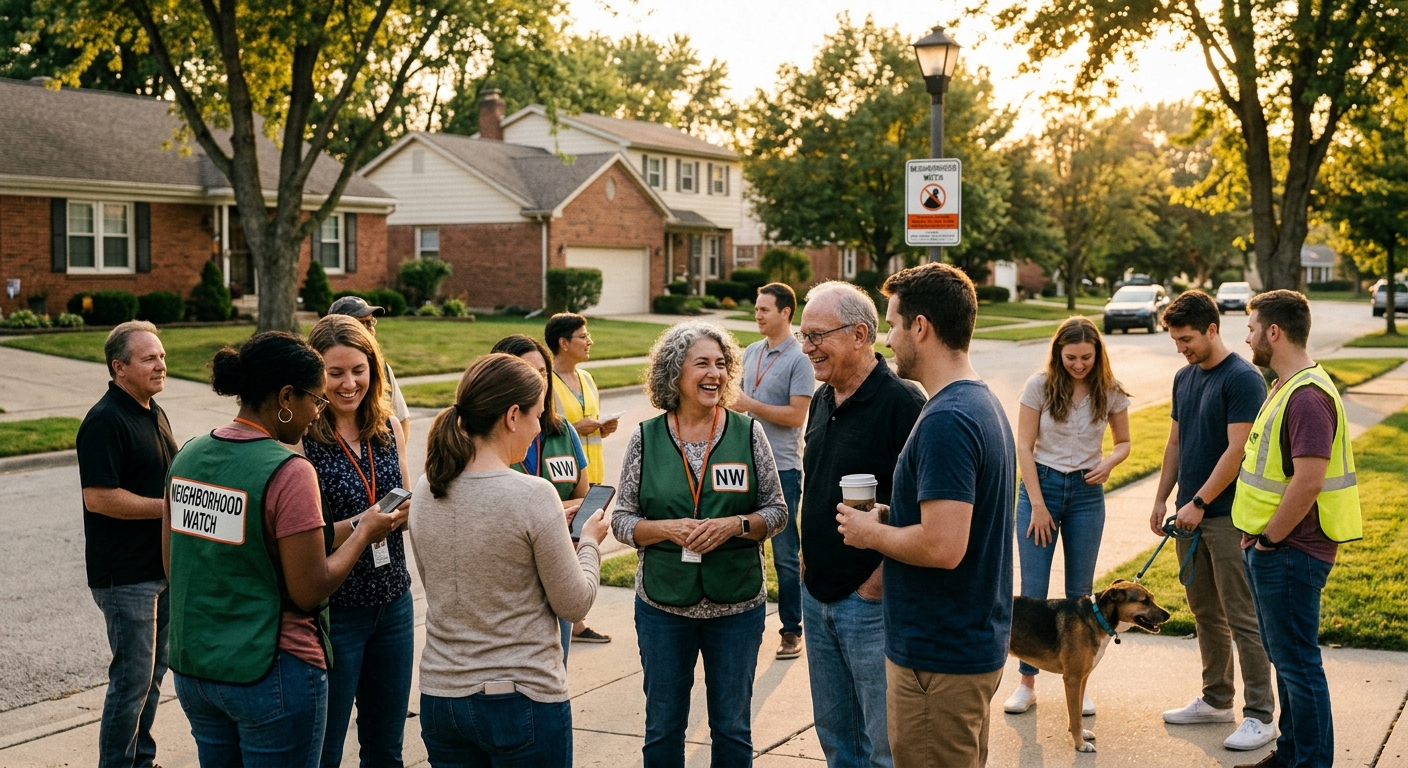
Over the next six months, the group chat grew from 11 contacts to over 200 households across four connected streets. Maria created a simple shared document, a kind of neighborhood directory of needs and offers. People listed what they could give, rides, meals, childcare, handyman skills, dog walking, grocery runs, and what they sometimes needed.
What emerged looked less like a neighborhood watch and more like a mutual aid network built on genuine relationship.
Here is a snapshot of what the network provided in its first full year:
- 340+ volunteer hours logged by residents helping neighbors with tasks like yard work, moving furniture, and home repairs
- A weekly meal train that delivered home-cooked dinners to families dealing with illness, new babies, or loss
- A free lending library of tools, kitchen appliances, and kids’ sports equipment, housed in a converted shed donated by a retired contractor on the block
- A buddy system for seniors, pairing younger residents with older neighbors for weekly check-in calls and occasional companionship visits
- Emergency childcare coordination for parents who faced sudden work conflicts or medical appointments
The Skeptics, the Converts, and the Man Who Almost Didn’t Open the Door
Not everyone was immediately on board. Tom, a retired electrician in his 70s who had lived on Maple Crest for 32 years, initially dismissed the whole thing as “internet nonsense.” He didn’t join the group chat. He didn’t come to the first three meetings.
Then last winter, he had a fall on his icy porch steps. He lay there for nearly twenty minutes before a neighbor, part of the buddy system, happened to walk by.
Tom is now one of the network’s most active volunteers. He runs a free minor electrical repair service for elderly and low-income residents on the block. “I spent my whole career being useful to strangers,” he said. “Took a fall on my own porch to realize I could be useful to my neighbors too.”
Stories like Tom’s became the heartbeat of what Maria had built. Not dramatic rescues, not viral moments, just ordinary people deciding to show up for each other in ordinary ways.
What Maria Learned About Community
When asked what surprised her most about the whole journey, Maria didn’t talk about logistics or spreadsheets. She talked about trust, and how long it actually takes to build it.
“People don’t open up right away. They test the water. They watch to see if you actually follow through,” she explained. “Community isn’t a launch. It’s a practice. You have to keep showing up even when the enthusiasm fades.”
She also learned that structure matters. Warmth alone doesn’t sustain a network. She created simple rotating leadership roles so no single person burned out. She set up a quarterly in-person gathering, a block potluck where people brought dishes from their cultural backgrounds. She established basic agreements about how the group handled conflict.
These unglamorous details, the ones nobody posts about on social media, are what kept the network functioning long after the initial excitement wore off.
Seven Things Any Neighbor Can Do to Start Something Like This
Maria is the first to say she had no special qualifications. No nonprofit background. No community organizing degree. Just a kitchen table and a willingness to try. Here is what she recommends to anyone thinking about starting something similar:
- Start with one specific, concrete reason to gather. Safety, a shared concern, or a neighborhood improvement project gives people a low-commitment reason to show up.
- Keep the first meeting small and informal. A living room or a back porch works better than a community center for building real connection.
- Create a simple way to track needs and offers. A shared document, a bulletin board, or even a physical notebook works. Make it easy to update.
- Celebrate small wins loudly. When someone gets a ride they needed or a meal they couldn’t have made themselves, tell the story in the group. Recognition fuels momentum.
- Build in leadership rotation early, before anyone burns out. Spread the responsibility so the network doesn’t depend on one person’s energy.
- Host food-centered gatherings regularly. Eating together is one of the oldest trust-building rituals humans have. Use it shamelessly.
- Be patient with the skeptics. The people who resist most at first often become the most committed once they see the network deliver on its promises.
A Neighborhood That Knows Its Own Name Now
Today, Maple Crest and its surrounding streets operate with a quiet confidence that wasn’t there five years ago. Residents describe knowing not just their immediate neighbors, but families three streets over. Kids move between yards freely. Seniors have people checking on them. New families moving in receive a welcome packet and an invitation to the next potluck.
Crime in the area has dropped, though Maria is careful not to take sole credit for that. “Lots of factors play into safety,” she said. “But I do think people who feel seen and connected are less likely to fall through the cracks, and more likely to step up for each other.”
That, more than any crime statistic, is what she set out to create. A place where falling through the cracks is harder to do, because there are enough hands nearby to catch you.
She started with a flyer. She built a neighborhood. And somewhere along the way, 200 households discovered that community was never really missing. It was just waiting for someone to knock on the door first.