🎧 Listen to this story
Narrated by Sadachbia · 7,424 characters
A Career Measured Not in Procedures, But in Presence
Most of us will spend our lives trying to avoid thinking about death. We change the subject, we postpone the conversation, we fill the silence with noise. But for one night nurse named Margaret Calloway, death was not something to be avoided. It was something to be witnessed, honored, and yes, even held.
Over a 34-year career working the night shift at a palliative care unit in rural Ohio, Margaret estimates she was present at the passing of more than 200 patients. Not as a bystander, not as a professional simply checking boxes, but as a human being who made a quiet, personal promise on her very first night on the job: no one would die alone on her watch.
This is her story, told through the moments she carries with her every single day.
The First Promise
Margaret was 24 years old when she started working nights at St. Clement’s Hospital. She had chosen nursing because she wanted to help people heal. What she had not fully prepared for was the reality that healing is not always about getting better.
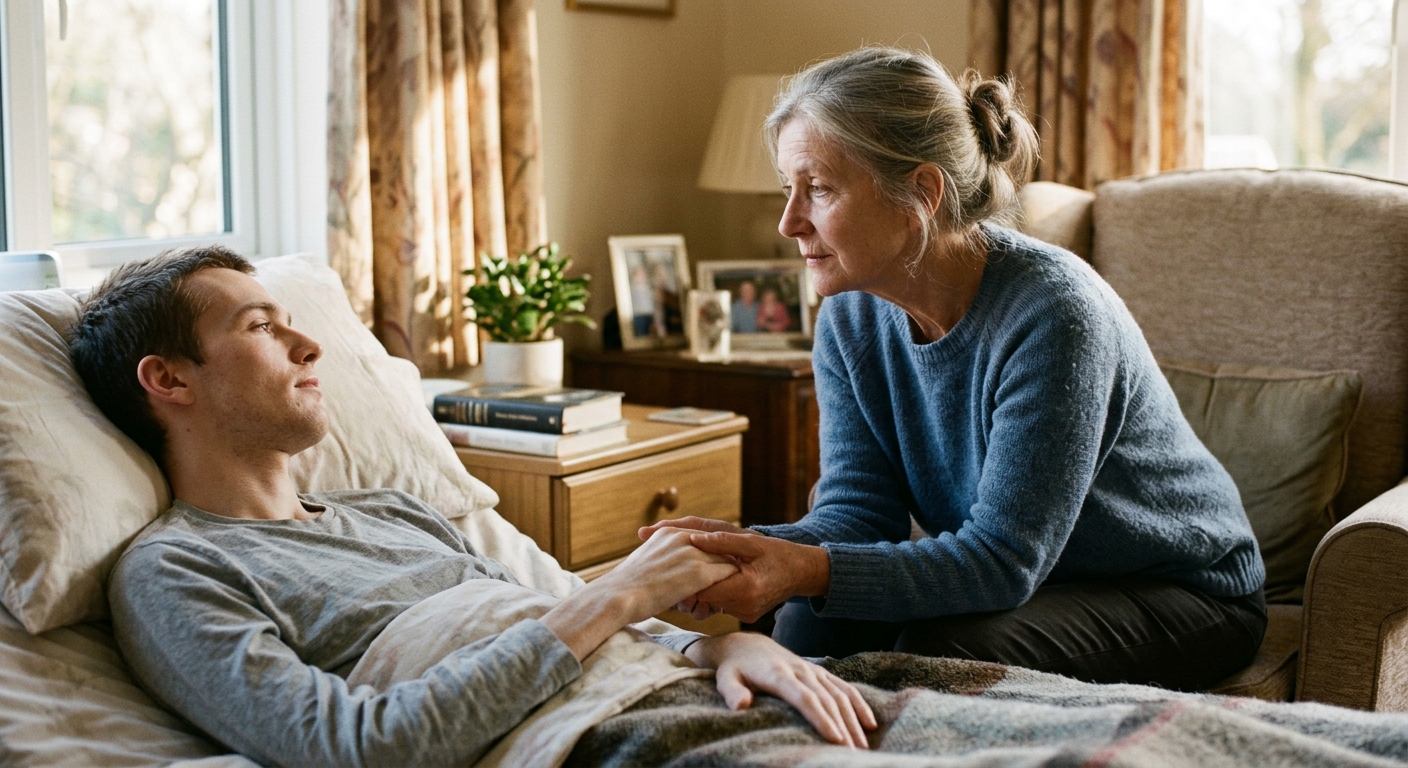
“My first week, an elderly man named Harold passed away at 2 in the morning,” she recalls, her voice steady and warm. “His family lived three states away. The room was quiet and dim, and I realized he was going to leave this world without a single familiar hand to hold. I walked in, pulled up a chair, and I held his hand until he was gone. I don’t know if it helped him. But something in me knew I had to do it.”
That night set the tone for the next three decades.
What 200 Goodbyes Actually Teach You
We asked Margaret what she has learned from being present at so many final moments. Her answers were not what we expected. There was no gloom, no existential dread. Instead, she spoke with a kind of clarity that only comes from sitting very close to the truth for a very long time.
1. People Rarely Regret What They Did. They Regret What They Didn’t Say.
“In all my years, I never once heard someone wish they had worked more hours or earned more money,” Margaret says. “But I heard many people whisper names. Children they had argued with. Siblings they had drifted from. Friends they had meant to call. The unfinished conversations were the heaviest things people carried.”
2. Fear of Death Is Almost Always Fear of Being Forgotten.
“People don’t lie awake terrified of the mechanics of dying,” she explains. “What they fear is disappearing without having mattered. That their life won’t have left a mark. I started asking patients to tell me something they were proud of, even something small. You would be amazed how that single question could change the energy in a room.”
3. Touch Is a Language That Doesn’t Require Words.
As cognitive function fades in final hours, Margaret noticed something remarkable: even patients who could no longer speak would respond to a hand placed gently in theirs. A squeeze. A slight relaxation of the jaw. “The body knows it is not alone,” she says. “That matters more than we give it credit for.”
4. Families Need Permission to Let Go.
One of the most profound roles Margaret found herself playing was not with the patient, but with the family gathered around the bed. “Sometimes a person is holding on because they can feel their loved ones are not ready to release them,” she says. “I have whispered to families, gently, that it is okay to tell their person it is okay to go. And so many times, within minutes, that person found peace.”
5. Ordinary Moments Are the Ones People Return To.
“I expected people to talk about weddings and graduations in their final days,” Margaret admits. “And some did. But just as often, they talked about a Saturday morning with nothing to do. A dog asleep on their feet. The smell of their mother’s kitchen. The ordinary things turned out to be extraordinary all along.”
The Patients Who Changed Her
Among the 200-plus individuals whose hands Margaret held, a few have stayed with her in ways she finds difficult to fully articulate.
There was a 91-year-old retired schoolteacher named Dorothy, who spent her final hours reciting poetry from memory. “She went through Frost, Dickinson, Whitman,” Margaret says, laughing softly. “I sat there thinking, this woman’s brain is giving her the most beautiful gift right at the end. She was smiling.”
There was a 38-year-old father of two who asked Margaret to write down a message for his children. She sat with a notepad and transcribed his words for nearly an hour. “He was so deliberate. He chose every word carefully. I kept that note in my own memory for years. It reminded me that love is not passive. It is active, intentional, and worth the effort even when it costs you.”
And there was a woman named Ruth who had no family, no visitors, and no known next of kin. She had spent most of her life drifting, working odd jobs, living simply. “Ruth grabbed my hand on her last night and said, ‘I think I did alright.’ And I looked at her and I said, ‘I think you did too.’ She smiled and closed her eyes.” Margaret pauses. “I think about Ruth a lot. She taught me that a life doesn’t have to be large to be enough.”
The Toll Nobody Talks About
It would be dishonest to write this story without acknowledging the weight that comes with Margaret’s calling. Compassion fatigue is real, and it visits even the most resilient caregivers.
“There were years I drove home in tears,” she says plainly. “Years I questioned whether I could keep doing it. Grief accumulates. You carry pieces of people with you and eventually you have to learn how to hold all of that without being crushed by it.”
Her strategies were not glamorous. Long walks with her dog. A journal she has kept since 1998. A therapist she sees every few months. And most importantly, a community of fellow nurses who understood without needing explanation.
“We have to normalize the grief of caregivers,” she says firmly. “It is not weakness to feel it. It is what makes you human enough to do the job well.”
What She Wants You to Take Away
Margaret retired two years ago, though she volunteers at a local hospice on weekends because, in her words, “I don’t know how to stop showing up.”
When asked what she most wants people reading her story to understand, she doesn’t hesitate.
“Call the person you’ve been meaning to call. Say the thing you keep almost saying. Don’t wait for a perfect moment because the perfect moment is this one,” she says. “I have held the hands of people who would have given anything for five more minutes with someone they loved. Don’t make them wait. Don’t make yourself wait either.”
She leans back and looks out the window before adding one last thought.
“Death is not the opposite of life. Distance is. Silence is. Not showing up is. Death just makes it final. But we have so much time before that. So much time to choose differently.”
A Final Reflection
Margaret Calloway did not set out to become a philosopher or a spiritual guide. She set out to take care of people on the hardest nights of their lives. But somewhere between the first hand she held and the last, she gathered a kind of wisdom that no textbook could have given her.
If her 34 years have taught us anything, it is this: presence is the most profound gift we can give another human being. Not advice, not solutions, not grand gestures. Just showing up, staying close, and making sure no one faces the dark alone.
That is a lesson worth learning long before we need it most.