🎧 Listen to this story
Narrated by Kore · 7,162 characters
When the Water Stops Running, So Does Everything Else
There is a practical reality that rarely makes the news when people talk about domestic violence shelters: the toilets break, the pipes burst, the water heaters fail, and the heating systems give out. These are not dramatic stories. They do not trend on social media. But for the women and children living in those shelters, a broken pipe is not a minor inconvenience. It is one more crisis stacked on top of a mountain of crises they are already trying to survive.
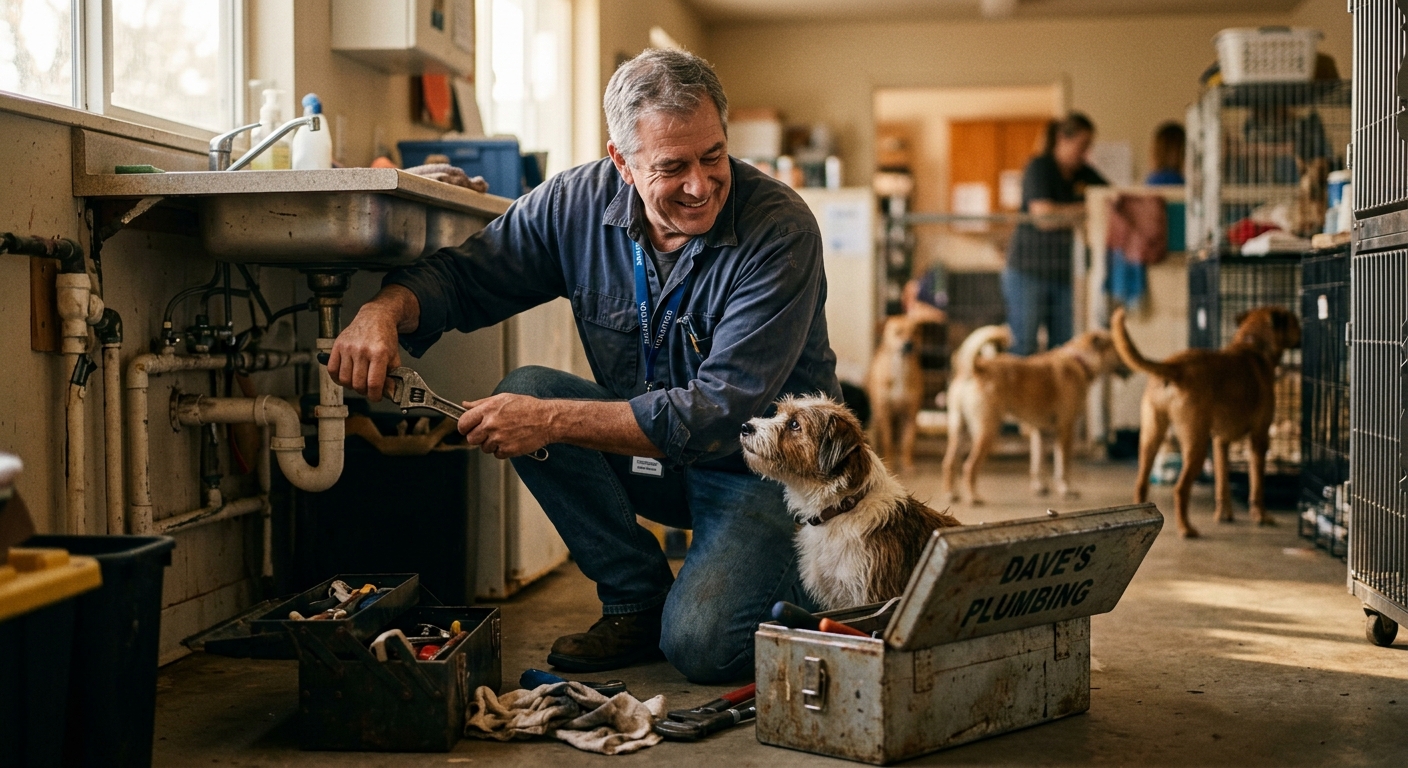
That is where Marcus Tiley comes in. A licensed master plumber from Columbus, Ohio, Marcus has spent the last eleven years showing up at domestic violence shelters across his region with his toolbox, his truck, and a simple policy he never wavers on: no invoice, no payment, no exceptions.
How It Started: A Leaky Faucet and a Conversation He Could Not Forget
Marcus did not set out to become an unofficial lifeline for shelters in need. In 2013, he was called in by a friend who worked at a local shelter as a paid job. What he expected to be a straightforward repair turned into something that changed his perspective completely.
‘I fixed the issue, and then the director walked me through the place,’ Marcus recalled in a recent interview. ‘She showed me where seventeen women were living with their kids. She told me they had a broken shower on the second floor that had been out for three months because they could not afford to fix it. Three months. These women were already dealing with so much, and they were sharing one working bathroom between seventeen people.’
Marcus fixed the shower. He did not charge for it. And he drove home that evening thinking about how many shelters were dealing with the same quiet, unglamorous struggles.
Within a month, he had contacted six more shelters in his area. Within a year, he had formalized his commitment. He set aside two Saturdays per month dedicated entirely to shelter maintenance calls, free of charge. His small plumbing business, Tiley & Sons, absorbs the cost of parts and labor. He has never once asked for a tax write-off or public recognition.
What a Day of Volunteer Plumbing Actually Looks Like
If you imagine a montage of heartwarming moments set to gentle music, think again. Marcus describes his shelter days as exactly what they are: real work, often in difficult conditions, with real stakes.
A typical Saturday might involve:
- Replacing a corroded water heater that has been limping along for two winters
- Fixing a backed-up drain in a shared bathroom used by a dozen residents
- Repairing a toilet that children have been afraid to flush because of rattling pipes
- Checking for slow leaks that, if left unchecked, could cause mold and structural damage
- Installing new fixtures donated through a partnership he built with a local hardware supplier
He brings his apprentices with him when schedules allow, turning the visits into training opportunities. Several of them have since started their own volunteer arrangements with nonprofits in neighboring counties.
The Ripple Effect: One Plumber, Dozens of Lives
It would be easy to frame this story as simply about plumbing. But shelter directors who work with Marcus are quick to point out that what he provides goes far beyond functional pipes.
‘When basic things in this building work properly, it sends a message to the women staying here,’ said one shelter director who asked to remain anonymous to protect her residents. ‘It says: you matter. Your comfort matters. Someone cares enough to make sure you have hot water and a working bathroom. That sounds small, but for people who have spent years being told they do not matter, it is anything but small.’
Shelters operate on razor-thin budgets. Every dollar that does not go toward an emergency plumbing call can go toward counseling, legal aid, childcare, or job training. Marcus estimates that over eleven years, his free labor and donated parts have saved shelters in his network somewhere between $180,000 and $220,000. He calculated this once, reluctantly, at the request of a reporter, and then quickly changed the subject.
Why He Does Not Want to Be Called a Hero
Ask Marcus if he considers himself a hero and he will give you a look that makes clear he finds the question slightly annoying.
‘I fix pipes,’ he said flatly. ‘That is what I know how to do. I am not running into burning buildings. I am not doing anything that requires courage. I am just using a skill I already have. The question I ask myself is: why would I not do this?’
That reframe is important. Marcus does not talk about sacrifice. He talks about utility: he has a skill, there is a need, and the connection between the two is obvious to him. He challenges other tradespeople and service professionals to think the same way.
‘Electricians, HVAC guys, roofers, painters. Every shelter I have ever visited has a list of things they need done that they cannot afford. If every skilled tradesperson in America committed to one shelter, one day a year, the problem would basically disappear.’
Building a Quiet Network
What began as one man’s personal commitment has quietly grown into something larger. Marcus now coordinates with a loose network of tradespeople in Ohio, Indiana, and Kentucky who have adopted similar practices. There is no organization, no 501(c)(3), no website. It runs on phone calls and word of mouth.
‘I do not want to turn it into a thing,’ he said. ‘The moment it becomes a branded charity with a logo, it changes. People start doing it for the recognition. I just want people to do it because it is the right thing to do.’
What Shelters Want You to Know
For shelter directors who were asked what they wish the public understood about their facilities, the answers were consistent and clear:
- Shelters are chronically underfunded, and maintenance costs are a constant crisis
- Skilled volunteers are often more valuable than cash donations
- Most shelters have a running list of repairs they cannot afford and have learned to live with
- Reaching out and asking what is needed, rather than assuming, makes an enormous difference
- Consistency matters: one reliable person who shows up regularly is worth more than ten people who help once
The Lesson Marcus Did Not Mean to Teach
There is a quiet philosophy embedded in what Marcus Tiley does, even if he would resist the word philosophy entirely. It is this: the most powerful acts of service are often the ones that require no reinvention of yourself. They ask only that you show up, use what you already have, and direct it toward someone who needs it.
No one is waiting for you to become extraordinary. The women in those shelters do not need a hero. They need hot water. And sometimes, the most profound thing a person can do is simply show up on a Saturday morning with a wrench, a willingness to work, and a policy of never sending a bill.
If you are a tradesperson, contractor, or service professional interested in connecting with domestic violence shelters in your area, reach out directly to your local shelter network or search for your regional coalition through the National Domestic Violence Hotline at thehotline.org.