🎧 Listen to this story
Narrated by Aoede · 8,215 characters
The Whistle That Changed Everything
Every Saturday morning, rain or shine, the sound of a whistle cuts through the early air of the Riverside District, one of the city’s most chronically underfunded neighborhoods. It is followed by the thudding of sneakers on patchy grass, shouts of encouragement, and the unmistakable energy of girls who have somewhere to be and someone who believes in them.
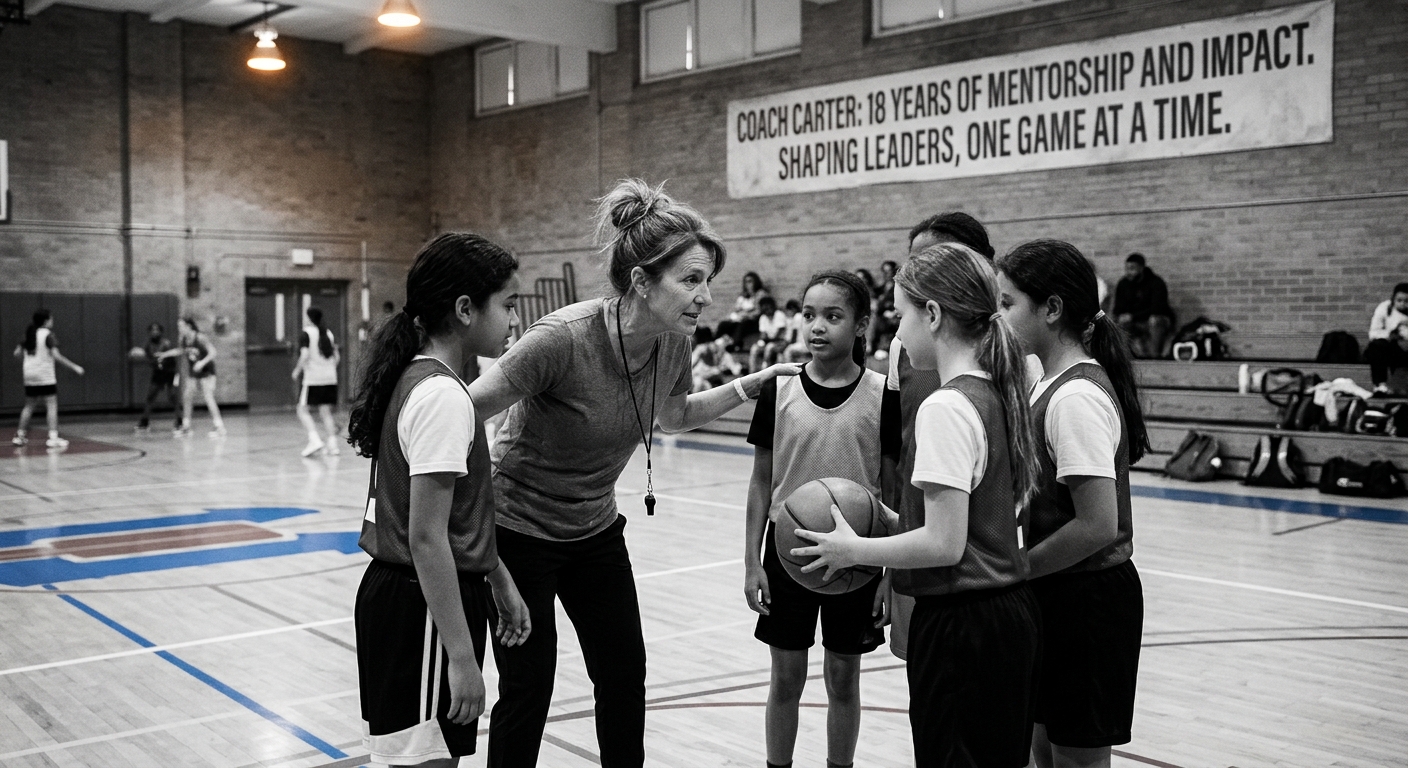
That someone is Denise Calloway, 54, a former high school soccer player turned middle school art teacher who has been coaching a free girls’ soccer program in her community for eighteen consecutive years. No salary. No sponsorship for most of those years. No complaints.
“People always ask me why I do it for free,” Denise says, lining up orange cones on the field before practice. “But honestly, that question never really made sense to me. You don’t ask a mother why she takes care of her kids for free. This is just what you do when you love something and you love people.”
Where It All Started: A Field, a Ball, and a Problem
In 2006, Denise noticed something that bothered her deeply. The boys in her neighborhood had options. There were basketball leagues, football teams, and informal pickup games on every corner. The girls? They had very little. The nearest organized sports program for young girls required transportation, registration fees, and equipment costs that many local families simply could not afford.
“I watched these brilliant, energetic girls just kind of disappearing after school,” Denise recalls. “Some were getting into trouble, not because they were bad kids, but because they had nothing. No structure, no place to channel all of that power they had inside them.”
With a borrowed ball, a hand-painted sign, and a conversation with the parks department to secure field time on weekends, Denise launched the Riverside Girls Soccer Club. The first season had eleven players. Today, across three age divisions, the program serves more than ninety girls every year.
What a Typical Saturday Looks Like
To understand what Denise has built, you have to show up. Really show up. By 7:45 a.m., parents and older siblings are setting up folding chairs along the sideline. The youngest group, ages six through eight, arrive in mismatched cleats and oversized shin guards, giggling and dragging water bottles behind them. The older girls, some now in high school, arrive with focus in their eyes.
Practice runs for three hours and covers far more than soccer. Denise weaves in conversations about teamwork, conflict resolution, and what she calls “life positioning,” which is her term for understanding where you stand and where you are trying to go.
“Soccer is just the vehicle,” she explains. “We are really teaching them to move through space with confidence, to communicate, to fail and get back up. Those are skills that go way beyond this field.”
The Numbers Behind the Commitment
Over eighteen years, the scope of what Denise has quietly accomplished is staggering:
- Over 800 girls have passed through the program since its founding in 2006.
- 14 former players have gone on to play soccer at the collegiate level.
- 3 girls from the program have received full academic scholarships where soccer played a direct role in their applications.
- Zero registration fees have ever been charged to families.
- Hundreds of volunteer hours contributed annually by former players who come back to help coach.
For many years, Denise covered equipment costs out of her own teacher’s salary. She bought cleats at thrift stores, collected donations of old uniforms, and organized bake sales to fund tournament entry fees. In 2019, a small local grant finally helped ease the financial pressure, but the program’s heart has always run on something harder to quantify than money.
The Girls Who Grew Up and Came Back
One of the most remarkable testaments to what Denise has built is the pipeline of former players who return to volunteer as assistant coaches and mentors. Maya Torres, now 26, started with the program at age eight and is currently in her fourth year of volunteering every weekend.
“Coach Denise gave me somewhere to belong when I needed it most,” Maya says. “My family was going through a really hard stretch when I was about ten. My mom was working two jobs and couldn’t always be present. But every Saturday, I had practice, and that was my anchor. I owe her more than I can explain.”
Maya is now studying to become a physical education teacher. She says the trajectory of her career is a direct line from those Saturday mornings on a patchy field in Riverside.
Another former player, Kezia Odom, now 22, credits the program with teaching her a critical lesson that shaped her character:
“There was a game we lost badly when I was about twelve. I was furious, ready to give up. Coach Denise sat with me after and said, ‘The game doesn’t end when the whistle blows. It ends when you decide it ends.’ I think about that all the time, in soccer and in life.”
Challenges That Would Have Broken Most People
Denise’s eighteen years have not been without serious obstacles. She has navigated field closures, budget shortfalls, neighborhood safety concerns, and the devastation of the pandemic years, during which she organized virtual fitness sessions and mental wellness check-ins for her players when in-person practices were impossible.
“COVID was the hardest,” she says quietly. “Some of our girls were in really difficult home situations. The field had been a safe space for them, and suddenly it was gone. We did what we could through screens, but I won’t pretend that was enough.”
When fields reopened, Denise was one of the first coaches back, mask on, cones spaced apart, doing everything by the book to make sure her girls had somewhere to return to.
She has also faced skepticism over the years from people who questioned why a free community program was “worth taking seriously” as a sporting endeavor. Her response has always been to let the results speak. Several of her players have competed at regional and state levels, earning recognition that no amount of skepticism can erase.
What the Community Says
Local parents speak about Denise with a reverence usually reserved for family. Maria Gutierrez, whose two daughters have both gone through the program, puts it plainly:
“In this neighborhood, you are always looking for people who are actually here, not just passing through or doing a charity project for a year and then leaving. Denise has been here longer than most people’s marriages. She is part of our lives.”
The Riverside District’s city council representative, acknowledging the program in a recent community address, called Denise “the kind of infrastructure that never shows up in a budget but holds a neighborhood together.”
So Why Does She Do It?
Sit with Denise long enough and the “why” becomes obvious in the way questions eventually answer themselves. She lights up watching a shy six-year-old finally kick the ball cleanly for the first time. She tears up a little talking about a former player who texted her from her college dorm last fall. She greets every parent by name, asks about siblings, remembers birthdays.
This is not a side project. This is her purpose, threaded through her everyday life with the same quiet consistency as breathing.
“I don’t think I’m special,” she says, and she seems to genuinely mean it. “I think there are people like me in every neighborhood. People who just decided to show up. I just kept showing up.”
The Lesson We Can All Take From Field 7
The patchy grass of Riverside Park’s Field 7 is not a glamorous venue. There are no bleachers, no scoreboard, no concession stand. But something important and lasting has been built there, one Saturday at a time, for eighteen years.
The lesson is not complicated. It is about consistency over charisma, presence over perfection, and the profound impact of one person deciding that the kids in their community deserve more, and then simply doing something about it, without waiting for permission, funding, or recognition.
Denise Calloway will be back on that field next Saturday. And the one after that. And the one after that.
Some people build monuments. Some people build something better.