
🎧 Listen to this story
Narrated by Kore · 7,548 characters
The Morning Rituals of the World’s Most Unstoppable Octogenarians
Most of us struggle to get off the couch on a Saturday morning. These people are lacing up their shoes, pinning on a race bib, and running 26.2 miles. Oh, and they’re doing it in their eighties.
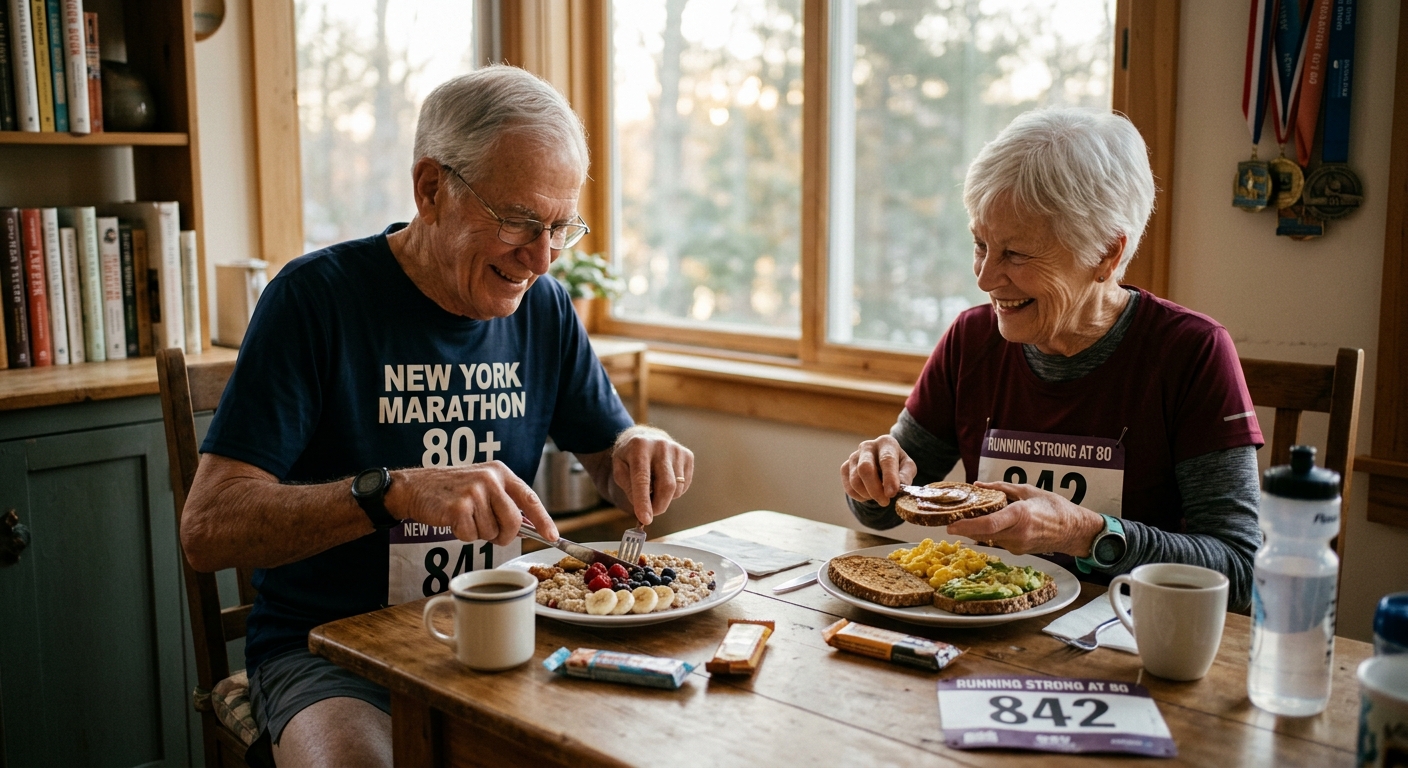
Across the world, a quiet but remarkable community of octogenarian marathon runners is rewriting everything we thought we knew about aging, endurance, and what the human body is capable of. And while their training plans and mental toughness are certainly part of the story, many of them point to something far more ordinary as a cornerstone of their performance: breakfast.
We spoke with coaches, nutritionists who work with masters athletes, and several competitive runners over the age of 80 to find out exactly what fuels their mornings. The answers were surprising, refreshingly simple, and packed with lessons anyone can take to the table.
Meet the Runners
Before we get to the food, it helps to understand who we’re talking about. These are not casual joggers. These are competitive athletes who enter sanctioned races, train year-round, and take their performance seriously. Some have been running since their twenties. Others picked it up after retirement. A few didn’t start until their sixties or seventies.
What they share is a deep, almost reverent relationship with how they nourish their bodies. At 80-plus, there is no room for junk fuel. The margin for error narrows with age, and these runners know it better than anyone.
7 Breakfast Patterns These Athletes Swear By
1. Oatmeal: The Unanimous Champion
If there is one breakfast food that came up in nearly every conversation, it was oatmeal. Not the sugary instant packets, but slow-cooked rolled oats or steel-cut oats topped with real ingredients. Berries, walnuts, a drizzle of honey, sometimes a spoonful of nut butter stirred in for staying power.
“I’ve eaten oatmeal before every long run for thirty years,” said one 83-year-old runner from Oregon who has completed over 40 marathons. “It sits well, it doesn’t spike my blood sugar, and I feel steady for hours.”
Nutritionists confirm this instinct. Oats provide complex carbohydrates that release energy gradually, along with beta-glucan fiber known to support heart health, something especially important for older endurance athletes.
2. Eggs, But Not the Way You Think
Several runners mentioned eggs as a regular part of their pre-training meals, though interestingly, most ate them the evening before a race rather than on race morning itself. Protein takes longer to process, and these athletes have learned through decades of trial and error that a heavy protein load right before a run can slow them down.
That said, on non-race training mornings, scrambled or soft-boiled eggs with whole grain toast showed up frequently. One 81-year-old runner from Florida pairs two eggs with half an avocado every single morning. “My doctor says my cholesterol is perfect. I’ve been doing this for fifteen years,” she said with a laugh.
3. Bananas: The Original Energy Bar
Quick, portable, easy to digest and loaded with potassium, bananas are practically a religion in the distance running world. For octogenarian runners, they serve double duty: they provide fast-acting carbohydrates close to race time and help prevent the muscle cramping that can become more common with age.
More than half the athletes we researched mentioned eating a banana either as part of breakfast or as a standalone snack 30 to 45 minutes before heading out.
4. Greek Yogurt with Real Fruit
Protein, probiotics, calcium for bone density, and a delivery system for antioxidant-rich berries. Greek yogurt came up repeatedly as a morning staple, often layered with blueberries, raspberries, or sliced strawberries. Several runners added a tablespoon of ground flaxseed or chia seeds for omega-3 fatty acids and additional fiber.
Bone density is a genuine concern for older runners, and the calcium and vitamin D connection in fortified dairy products is not lost on this group. These athletes are intentional about every ingredient.
5. Whole Grain Toast with Nut Butter
Simple, effective, and beloved. A slice or two of dense whole grain bread topped with almond butter or natural peanut butter gives a combination of slow-burning carbohydrates and healthy fats that carries runners through long training sessions. Add a few sliced banana pieces on top and you have a pre-run breakfast that any sports dietitian would approve of.
6. Smoothies for the Early-Morning Racers
Some runners struggle to eat solids early in the morning, especially on race day when nerves can suppress appetite. For these athletes, a smoothie bridges the gap. Common combinations include spinach or kale blended with frozen berries, a banana, a scoop of protein powder, and either almond milk or plain kefir.
“I can’t eat at 5 a.m. before a race,” admitted one 80-year-old competitor from California who runs marathons in her age group division. “But I can drink a smoothie. My body knows what to do with it.”
7. Coffee: A Non-Negotiable
Nearly every runner mentioned coffee. Not as an afterthought, but as a deliberate, appreciated part of the morning ritual. Research on caffeine and athletic performance is robust, showing improved endurance, focus, and even reduced perception of effort. For older athletes especially, the mild stimulant effect of a morning cup or two can be a genuine performance aid.
The key, several noted, is moderation and consistency. “I’ve had one cup before every run since 1978,” said one 82-year-old. “I’m not about to stop now.”
What They Avoid
As interesting as what these runners eat is what they consciously leave off the plate. Processed foods, sugary cereals, pastries, and heavy greasy breakfasts were unanimously dismissed. Several runners specifically mentioned cutting back on red meat and reducing sodium intake as they aged. Alcohol the night before a race? Not a chance.
There was also a notable emphasis on hydration. Many of these athletes drink 8 to 16 ounces of water first thing in the morning, before coffee and before food. Dehydration becomes more insidious with age, as the body’s thirst signals grow less reliable.
The Bigger Lesson on the Plate
It would be easy to read this as a story about food. And it partly is. But what these octogenarian marathoners are really teaching us is something about intentionality, consistency, and respect for the body across a lifetime.
They didn’t stumble into these breakfast habits. They arrived at them through decades of paying attention, listening to their bodies, adjusting, and refusing to accept that aging means giving up. Their plates reflect a philosophy: that what you put into your body is a form of self-respect, and that it’s never too late to take it seriously.
Whether you’re 30, 50, or 75, whether you run marathons or just walk around the block, the principles on these breakfast tables translate. Real food. Slow-burning fuel. Consistent hydration. And maybe a good cup of coffee to start the day.
Start Small, Start Tomorrow
You don’t have to run a marathon to eat like someone who does. Pick one thing from this list and add it to your morning routine this week. A bowl of oatmeal with berries. A banana before your walk. A glass of water before your coffee.
The runners who cross finish lines at 80 didn’t get there in a day. They got there one morning at a time, one meal at a time, with quiet discipline and a deep belief that the best years don’t have to be behind them.
Maybe they’re onto something.