🎧 Listen to this story
Narrated by Aoede · 9,713 characters
The Plunge Nobody Expected to Take Twice
It starts as a dare, a bucket list item, or a desperate attempt to feel something different. But for thousands of people around the world, stepping into cold open water for the first time became the beginning of something they never anticipated: a genuine transformation in their mental health, their physical resilience, and their relationship with themselves.
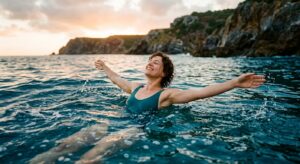
Cold water swimming, once reserved for elite athletes or eccentric winter dippers, has exploded into mainstream wellness culture over the past decade. Wild swimming groups are forming in lakes and rivers across the UK, Ireland, Australia, and the United States. Apps are tracking cold exposure minutes. Social media is filled with red-faced, grinning people climbing out of near-freezing water looking inexplicably alive.
But beyond the trend, there are real people with real stories. And there is real science beginning to explain what is happening beneath the surface.
What Real Swimmers Are Saying
We spoke with swimmers from different walks of life to understand what drew them to cold water and what kept them coming back.
Sarah, 41, Teacher and Anxiety Survivor
Sarah began cold water swimming three years ago after a particularly brutal winter of panic attacks. Her therapist had suggested “something physical” to help regulate her nervous system. A friend invited her to a local lake group, and she almost did not go.
“The first time I got in, I thought I was going to die,” she said, laughing. “My chest locked up, I couldn’t breathe properly, and I wanted to get straight back out. But I stayed for maybe two minutes. And when I got out, something had shifted. My brain had completely stopped spiraling. There was no room for anxiety because every single cell in my body was focused on just being present.”
Within three months, Sarah was swimming four times a week. Her panic attacks, which had been weekly occurrences, became rare events. “I am not saying it cured me,” she is careful to add. “But it gave me a tool that nothing else had given me. It taught me that I could be uncomfortable and survive it.”
Marcus, 55, Retired Firefighter Living with Depression
For Marcus, the road into cold water came after he left a 28-year career with persistent depression and what he describes as a “total flatness” that no medication had fully resolved. A neighbor who practiced cold water immersion convinced him to try a local river on a February morning.
“It was 6 degrees Celsius,” he recalls. “I stood on that bank for ten minutes before I could make myself go in. But when I did, something happened in my brain. There was this massive rush, and for the first time in months, I felt genuinely awake. Not happy exactly, just real. Present. Like the lights had come back on.”
Marcus now leads a community wild swimming group for veterans and first responders dealing with post-traumatic stress. “These are people who don’t respond well to sitting in a circle and talking,” he explains. “But you put them in cold water together, and they open up. They laugh. They support each other. The water does something that words sometimes cannot.”
Priya, 33, New Mother Recovering from Postpartum Burnout
Priya found cold water swimming eighteen months after the birth of her second child, during a period she describes as “losing herself completely.” A short documentary she watched online about open water swimming made her curious enough to try a local lido that kept its pool unheated year-round.
“That first swim was the first hour in two years that belonged entirely to me,” she says. “The cold forced me to be nowhere else but there. I couldn’t think about the baby, the to-do list, the mom guilt. I was just a body in cold water, breathing. And that was enough.”
The Science: What Is Actually Happening in the Body
These experiences are compelling. But what is the biological story? Researchers have been paying close attention, and the findings are genuinely fascinating.
The Cold Shock Response and Nervous System Regulation
When the body enters cold water, it triggers an immediate physiological response known as cold shock. Heart rate spikes, breathing becomes rapid and shallow, and stress hormones flood the system. This sounds alarming, but here is what is interesting: with repeated exposure, the body learns to dampen this response. Regular cold water swimmers show significantly lower cardiovascular and hormonal reactions to cold stress over time.
This adaptation process is believed to translate into broader nervous system regulation, meaning the body becomes better at managing stress responses in general, not just in cold water. A 2021 study published in the journal PLOS ONE found that regular cold water swimmers reported lower levels of tension, fatigue, and negative mood compared to non-swimmers.
Norepinephrine: The Neurochemical Behind the Rush
One of the most cited biological mechanisms behind cold water swimming’s mood-boosting effects is the dramatic release of norepinephrine. Research has shown that cold exposure can increase norepinephrine levels in the brain by up to 300 percent. Norepinephrine is a neurotransmitter and hormone that plays a key role in attention, focus, energy, and mood regulation. It is also a target of several antidepressant medications.
Dr. Susanna Søberg, a leading researcher in cold and heat therapy, has written extensively about how deliberate cold exposure activates metabolic and neurological pathways that support resilience. Her work suggests that the discomfort of cold water is not a side effect to endure, but the actual mechanism producing the benefit.
Inflammation, Immunity, and Physical Recovery
Beyond mental health, cold water immersion has a well-documented relationship with physical recovery and inflammation. Athletes have long used ice baths to reduce muscle soreness and inflammation after intense training. But emerging research suggests that regular cold water swimming, as opposed to isolated post-workout immersion, may have cumulative anti-inflammatory effects.
A landmark case study published in the BMJ Case Reports journal described a young woman whose treatment-resistant depression improved significantly after she began a weekly cold water swimming program. Researchers proposed that the reduction in systemic inflammation may have played a role, given the known links between inflammation and depressive disorders.
The Social and Behavioral Dimensions
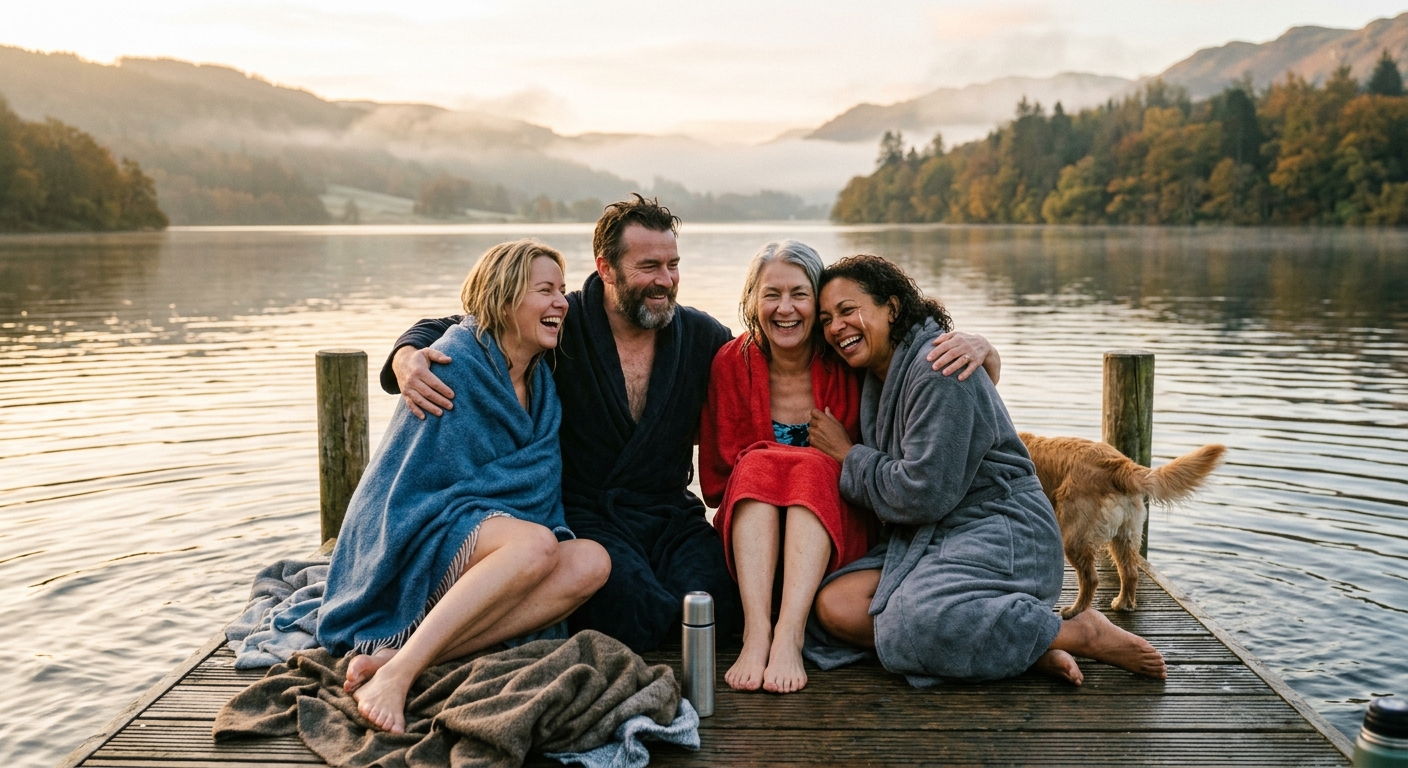
Science does not happen in a vacuum, and neither does cold water swimming. Most people who practice it regularly do so in groups, and researchers believe the social bonding element contributes meaningfully to its benefits. The shared experience of doing something uncomfortable, the laughter, the mutual encouragement, the post-swim coffee ritual: these are not trivial add-ons. They are part of the therapeutic package.
Community-based wild swimming groups have been studied as informal mental health support networks, particularly in the UK where the practice has deep cultural roots. Participants consistently report increased sense of belonging, purpose, and accountability.
7 Things Cold Water Swimmers Say They Gained
- A daily proof of courage: Doing something hard every morning before most people are awake builds a quiet confidence that carries into the rest of the day.
- A genuine reset button: The intensity of cold immersion crowds out rumination, anxiety, and mental noise in a way that is hard to replicate.
- Physical resilience: Regular swimmers report fewer colds, faster recovery from illness, and a general sense of robustness they did not have before.
- Community: Wild swimming groups tend to be remarkably welcoming and diverse, bringing together people who would rarely interact otherwise.
- A new relationship with discomfort: Learning to breathe through cold shock teaches a transferable skill for managing stress and difficult emotions.
- Connection to nature: Open water swimming reintroduces people to natural environments and seasonal cycles in a deeply embodied way.
- Improved sleep: Many cold water swimmers report more consistent and deeper sleep, a benefit supported by research into cold therapy and circadian rhythm regulation.
Is It Safe? What You Need to Know Before You Try
Cold water swimming carries real risks, and it is important to be honest about them. Cold shock can be dangerous for people with certain heart conditions, and hypothermia is a genuine concern for those who stay in too long or swim alone in remote locations. The Royal Life Saving Society and similar organizations in various countries recommend always swimming with others, never diving into cold water, and starting with supervised group swims rather than solo wild swimming.
Beginning in warmer months and gradually building up to colder temperatures is the safest approach. Listening to the body is essential. The goal is not to tough it out to the point of danger, it is to build a gradual, sustainable practice that the nervous system can adapt to over time.
The Bigger Lesson in the Cold
What is striking about every cold water swimmer’s story is that the water itself is almost secondary to what the practice represents. It is a daily decision to do something hard. It is a physical reminder that discomfort is survivable. It is a community built around shared vulnerability.
Whether it is a lake at dawn, an unheated lido on a grey morning, or a river in February, the cold water asks the same question every single time: are you going to get in? And the people who keep saying yes are finding that the answer changes something fundamental about who they are.
The science is still catching up to the stories. But the stories are already extraordinary.