🎧 Listen to this story
Narrated by Kore · 7,051 characters
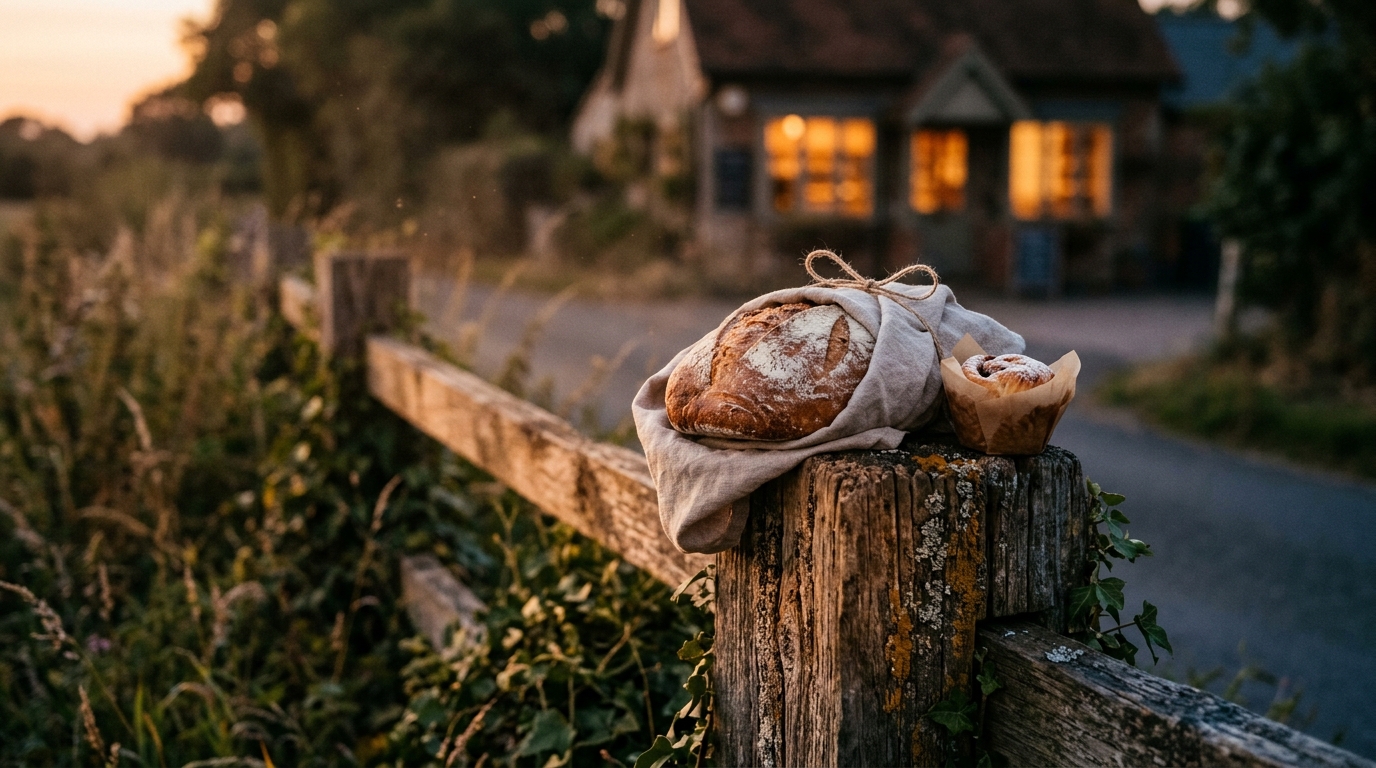
There is a particular hour in the small town of Harwick when the light turns the color of weak tea and the streets go quiet. The shops pull down their shutters. The smell of woodsmoke drifts from chimneys. And at the corner of Alder Lane, just beyond the back door of a modest bakery, a woman named Marguerite Doyle steps outside with a paper sack in her hands and sets it on a weathered fence post.
She does not wait to see who comes. She does not leave a sign. She simply sets down the bread, smooths the top of the bag, and goes back inside to turn off the ovens for the night.
This is the story of that fence post, and of the quiet ritual that has made it one of the most beloved corners of a town that rarely makes the news.
How a Small Habit Became a Tradition
Marguerite opened her bakery eleven years ago, after a long career doing something entirely unrelated. She will tell you she was no businesswoman. She was simply someone who loved the early morning dark, the warmth of a proofing cabinet, and the way a loaf sounds when it is tapped on the bottom and rings hollow and true.
The first year, she threw away what did not sell. Day-old loaves, a few stray rolls, the end pieces nobody wanted. It bothered her, though she could not say why at first.
"One evening I was carrying a bag out to the bin," she recalls, "and I just stopped. I thought, this bread was made with the same flour and the same care as the bread I sold this morning. The only thing that changed was the calendar."
So she set the bag on the fence post instead. The next evening, she did it again. The bag was gone by morning. She never learned who took it, and she decided that she did not need to.
The Evening Hour
Ask Marguerite why she does it at dusk, and she smiles in a way that suggests she has thought about this more than she lets on.
"The day is loud," she says. "Customers, orders, the register, the phone. By the time evening comes, everything has settled down, and you finally have room to notice what matters. For me, the bread on the post is how I end the day on purpose. It is the last thing I do that is not for money. It is just for someone."
There is something worth sitting with in that. Most of us end our days by collapsing into whatever is left of our energy. We scroll, we sigh, we replay conversations we wish had gone differently. Marguerite closes hers with a gesture of quiet generosity, and she says it changes how she sleeps.
"I go to bed thinking about the bread out there in the cold," she says. "Somebody is going to be glad of it. That is a good thing to fall asleep thinking about."
What the Bread Has Meant to the Town
Nobody in Harwick keeps an official record of who takes the loaves. That is rather the point. But over the years, small stories have drifted back to Marguerite, usually without any prompting.
- A night-shift nurse who walks home past Alder Lane at the end of her shift told Marguerite that a warm-smelling bag on a cold morning felt like being welcomed home by the whole town.
- A young father between jobs once left a note tucked beneath a stone on the post. It said only, "Thank you. My kids had toast this week."
- An elderly widower who had stopped cooking for one began walking to the fence each evening, simply to have a reason to go outside.
- A group of teenagers who passed the corner on their way home from practice started leaving small things in return: a drawing, a jar of wildflowers, a hand-lettered card.
None of these people knew one another. Yet through a single paper sack, a quiet thread connected them.
A Note Left on the Post
One of Marguerite’s favorite keepsakes is a folded index card she found one spring morning, tucked beneath the bag the night before. She keeps it by the register now. It reads, in careful handwriting:
"I did not know how to ask for help, so I am grateful you never made me. The bread tasted like being seen."
She does not know who wrote it. She has read it, she admits, more times than she can count.
What We Can Learn From a Fence Post
It would be easy to read this as simply a sweet story about a kind woman. It is that. But it also holds a few lessons worth carrying into our own evenings.
1. Generosity does not require an audience
Marguerite has never posted about the fence post. She has never sought thanks. The kindness is complete the moment the bag is set down. There is a rare freedom in giving without needing to be seen giving.
2. Dignity is a form of kindness
By leaving the bread out for anyone, with no questions and no sign-up sheet, she lets people take what they need without having to explain themselves. No one has to prove they are hungry enough. The bread simply waits.
3. Small and consistent beats grand and occasional
She is not feeding the whole town. She is leaving one bag of bread on one fence post. But she does it every single evening, and that steadiness is what makes it trustworthy. People can rely on it. They plan their walks around it.
4. Waste can become a gift
What looked like leftovers to a business owner looked like nourishment to someone else. It makes you wonder what else we tend to toss aside that another person might be glad to have.
The Last Light Over Alder Lane
On the evening I visited, the sky was fading to a soft apricot as Marguerite wiped down the last of her counters. She tied off a paper sack, tucked a small sprig of rosemary into the fold, and carried it out the back door.
The air had that particular chill that arrives right after sunset, when the day lets go of its warmth. She set the bag on the fence post, rested her hand on it for a moment, and then turned back toward the glow of the kitchen window.
I asked her if she ever wondered who would find it.
"Sometimes," she said. "But mostly I just hope it finds whoever needs it. The bread knows where to go."
As I walked away down Alder Lane, a figure was already approaching in the dusk, hands tucked in their coat, heading toward the post. I did not look back. It did not feel like my moment to watch.
A Gentle Invitation for Your Own Evening
You may not own a bakery. You may not have a fence post to your name. But the evening is a quiet doorway, and most of us pass through it every single day.
Before you turn out the lights tonight, consider asking yourself one small question: What is one thing I could set down for someone, without needing to be thanked?
It might be a text to a friend who has been on your mind. It might be extra soup left in a container on a neighbor’s step. It might be a handful of coins in a jar for the next person who needs them. It might simply be a kind word you finally say out loud.
The scale does not matter. What matters is the quiet, deliberate choice to end the day with a little more warmth in the world than when it began.
Somewhere in Harwick tonight, a paper sack is sitting on a weathered fence post, waiting in the dark for whoever needs it. And somewhere nearby, a baker is drifting off to sleep, content in the knowledge that she did one good thing that did not ask for anything back.
May your own evening be as gentle as hers.