🎧 Listen to this story
Narrated by Kore · 6,114 characters
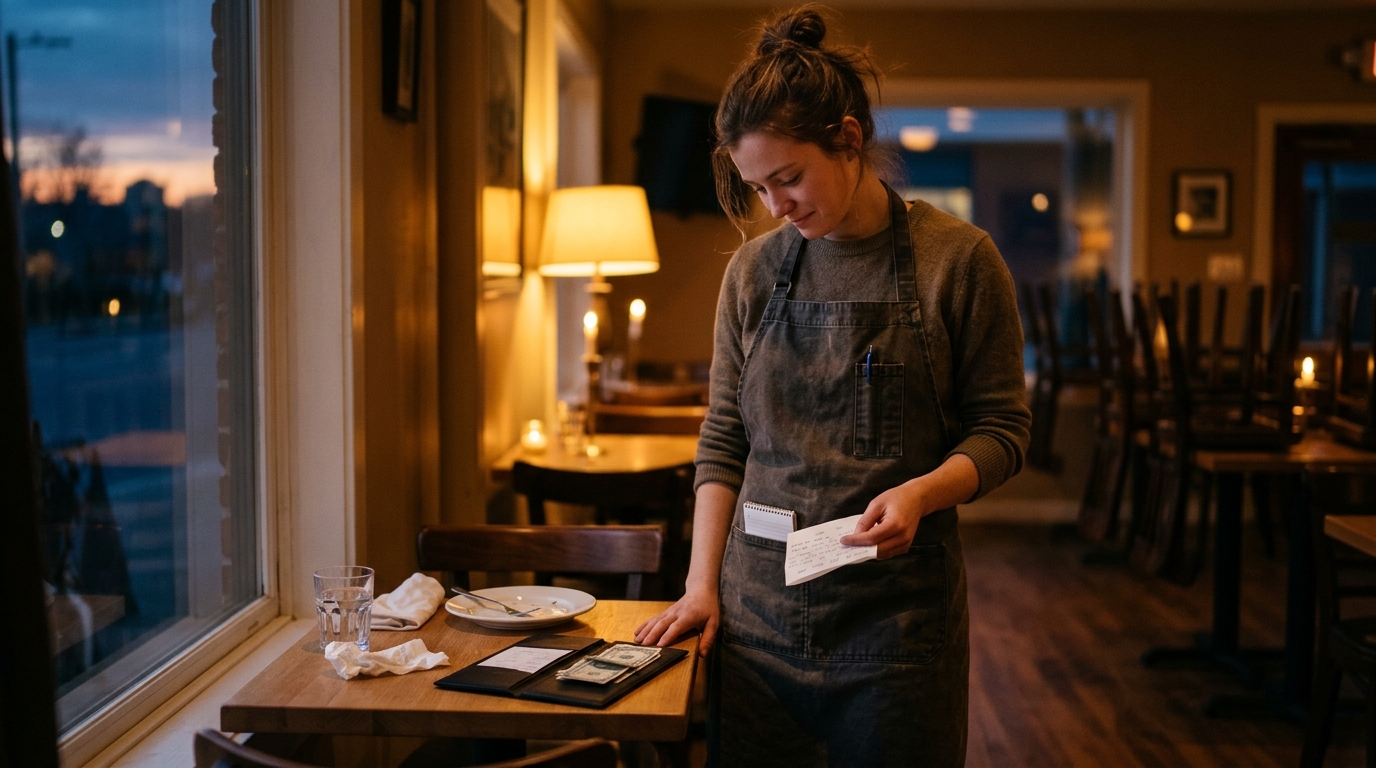
There is a particular hour in every restaurant when the room exhales. The dinner rush has thinned to a few lingering tables, the kitchen radio gets turned up just a little, and the light outside the windows goes from gold to blue. It is the hour when chairs get flipped, salt shakers get refilled, and the people who are still sitting there tend to be the ones who had nowhere particular to be.
This is a story about that hour, and about a waitress who has learned to read it better than anyone.
The Woman at the Back Section
Her name is Marisol, and she has worked the evening shift at a small neighborhood diner for eleven years. Her regulars know her as the one who remembers how you take your coffee, who tops off your water without being asked, and who never rushes you out the door. What her regulars do not know, at least not most of them, is what she does in the last forty minutes before close.
When a person dining alone is still at their table as the other customers drift away, Marisol quietly takes their check to the register, pays it out of her own tips, and brings back a small slip of paper in its place. The slip says only this: Your meal is taken care of. Take your time.
No name. No explanation. No speech.
How It Started
She does not tell the story with much drama. Years ago, on a cold night in February, she noticed an older man at the corner table. He had ordered a bowl of soup and a slice of toast, and he had been eating with the slow care of someone stretching the meal out. When she brought him the check, he counted out coins from a small leather pouch and set them on the table one at a time.
He was short by a dollar and forty cents.
He did not ask for help. He just looked at the pile of coins, then at his hands, and then quietly began to apologize. Marisol told him it was a mistake on her end, that the soup had been discounted at closing. It was not true. She covered the difference and the tip too, and he left with a small nod that she says she still thinks about.
That night, driving home, she kept turning it over. Not the money, which was small. It was the apology. A grown man apologizing for being hungry and a little short.
“I realized the check is not the hard part for some people,” she says. “The hard part is the sitting there, feeling like you have to justify taking up a chair.”
Why Closing Time
Marisol is specific about the timing, and the reasons are worth listening to.
- Privacy. By the end of the night, the dining room is nearly empty, so no one is watching a stranger receive a kindness.
- Dignity. Someone who has been quietly counting dollars all evening is not put on the spot in front of a crowd.
- Stillness. The last stretch of the night is slower, and people alone often linger over the final sip of coffee because the walk home feels long.
- Contrast. After a loud shift, a small gesture feels larger, both to her and to the person receiving it.
She also says there is something about the end of the day that opens people up. Without the noise of the rush, you can see who is tired, who is lonely, and who is simply carrying more than they let on.
The Evening Reflection
When the last table is cleared, Marisol does not go straight home. She sits for a few minutes in the back booth with a cup of tea, the chairs up on the tables, the neon sign humming softly in the window. It is her version of the day settling.
She does not think about who thanked her, since most of them never knew it was her. She thinks about the quiet things she noticed: the woman who read the same page of her book three times, the young man who ate slowly and looked at his phone without typing anything, the traveler who asked for the quietest corner.
“It is the only part of the night that is just mine,” she says. “I go over the faces. I hope they sleep okay.”
There is a kind of prayer in that, even if she would never call it one.
What the Slips Have Become
A few customers have kept their slips. One woman told a coworker she had hers folded in her wallet for two years, behind her driver’s license. Another said she had read it in the parking lot with the engine off, and then sat there for ten minutes before she could drive.
Word has slowly spread, though Marisol never confirms it. Some regulars now leave an extra five or ten dollars on their own checks, tucked under the saltshaker, with a small note: For the closing shift. She does not ask them to. She just finds it, sometimes, and quietly adds it to the pool of money she uses on nights when her own tips are thin.
So the kindness has started to grow its own roots, without anyone organizing it.
What We Can Take From a Closing-Time Waitress
You do not have to work in a restaurant to practice what Marisol practices. Her approach holds up almost anywhere:
- Notice the person nobody is watching. Kindness often starts with attention, not money.
- Protect their dignity. Give help in a way that asks nothing back and demands no performance of gratitude.
- Let it be small. A gesture does not have to be grand to be remembered.
- Skip the credit. Some of the best kindness is the kind that cannot be traced back to you.
- Make room for stillness. End the day by reflecting on who you saw, not just what you did.
One Last Thought Before the Lights Go Out
At the end of her shift, Marisol turns off the sign, locks the door, and stands for a moment on the sidewalk. The street is quiet. A few windows glow in the apartments above the shops. Somewhere, a person she fed tonight is walking home a little lighter, without ever knowing her name.
That is the part she likes best, she says. Not being thanked. Just knowing that someone who came in feeling invisible left feeling, for one small evening, seen.
Tonight, as the day winds down for you too, maybe think of the quiet people you crossed paths with. The ones eating alone, working late, or lingering a little longer than they needed to. You may not be able to pay for their dinner. But you might be able to look up, smile, and leave the door open a little wider.
Sometimes the best kindness happens right at closing time, when no one is watching and everyone needs it most.