🎧 Listen to this story
Narrated by Sulafat · 6,369 characters
The Day Everything Changed
Maria Sandoval was 41 years old when her doctor called her into the office and closed the door behind him. She remembers the sound of the latch clicking shut, a small and ordinary sound that somehow split her life into two distinct halves: before and after.
The diagnosis was stage two breast cancer. Treatable, the doctor said. But the word “cancer” had already filled the room like smoke, and Maria sat in that chair absorbing a silence she had never known before.
“I drove home and sat in my driveway for forty-five minutes,” she recalls. “I couldn’t go inside. I wasn’t crying. I was just… recalculating. Like a GPS that had lost signal and was trying to find the route again.”
What happened in the months and years that followed surprised even her closest friends. Maria did not simply survive her diagnosis. She used it as a demolition crew, tearing down the life she had been sleepwalking through and building something that actually fit her soul.
The Life She Had Been Living
Before the diagnosis, Maria worked sixty-hour weeks as a corporate attorney in Denver. She was good at her job, perhaps excellent. But she hadn’t felt genuinely excited to go to work in years. She had a routine, a salary, a tidy apartment, and a calendar so packed with obligations that she sometimes forgot to eat lunch.
“I was efficient,” she says with a short laugh. “I was very, very efficient at a life I hadn’t consciously chosen.”
She had always meant to take that trip to Portugal. She had always meant to call her college roommate more often, plant a garden, learn to cook properly, write the essays that lived like restless tenants in the back of her mind. Always meant to. Always later.
The diagnosis handed her a brutal but clarifying truth: later is not a guaranteed destination.
Treatment, and the Thinking That Came With It
Maria underwent surgery followed by six rounds of chemotherapy. The side effects were brutal. There were days she could not get out of bed, days the nausea was relentless, days her body felt like borrowed property. But in the stillness that illness forces on you, something unexpected happened.
She started thinking. Really thinking, not the frantic task-management loop her brain had been running for years, but slow, searching, honest reflection.
“Chemo gives you a lot of time,” she says. “You can’t distract yourself the way you normally do. Your phone loses its appeal. TV feels hollow. And eventually you’re just left sitting with yourself, and you have to decide whether that’s a terrible thing or a useful one.”
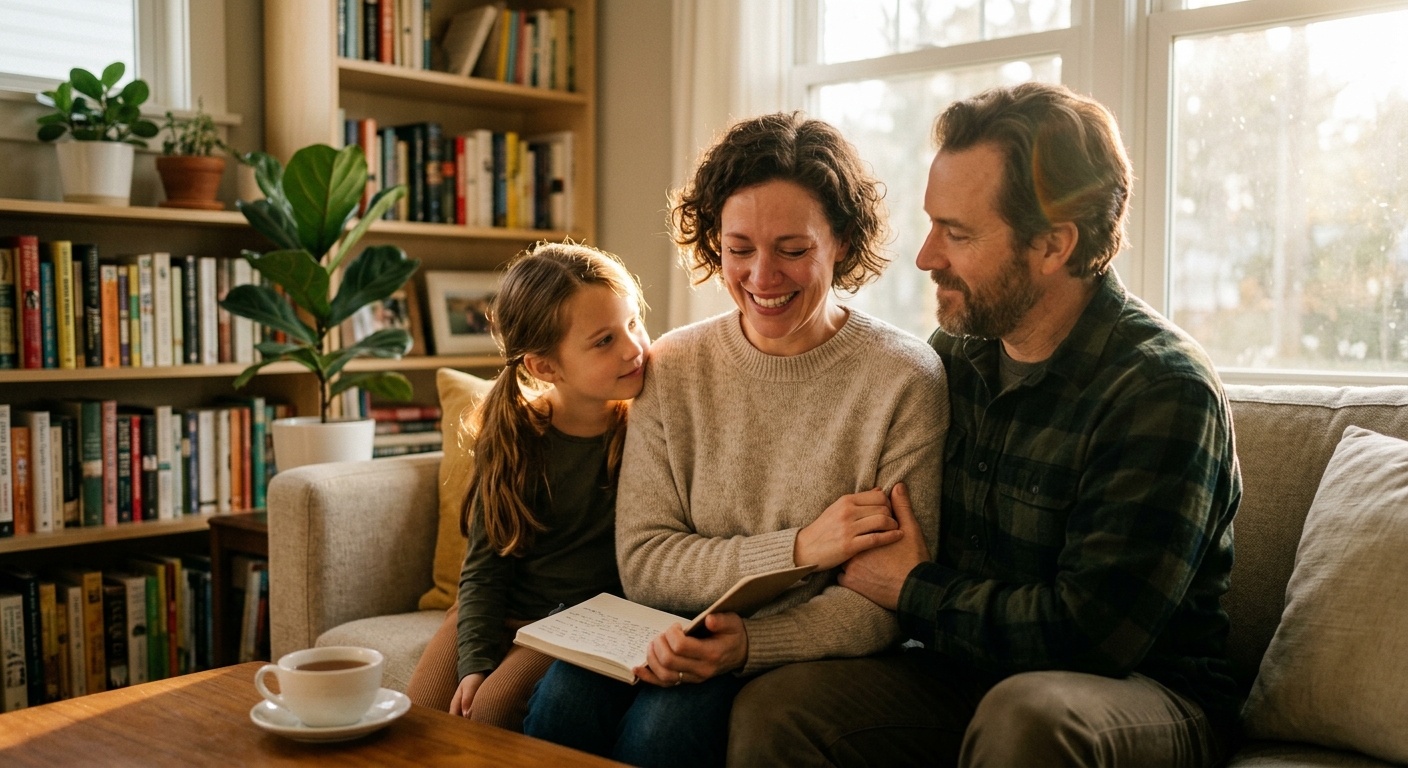
She chose useful. She started keeping a journal, something she hadn’t done since college. She wrote about fear, yes, but also about gratitude and longing and the specific textures of joy she had let slip through her fingers. She wrote about who she wanted to be if she got the chance to keep being someone.
Five Shifts That Transformed Her Life
Maria is the first to say that her transformation was not dramatic or cinematic. It was incremental, practical, and sometimes uncomfortable. But looking back, she identifies five clear shifts that changed everything:
- She stopped performing busyness. She realized she had been using a packed schedule as a form of identity and armor. When she recovered, she deliberately left white space in her calendar and learned to sit in it without anxiety.
- She said no without apologizing. Cancer had stripped away her tolerance for obligations that drained her. She began declining invitations, projects, and relationships that didn’t align with what she actually valued.
- She made the calls she had been postponing. The Portugal trip, the college roommate, her estranged sister. She stopped treating meaningful connection as a reward she had to earn after everything else was done.
- She left corporate law. Eighteen months after her final treatment, she resigned from her firm and began working as a legal consultant for nonprofit organizations. She took a significant pay cut and has not once regretted it.
- She got her hands dirty. Literally. She planted that garden she had always meant to plant. She learned to make pasta from scratch. She started hiking on weekends. She credits physical engagement with the world as a kind of daily celebration of being alive in a body that fought for her.
What She Wants You to Know
Maria is now four years cancer-free. She gives occasional talks at cancer support groups, not as an inspirational performance, but as honest conversation with people who are sitting in that same smoky room she once sat in.
She is careful not to romanticize illness. “I would not wish cancer on anyone,” she says firmly. “It is painful and terrifying and it takes things from you that you don’t get back. I am not saying it was a gift. I am saying I decided to treat what came out of it as one.”
That distinction matters to her deeply. The growth was not a product of the disease. It was a product of her choices, made under extreme pressure, yes, but choices nonetheless.
The Question She Now Asks Every Morning
Each morning, before she checks her phone or makes her coffee, Maria asks herself a single question: “If today were one of the good ones, what would I do with it?”
Not every day looks extraordinary from the outside. Sometimes the answer is a phone call, a long walk, finishing a chapter of a good book, making dinner for a friend. But the question keeps her oriented toward what she values rather than simply what is next on the list.
“I used to think that living fully meant doing big things,” she says. “Now I think it means paying attention. Really paying attention to the life you’re actually in, not the one you’re waiting to start.”
The Lesson in the Latch
Maria still thinks about that sound sometimes, the quiet click of the doctor’s door closing. It marked the end of one version of her life. But she has come to see it differently now.
It wasn’t a door closing. It was one opening.
Not everyone needs a crisis to wake up. But most of us are waiting for something, a sign, a permission slip, a better moment, to start living the way we actually want to live. Maria’s story is not a call to wait for catastrophe. It is a call to do the recalculating now, while the signal is still strong and the road ahead is wide open.
You don’t need a diagnosis to decide that your life is worth showing up for, fully, every single day.