🎧 Listen to this story
Narrated by Kore · 8,785 characters
A New Kind of Prescription
Imagine sitting in your doctor’s office, describing months of anxiety, low mood, and a creeping sense of disconnection from the world. Your physician listens carefully, nods, and then slides a piece of paper across the desk. You expect the name of a medication. Instead, you read two words: grow something.
This is not a hypothetical scenario. Across the United Kingdom, the Netherlands, Japan, New Zealand, and parts of Canada and the United States, a growing number of physicians, psychiatrists, and public health officials are formally prescribing gardening as a legitimate medical intervention. It has a name: social prescribing, or more specifically, green prescribing. And the science behind it is far more robust than you might expect.
What Is Green Prescribing?
Green prescribing refers to the practice of healthcare providers recommending nature-based activities, most commonly gardening, as part of a patient’s treatment plan. These activities are typically organized through community gardens, hospital allotments, therapeutic horticulture programs, or simple at-home growing instructions given to patients with a referral to a local gardening group.
In the UK, the National Health Service has embedded social prescribing into its long-term plan, with link workers connecting patients to community activities including gardening programs. In New Zealand, the government has funded green prescription initiatives since the early 2000s. In Japan, the ancient practice of shinrin-yoku, or forest bathing, has been studied and incorporated into wellness programs for decades, and horticultural therapy is now a recognized profession.
This is not fringe medicine. This is a quiet revolution happening at the intersection of science, policy, and the simple human need to put your hands in the earth.
The Research Behind the Roots
Skeptics might ask: is there real evidence here, or is this just a feel-good trend dressed up in clinical language? The answer, increasingly, is that the evidence is substantial and growing.
Mental Health Benefits
A 2017 meta-analysis published in Preventive Medicine Reports reviewed 22 studies on gardening and found significant improvements in depression, anxiety, and overall quality of life among participants. A separate study from the University of Westminster found that even a single gardening session could reduce cortisol levels, the body’s primary stress hormone, and improve mood states measurably.
Researchers at the University of Bristol discovered that a specific bacterium found in healthy soil, Mycobacterium vaccae, may actually trigger the release of serotonin in the brain when it enters the body through skin contact or inhalation. In other words, digging in dirt might literally make you happier at a neurochemical level. The implications of that finding alone are staggering.
Physical Health Outcomes
The physical benefits are equally compelling. Regular gardening has been associated with:
- Reduced risk of dementia by up to 36 percent in some longitudinal studies
- Lower rates of obesity and type 2 diabetes
- Improved cardiovascular health through moderate physical activity
- Better sleep quality and duration
- Increased vitamin D levels from outdoor exposure
- Enhanced fine motor skills and coordination, particularly in older adults
A study published in the British Journal of Sports Medicine found that gardening as a form of moderate-intensity physical activity meets the WHO’s recommended weekly exercise guidelines for many participants, without them even realizing they are exercising.
Social and Cognitive Benefits
Community gardening programs in particular have shown remarkable results in reducing loneliness and social isolation, two conditions that the UK’s Chief Medical Officer has described as more dangerous to health than smoking 15 cigarettes a day. Participants in group gardening programs report stronger senses of purpose, greater feelings of belonging, and improved cognitive function across age groups.
The Countries Leading the Way
United Kingdom
The UK is arguably the most advanced nation when it comes to institutionalizing green prescribing. NHS England’s social prescribing program now employs thousands of link workers nationwide. Organizations like Thrive, a charity founded in 1978, have been delivering therapeutic horticulture programs to people with physical disabilities, mental health conditions, and learning difficulties for nearly five decades. Some GP surgeries now have designated garden spaces where patients can be referred directly.
The Netherlands
The Dutch concept of care farms, or zorgboerderijen, has been running since the 1990s. These are working farms and gardens where patients with mental illness, addiction recovery needs, or elderly dementia diagnoses spend structured time doing agricultural and horticultural work. There are now over 1,100 care farms operating in the Netherlands, supported by health insurance coverage in many cases.
Japan
Japan has long recognized the healing power of nature through shinrin-yoku and, more recently, through formalized therapeutic horticulture. Japanese research has demonstrated measurable reductions in blood pressure, heart rate, and stress hormones among participants in regular garden-based therapy sessions. Several hospitals in Tokyo incorporate rooftop or courtyard gardens specifically designed for patient use.
New Zealand and Australia
New Zealand’s Green Prescription program has been government-funded for over two decades and now covers a range of physical activity and nature-based interventions. Australia has seen a surge in horticultural therapy programs tied to its growing awareness of mental health challenges, particularly among veterans and indigenous communities.
What a Gardening Prescription Actually Looks Like
For those unfamiliar with the process, receiving a gardening prescription does not mean your doctor hands you a packet of seeds and sends you on your way. The process is typically structured and supported. Here is what it often involves:
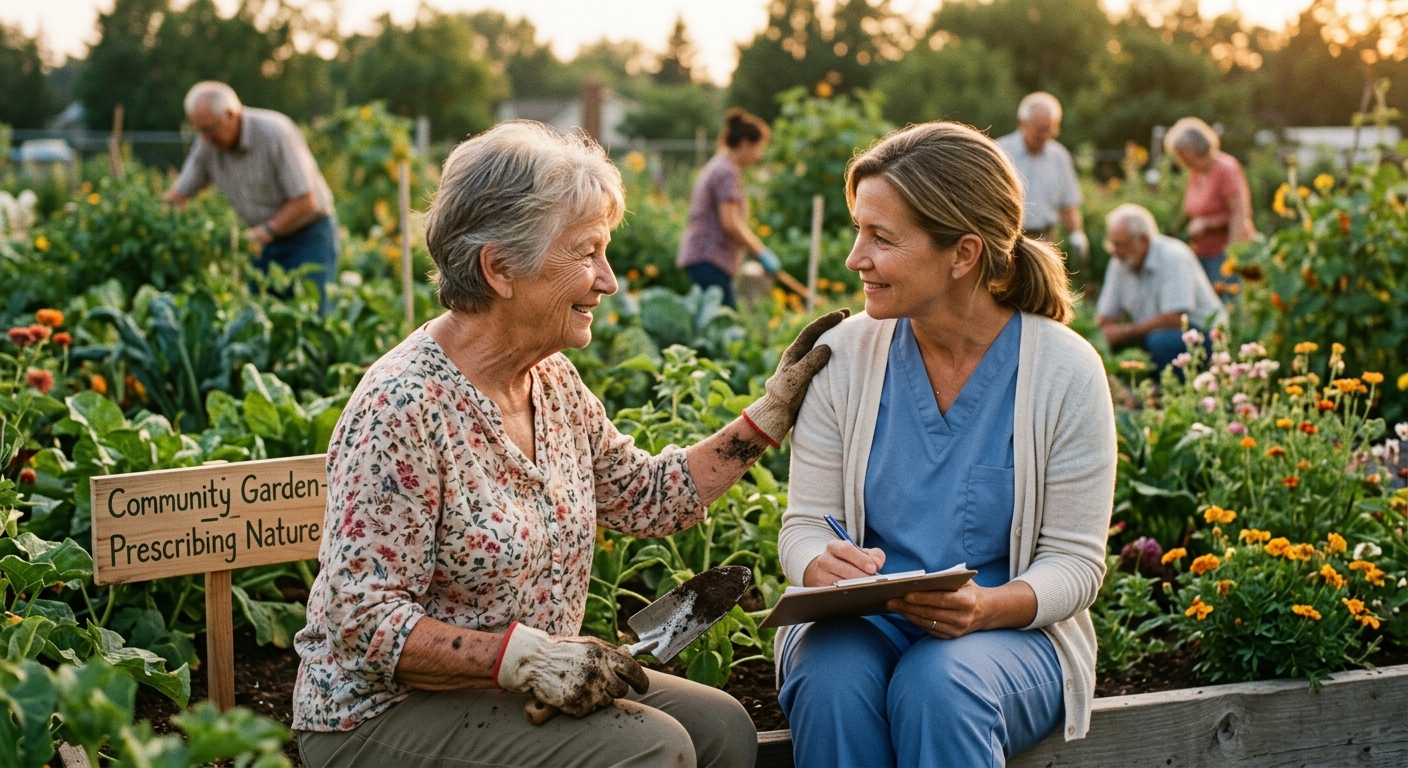
- Assessment: A GP or mental health professional identifies that a patient might benefit from a nature-based activity as part of their care plan.
- Referral: The patient is connected to a link worker or social prescribing coordinator who matches them with a local program suited to their needs and mobility.
- Program Participation: Sessions are usually held in community gardens, therapeutic horticulture centers, or care farms. They are typically group-based, with trained facilitators.
- Monitoring: Progress is tracked through check-ins with the referring clinician or link worker, with outcomes measured against initial health goals.
- Transition: Many participants continue gardening independently after their formal program ends, having built confidence, skills, and social connections.
Why Now? Understanding the Timing
It is worth asking why this movement is gaining so much momentum right now. Several converging factors help explain it. Mental health conditions are at record levels globally following years of pandemic disruption, economic stress, and digital overload. Healthcare systems in most developed countries are under severe financial strain and are actively seeking non-pharmaceutical interventions that are low-cost but effective. At the same time, a growing body of peer-reviewed research has made it harder for the medical establishment to dismiss nature-based therapies as unscientific.
There is also something deeper at work. Many people, including clinicians, are recognizing that modern life has engineered something essential out of human experience: the daily, grounding contact with living things, with cycles of growth and decay, with the patience required to tend to something outside yourself. Gardening does not just treat symptoms. For many people, it restores something that was missing.
You Do Not Need a Doctor’s Note
Perhaps the most democratic thing about all of this is that you do not need a formal prescription to begin. A pot on a windowsill. A handful of herb seeds. A corner of a community plot. The research suggests that even small-scale engagement with growing things carries meaningful benefits.
If you have been feeling anxious, disconnected, or simply flat, the growing scientific consensus offers a gentle, ancient suggestion: go outside, find some soil, and grow something. The microbes, the sunlight, the quiet rhythm of watering and waiting, they may do more for you than you think.
The Takeaway
Gardening being prescribed by doctors is not a gimmick or a retreat from serious medicine. It is medicine catching up with what gardeners, farmers, and nature lovers have always known. The earth has always had healing in it. We are only now learning to write it on a prescription pad.