
🎧 Listen to this story
Narrated by Orus · 8,227 characters
The Lab Results Are In, and They Point to the Forest
For decades, spending time outdoors was considered a pleasant hobby, something you did on weekends when the weather cooperated. It was leisure, recreation, maybe even a personality trait. It was not medicine. But that framing is changing fast, and the people changing it are not wellness influencers or lifestyle bloggers. They are epidemiologists, neuroscientists, cardiologists, and public health officials working in research institutions around the world.
The conclusion they are arriving at, independently and through peer-reviewed studies, is striking: time in nature is not just good for you in a vague, feel-good sense. It is measurably, documentably, physiologically good for you in ways that rival the effects of certain medications and structured clinical interventions. And the absence of it, they argue, is making us sick in ways we have only begun to understand.
What the Research Actually Shows
Let us start with the numbers, because this story is built on them.
A landmark study published in Scientific Reports found that spending at least 120 minutes per week in nature was associated with significantly better health and well-being compared to no nature exposure at all. The effect held across age groups, chronic illness statuses, and socioeconomic backgrounds. Two hours a week. That is about 17 minutes a day.
Research out of Stanford University used brain imaging to compare participants who walked for 90 minutes in a natural setting versus an urban one. Those who walked in nature showed decreased activity in the subgenual prefrontal cortex, the region of the brain associated with repetitive negative thought patterns, a key feature of depression and anxiety disorders.
Meanwhile, studies from Japan on a practice called Shinrin-yoku, or forest bathing, have shown measurable reductions in cortisol levels, blood pressure, pulse rate, and even the activity of the sympathetic nervous system, the system responsible for the fight-or-flight stress response, after just short periods of time spent among trees.
The Immune System Connection Nobody Is Talking About Enough
Here is where the science gets genuinely fascinating. Trees and plants release airborne compounds called phytoncides, essentially the chemical signals plants use to communicate and defend themselves. When humans breathe in these compounds during time in wooded environments, something measurable happens inside the body.
Research led by immunologist Qing Li at Nippon Medical School in Tokyo found that exposure to phytoncides increased the number and activity of natural killer cells in the human body. Natural killer cells are a type of white blood cell that plays a critical role in destroying cancerous cells and virus-infected cells. The effect lasted for more than 30 days after a single nature immersion experience.
That is not a metaphor for feeling refreshed. That is a documented change in immune function.
The Mental Health Crisis and the Missing Prescription
Global rates of anxiety and depression have been climbing for years, a trend that accelerated sharply during and after the COVID-19 pandemic. Healthcare systems in most countries are stretched thin trying to meet the demand for mental health services. Waitlists are long, access is uneven, and medication, while helpful for many, does not work for everyone and carries side effects.
Into this gap, nature is emerging as a surprisingly powerful complementary tool. A meta-analysis published in Environmental Health Perspectives reviewed data from hundreds of studies and found consistent evidence that green space exposure was associated with reduced depression, reduced anxiety, improved attention, better sleep quality, and lower rates of all-cause mortality.
In the United Kingdom, the National Health Service has begun formally supporting what are called green social prescribing programs, where general practitioners refer patients to nature-based activities as part of their care plan. These include walking groups in parks, gardening programs, and conservation volunteering. Early results from pilot programs have shown significant improvements in mental well-being scores among participants.
7 Health Benefits of Time in Nature Backed by Science
- Lower cortisol levels: Multiple studies confirm reduced stress hormone concentrations after nature walks, even short ones.
- Reduced blood pressure: Forest environments have been shown to lower both systolic and diastolic blood pressure in hypertensive individuals.
- Improved attention and focus: Attention Restoration Theory, developed by researchers Rachel and Stephen Kaplan, holds that natural environments restore directed attention capacity more effectively than urban ones.
- Better sleep: Exposure to natural light patterns and reduced stimulation in nature helps regulate circadian rhythms and improve sleep duration and quality.
- Stronger immune response: As noted above, phytoncide exposure measurably boosts natural killer cell activity.
- Decreased rumination: Brain imaging studies show reduced activity in areas linked to repetitive negative thinking after time in natural settings.
- Increased feelings of awe and meaning: Research published in the Journal of Positive Psychology found that experiences of awe, most reliably triggered by nature, were associated with greater feelings of purpose, generosity, and life satisfaction.
The Equity Problem at the Heart of This Conversation
If time in nature is a health necessity, then access to nature is a health equity issue. And right now, access is deeply unequal.
Urban green space is disproportionately concentrated in wealthier neighborhoods. Low-income communities, communities of color, and densely populated urban areas often have the least access to parks, trails, and natural environments, while also bearing the highest burden of stress-related and chronic illness. Research from the Trust for Public Land has shown that in many American cities, low-income neighborhoods have significantly less park space per resident than higher-income ones.
This means that framing nature as a public health necessity carries a moral obligation alongside the scientific one. It is not enough to tell individuals to go spend time outdoors. Policymakers, urban planners, and public health officials need to treat green space as critical infrastructure, as essential as clean water systems or hospital access.
What You Can Do Right Now
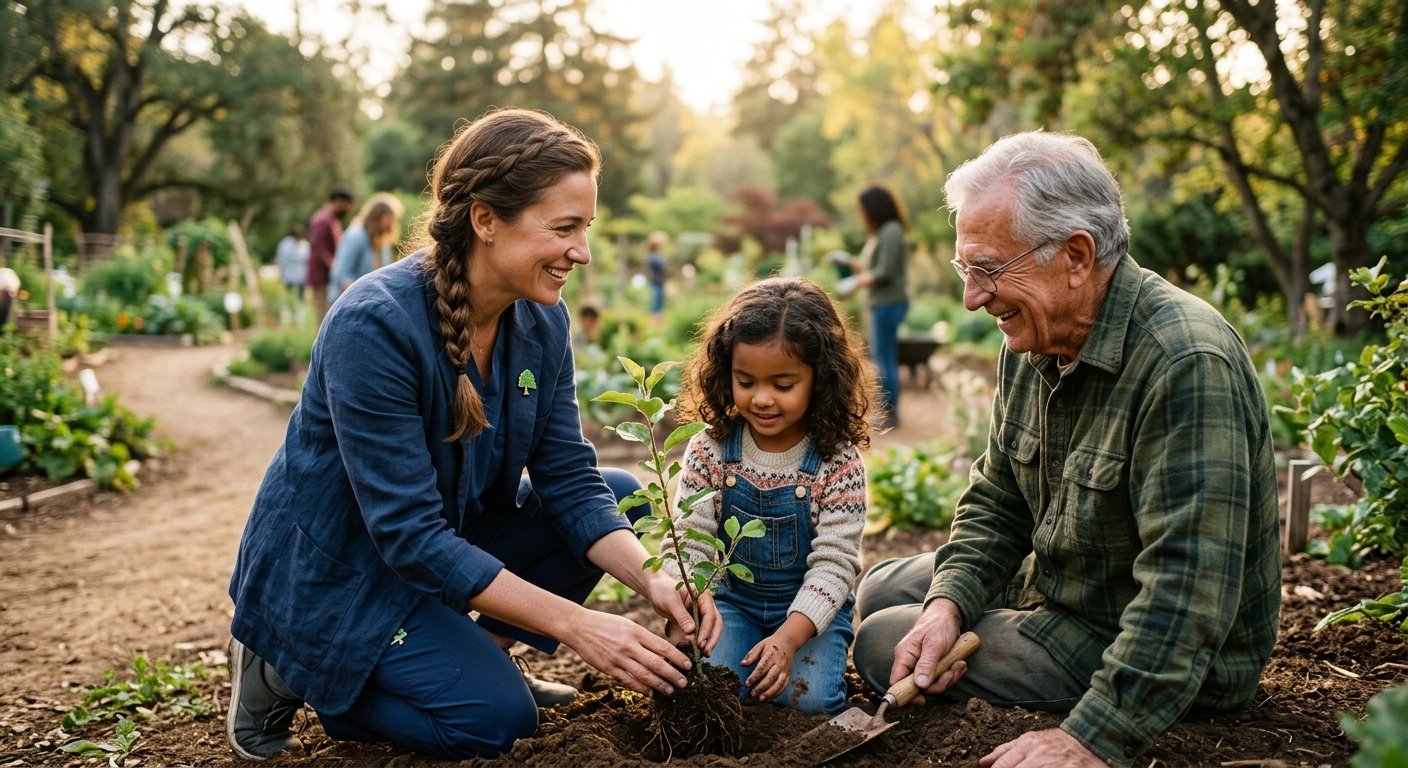
You do not need a mountain range or a national park. Research consistently shows that even modest natural environments, a city park, a tree-lined street, a community garden, produce meaningful health benefits. The key variables seem to be the presence of natural elements, reduced noise and urban stimulation, and time spent without screens or task-focused demands.
Here are some accessible starting points:
- Replace one scrolling session per day with a 20-minute walk somewhere with trees or grass.
- Look into park prescription programs in your area. Many hospitals and community health centers now offer them.
- If you have children, prioritize unstructured outdoor time. Research on attention and behavior in children is particularly compelling in this area.
- Advocate for green space in your community, especially if you live in an underserved neighborhood. Attend city planning meetings. Support urban greening initiatives.
A Shift in How We Define Health
There is something quietly revolutionary about where this science is leading us. For most of modern medicine, health has been defined as the absence of disease, managed through pharmaceuticals, procedures, and clinical intervention. Nature did not fit neatly into that model. It could not be patented, standardized, or prescribed in milligrams.
But the evidence is building toward a different understanding, one that places human beings back inside the natural world rather than apart from it. The forests, the coastlines, the city parks, the backyard gardens, these are not amenities. They are, increasingly, what the data tells us they have always been: part of the conditions that allow human beings to be well.
The scientists have weighed in. The question now is whether the systems we live inside will catch up.