
🎧 Listen to this story
Narrated by Orus · 9,278 characters
The Simplest Experiment We Ever Ran
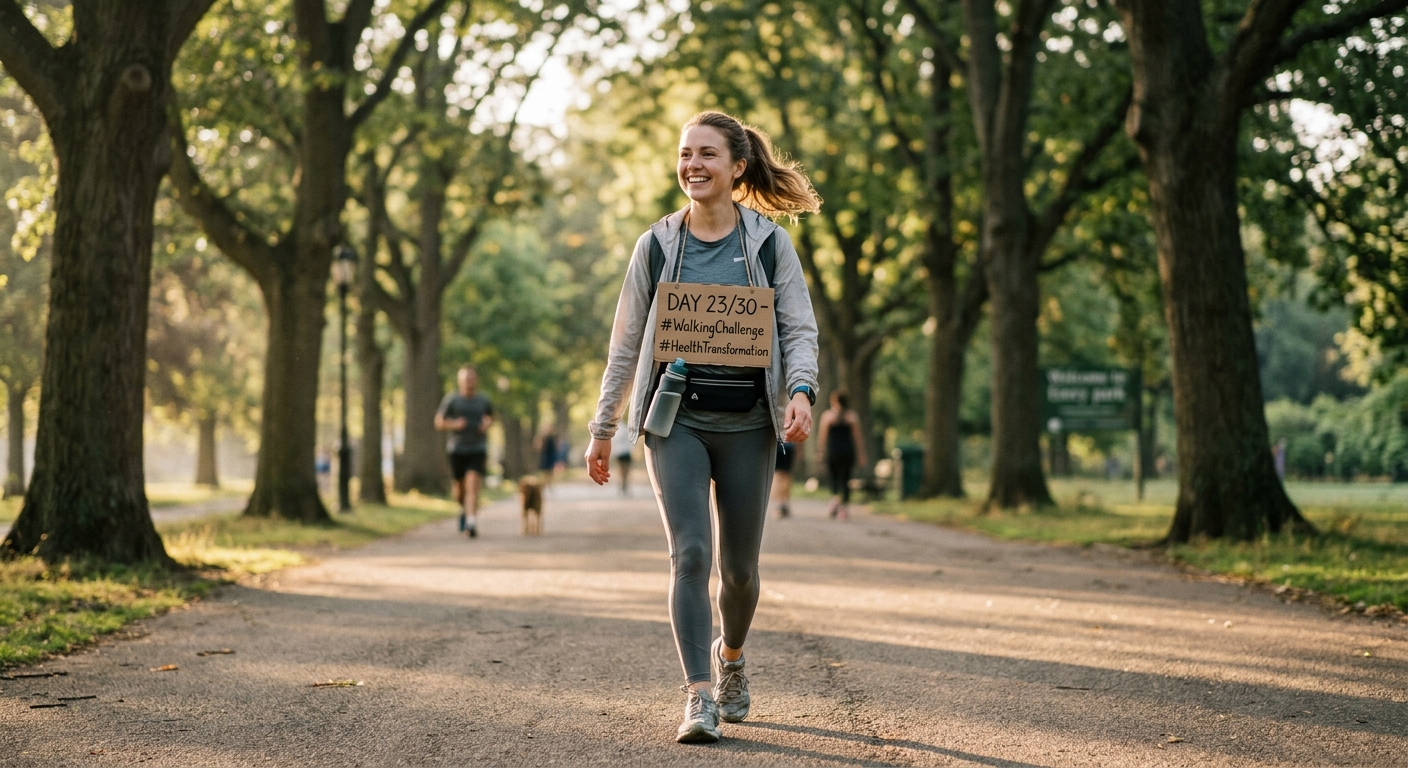
No gym memberships. No special equipment. No complicated meal plans. Just five ordinary people, a pair of shoes, and a commitment to walk for 30 minutes every single day for one month. What started as a lighthearted challenge for our readers turned into something none of us expected: a front-row seat to watching real human bodies and minds transform in ways that science has long promised but few people ever actually test for themselves.
We checked in with our five volunteers at the one-week mark, the two-week mark, and again at the end of the month. What they reported, combined with what the research tells us, paints a picture that is equal parts surprising, encouraging, and deeply human.
Meet the Five Walkers
- Diane, 58, retired teacher: Dealing with mild knee pain and low energy levels.
- Marcus, 34, software developer: Mostly sedentary, works from home, admitted he rarely leaves his apartment.
- Priya, 42, mother of three: Stressed, sleep-deprived, and skeptical that walking would do anything meaningful.
- Tom, 67, widower: Grieving, lonely, and looking for something to anchor his days.
- Zoe, 27, graduate student: Anxious, overwhelmed by her thesis, and struggling with low mood.
Five very different people. Five very different reasons. One shared habit.
Week One: The Body Starts Talking
Almost universally, the first week was described as the hardest. Not because walking itself is difficult, but because carving out 30 minutes in a life already packed to the edges felt like an act of rebellion against routine.
Marcus told us: “The first three days, I kept telling myself I was too busy. But I realized I had just watched two hours of television the night before. That was a wake-up call.”
By day five, something interesting started happening across the board. Multiple participants reported sleeping better. This tracks closely with the science: a study published in Mental Health and Physical Activity found that even moderate-intensity walking significantly improves sleep quality, particularly the ability to fall asleep faster and stay asleep longer. The reason is partly physiological. Walking raises your core body temperature slightly, and as it drops afterward, it signals to the brain that it is time to rest.
Diane, who had feared her knees would protest, was surprised. “I expected more pain. Instead, by day six, my knees actually felt looser. Less stiff in the mornings.”
What Science Says Is Happening Inside You
Even in week one, your body is doing extraordinary things beneath the surface. Here is what researchers have confirmed happens when you commit to 30 minutes of daily walking:
Your Heart Gets a Workout It Actually Enjoys
Walking is one of the most heart-friendly exercises in existence. According to the American Heart Association, regular brisk walking can lower your risk of heart disease and stroke by up to 35 percent. It reduces LDL (bad) cholesterol, lowers blood pressure, and improves circulation without the strain that high-intensity workouts place on the cardiovascular system. Think of it as a gentle, daily tune-up for the most important muscle in your body.
Your Blood Sugar Stabilizes
A short walk after a meal, even just 10 to 15 minutes, has been shown to significantly reduce blood glucose spikes. A 30-minute daily walk compounds this effect powerfully over time. For people at risk of type 2 diabetes, consistent walking has been shown in clinical studies to reduce that risk by nearly 30 percent. Your muscles, when engaged during a walk, absorb glucose from the bloodstream without needing insulin to do it, which is a remarkable built-in mechanism most people never use.
Your Brain Begins to Change
This is the one that surprised our participants the most when we shared it with them. Walking stimulates the production of BDNF, or brain-derived neurotrophic factor, which is sometimes called “fertilizer for the brain.” BDNF promotes the growth of new neural connections, improves memory, and plays a significant role in reducing symptoms of depression and anxiety. A Harvard study found that walking 35 minutes a day, five days a week, reduced the risk of major depression by 26 percent.
Your Joints Lubricate Themselves
Cartilage in your joints does not have its own direct blood supply. It gets its nutrients from the fluid around it, and that fluid only circulates properly when you move. Daily walking is essentially a delivery system for joint health. This is why Diane felt better, not worse, as the weeks went on.
Your Immune System Quietly Strengthens
Research from Appalachian State University found that people who walked briskly for 30 to 45 minutes per day had 43 percent fewer sick days than their sedentary counterparts. Walking increases the circulation of immune cells throughout the body, priming your defenses in a way that no supplement can fully replicate.
Week Two: The Emotional Shift Nobody Expected
If week one was physical, week two got personal.
Zoe, the anxious graduate student, sent us a message on day eleven that stopped us in our tracks: “I do not know how to explain this, but I feel less like I am drowning. I still have the same workload. Nothing external has changed. But something in my head is quieter.”
Tom, the widower, had begun walking through a park near his home. He started nodding at the same dog walker each morning. By day twelve, they were chatting. “I had not had a real conversation outside of a grocery store in three weeks before this,” he said. “That walk gave me a reason to be somewhere at a certain time. It gave me a place in the world again.”
Priya admitted she had been resistant. “I kept thinking, thirty minutes is not going to fix anything. But I started using it as my time. No kids, no emails, no requests. Just me. And I started looking forward to it in a way I did not see coming.”
These emotional benefits are not coincidental. Walking, particularly outdoors, triggers the release of endorphins and serotonin. It also lowers cortisol, the primary stress hormone, which in modern life tends to run chronically elevated in most adults. Lowering cortisol is not just about feeling calmer. It affects inflammation levels, weight regulation, immune function, and even how well you age.
Week Three and Four: The Compound Effect Kicks In
By the final two weeks, the changes had compounded in ways the participants had not anticipated.
- Marcus had lost four pounds without changing his diet. “I was not even trying. I think I just stopped stress-snacking because I was less stressed.”
- Diane reported that her morning stiffness had dropped from a persistent daily presence to something that appeared maybe twice in the last two weeks.
- Priya was sleeping through the night for the first time in years. “My husband noticed before I did,” she laughed.
- Zoe had finished the most productive chapter of her thesis. She credited the walks with giving her brain space to process and problem-solve.
- Tom had exchanged phone numbers with the dog walker. They were planning to walk together on weekends.
The Numbers That Tell the Whole Story
At the end of the month, we asked each participant to rate their overall wellbeing on a scale of one to ten, compared to where they started. The results were striking: the average starting score was 4.8. The average ending score was 7.4. Not a single person rated their ending wellbeing lower than their starting point. Not one.
These are not numbers from a controlled clinical trial. They are five messy, real, complicated human beings who made a small decision and honored it every day for thirty days. And something in them shifted.
So, What Is Actually Stopping You?
The irony of walking as a health intervention is that its very simplicity makes people dismiss it. We are culturally conditioned to believe that meaningful change requires suffering, expense, and complexity. Walking is free. It is gentle. Almost anyone can do it. And perhaps because of all that, we underestimate it almost completely.
The research does not. A landmark study in the New England Journal of Medicine concluded that walking is as effective as running for reducing the risk of heart disease, hypertension, high cholesterol, and diabetes, when caloric expenditure is matched. Another meta-analysis of 42 studies found that regular walking reduced all-cause mortality risk by 32 percent.
Thirty minutes. Every day. That is it.
How to Start Today
You do not need a plan. You do not need a goal. You just need to put on your shoes and walk out the door. But if a little structure helps, here are a few things our volunteers swore by:
- Walk at the same time each day until it becomes automatic.
- Leave your shoes by the door as a visual cue.
- Pick a route you actually enjoy, beauty matters for consistency.
- Use a podcast, music, or simple silence depending on what refuels you.
- Tell one person about your commitment, accountability is powerful.
- Do not skip two days in a row, one missed day is a rest, two is the start of quitting.
Tom is still walking. So is Diane, Priya, Marcus, and Zoe. They all said the same thing when we asked if they planned to continue: they could not imagine stopping now. Not because they had to. Because they wanted to.
That, perhaps, is the most meaningful transformation of all.