🎧 Listen to this story
Narrated by Orus · 7,271 characters
The Man Who Walks Into the Hardest Rooms
Most people, when they see a hospital waiting room filled with a grieving family, instinctively look for another hallway to take. Gerald Simmons walks straight in.
For the past eleven years, Gerald has volunteered as a hospital chaplain at a regional medical center in Asheville, North Carolina. He does not get paid. He does not receive benefits. He wakes up three mornings a week, drives twenty minutes to the hospital, clips on his ID badge, and spends his time sitting with families who are living through the worst moments of their lives. By his own rough count, he has now sat with more than 1,000 families in crisis.
He is 67 years old. He is a retired high school history teacher. And he may be one of the most quietly important people you have never heard of.
How It Started: A Personal Loss That Opened a Door
Gerald did not set out to become a chaplain. In 2013, his wife of 31 years, Donna, was hospitalized following a sudden cardiac event. She survived, but Gerald spent three terrifying days in a waiting room not knowing whether she would. During that time, a hospital chaplain named Father Reyes stopped by, pulled up a chair, and simply stayed with him for an hour.
“He didn’t preach at me. He didn’t tell me everything would be okay. He just sat there and let me talk,” Gerald recalls. “That hour felt like someone had handed me a life jacket.”
Donna recovered fully. But Gerald never forgot that hour. Two years after her discharge, he enrolled in a Clinical Pastoral Education program, completed his training, and began volunteering. He has not stopped since.
What a Chaplain Actually Does: Clearing Up the Misconceptions
Many people assume that hospital chaplains are there to pray with patients or deliver religious comfort. While that can certainly be part of the role, Gerald is quick to explain that the job is far more expansive and far more human than that.
- He listens without judgment: Families in crisis say things they cannot say anywhere else. Fear, anger, guilt, and regret all spill out. Gerald holds space for all of it.
- He helps navigate the fog: When someone is in shock, basic decisions feel impossible. Gerald helps families think through what they need right now, whether that is coffee, a phone charger, or someone to call.
- He bridges communication gaps: Sometimes families need help understanding what a doctor has told them. Gerald can sit with them after a medical conversation and gently help them process what it means.
- He is present for people of all faiths, and none: Gerald works with Christian families, Muslim families, Jewish families, atheist families, and everyone in between. “My job is not to tell you what to believe. My job is to remind you that you are not alone,” he says.
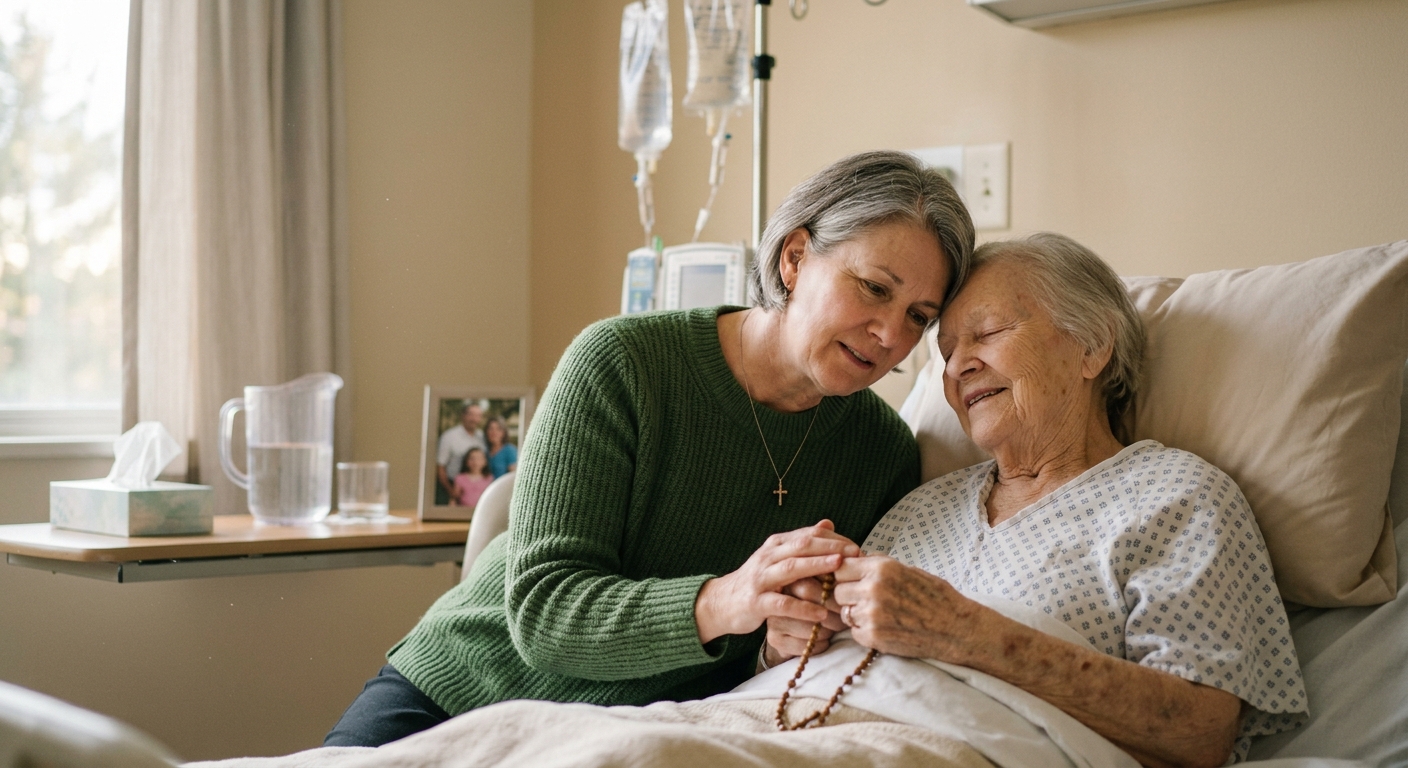
- He sits with the dying: When a patient has no family or when family cannot arrive in time, Gerald sits at the bedside so that person does not pass alone.
The Stories He Carries
Gerald does not share identifying details out of respect for privacy, but he speaks openly about the emotional textures of his work. He describes sitting with a mother whose teenage son had been brought in after a car accident. He sat with her for six hours. He did not know the boy. He did not know the outcome until it happened. But he stayed.
He talks about a father who broke down because he had argued with his adult daughter the morning before she collapsed at work, and could not stop replaying what he had said. “He needed to say it out loud to someone who was not inside the grief with him. That is sometimes what I am. A safe place outside the storm.”
He also describes moments that are unexpectedly beautiful. A family who sang hymns together in a waiting room. A couple who laughed for an hour remembering stories about the parent they were about to lose. “Grief is not always quiet,” he says. “Sometimes it is loud and funny and full of love.”
The Emotional Weight: How Does He Carry It?
This is the question people ask Gerald most often, and he takes it seriously.
“People want to know if I go home and cry. The answer is yes, sometimes. But what I have learned is that presence is not the same as absorption. I can be fully with someone in their pain without drowning in it myself. That took years to learn.”
Gerald keeps a journal. He attends a monthly support group for chaplains and pastoral care workers. He gardens. He and Donna take long walks. He credits his faith, but also his Clinical Pastoral Education training, for giving him practical tools to process what he witnesses without becoming undone by it.
He is also honest about the hard days. “There are mornings I sit in my car in the hospital parking lot for a few minutes before I go in. Not because I don’t want to be there. But because I want to make sure I’m bringing the right version of myself through those doors.”
What 1,000 Families Have Taught Him About Being Human
After more than a decade and over a thousand families, Gerald has developed some convictions that go well beyond the hospital walls. He shares them not as advice, but as observations.
1. Most people are braver than they think they are.
“I have watched people face unsurvivable news and still find a way to breathe. The human capacity for endurance is extraordinary.”
2. The things left unsaid are the things that haunt people.
“More families have told me they wish they had called more, visited more, argued less. I don’t say this to make anyone feel guilty. I say it because it is a reminder that the ordinary moments are not ordinary at all.”
3. Presence is the most powerful thing one human can offer another.
“Not advice. Not answers. Not even prayer, unless someone asks for it. Just being there. Just saying, with your body and your attention: you matter, and I am not leaving.”
4. Grief does not follow a script.
“Every family is different. Every loss is different. The moment you think you have seen it all, someone walks in and teaches you something new about what it means to love another person.”
Why He Will Keep Going
Gerald was asked recently if he ever thinks about stopping. He smiled and shook his head.
“I am an old retired teacher. I have time and I have two working legs and I have a little bit of experience sitting with hard things. If I can use that to make one family feel less alone on the worst day of their life, then that is about the best use of my Tuesday morning I can think of.”
He paused for a moment, then added: “Father Reyes gave me an hour when I needed it most. I never got the chance to thank him properly. This is me trying to pay it forward. Eleven years later, I’m still paying.”
A Final Thought: What Gerald’s Story Asks of the Rest of Us
You do not have to become a chaplain to carry something of Gerald’s lesson with you. What his story illuminates is a simple and radical truth: the most profound thing we can do for another human being costs nothing and requires no credentials. It only requires showing up, staying put, and resisting the urge to look for another hallway.
The next time someone you know is sitting in their own version of a waiting room, whether literal or figurative, consider following Gerald’s lead. Pull up a chair. Say less. Stay longer.
It turns out that is enough. It turns out it is everything.