
🎧 Listen to this story
Narrated by Aoede · 9,927 characters
A Rooftop in the Middle of the City, Buzzing With New Life
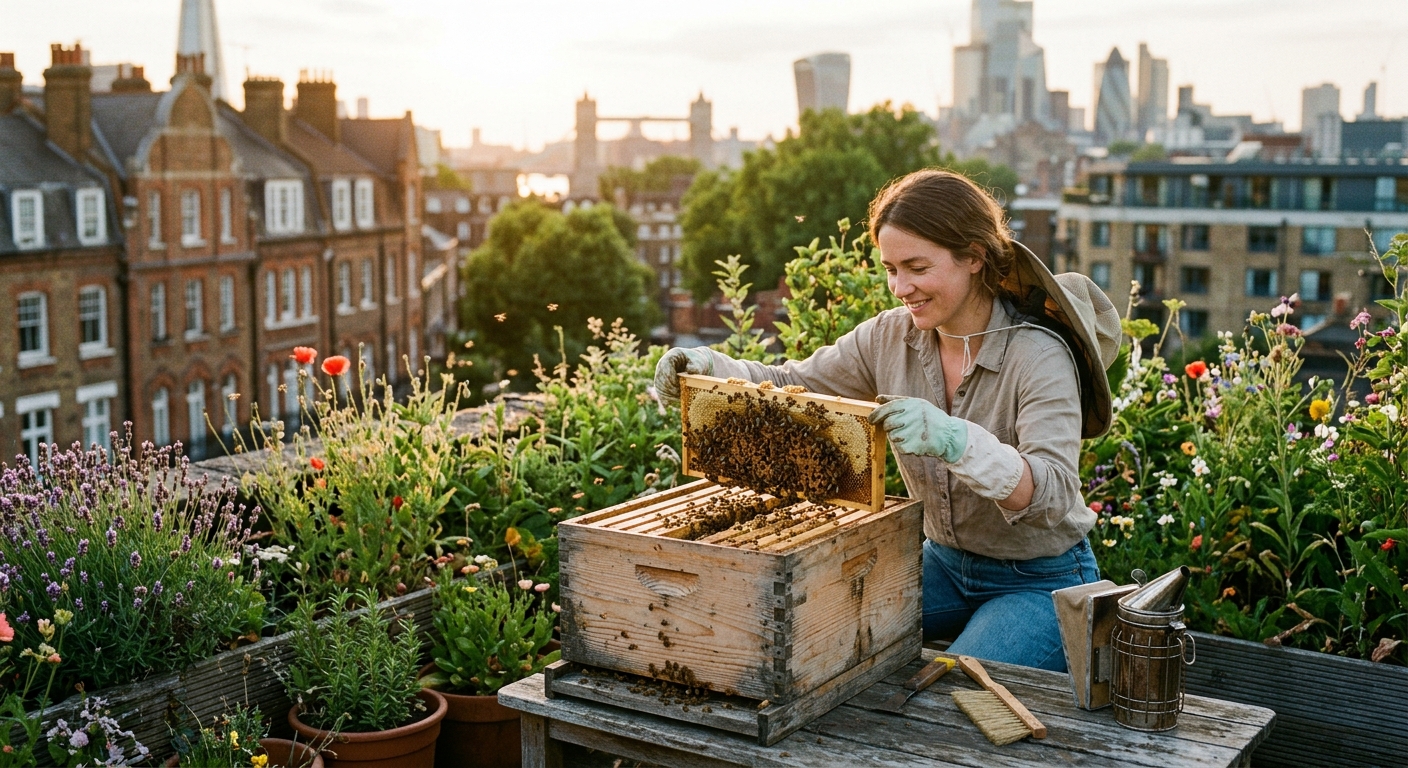
Picture the skyline of Chicago, Paris, or Tokyo. Now imagine that tucked behind the water towers and ventilation units, dozens of beehives are quietly humming with hundreds of thousands of bees. Not as a novelty. Not as a gimmick. But as a genuine, thriving ecosystem that is changing the way urban residents think about nature, community, and each other.
Urban beekeeping has exploded in the last decade. What started as a fringe hobby practiced by a handful of rooftop dreamers has grown into a coordinated global movement, one that is reconnecting city dwellers with the natural world and, perhaps more surprisingly, with one another.
Why Cities? Why Now?
It might seem counterintuitive. Cities are loud, paved, and polluted. They are the last places you would expect to find thriving bee colonies. But researchers and urban farmers have discovered something remarkable: cities are often better environments for bees than the surrounding countryside.
Here is why that matters:
- Pesticide exposure is lower in cities. While rural farmland is frequently saturated with insecticides and herbicides, urban green spaces tend to use fewer chemicals. City parks, community gardens, and private flower boxes create a patchwork of relatively safe foraging zones.
- Urban biodiversity is surprisingly rich. A single city block can contain dozens of flowering plant species, from window boxes to street trees to overgrown vacant lots. Bees thrive on variety, and cities deliver it.
- Temperatures are slightly warmer. The urban heat island effect, often cited as an environmental problem, actually extends the foraging season for bees in temperate climates, giving colonies more time to build their stores.
Dr. Rosi Rollings, an urban ecologist based in London, put it plainly in a 2022 interview with the BBC: ‘We have been underestimating cities as wildlife habitats for years. The bees figured that out before we did.’
More Than Honey: What Urban Hives Are Really Producing
Yes, urban beehives produce honey. Sometimes spectacular honey, rich and complex from a diet of urban wildflowers, linden trees, and rooftop herb gardens. But the real harvest from these projects goes far beyond what you can put in a jar.
1. Pollination That Feeds Communities
Urban community gardens and school vegetable plots have seen measurable increases in yield after nearby hives were installed. Squash, tomatoes, peppers, and berry bushes all depend on pollinators. When bees move in, food production goes up. In cities where food deserts are a persistent problem, this is not a small thing.
2. Environmental Education in Real Time
Across the United States and Europe, schools with rooftop or courtyard hives report something teachers struggle to manufacture in classrooms: genuine, electric curiosity. Students who have never shown interest in biology spend hours watching bees, asking questions, and conducting their own observations. Programs in Philadelphia, Amsterdam, and Melbourne have used hives as anchor points for science curricula that extend across biology, chemistry, mathematics, and environmental studies.
3. Mental Health and Community Belonging
This is perhaps the least expected benefit, but it may be the most profound. Beekeeping is meditative. It demands presence. You cannot tend a hive while scrolling your phone or rehearsing tomorrow’s worries. Dozens of community beekeeping programs in cities like Detroit, Glasgow, and Cape Town specifically target residents dealing with anxiety, depression, isolation, or trauma. Participants consistently describe the experience as grounding, calming, and deeply connecting.
A community beekeeper in Detroit named Marcus Webb, who runs a program for at-risk youth on the city’s east side, described it this way in a local radio interview: ‘When you are standing in front of that hive, you are completely present. The bees do not care about anything except what is happening right now. And somehow, that teaches you to do the same thing.’
The Neighborhoods Being Transformed
Urban beehive projects are not happening in wealthy enclaves alone. Some of the most powerful examples are unfolding in historically underserved communities where the relationship between residents and green space has long been complicated.
Detroit, Michigan: Bees on the East Side
Detroit’s decades of deindustrialization left thousands of vacant lots scattered across the city. Rather than viewing them as blight, a growing network of urban farmers and beekeepers began seeing opportunity. Today, Detroit has one of the most active urban beekeeping communities in North America, with hives maintained by community organizations, high school students, and formerly incarcerated individuals learning new trades. The honey is sold locally, profits stay in the neighborhood, and the pollinators support an expanding network of urban food gardens.
Paris, France: Bees Above the Boulevards
Paris has embraced urban beekeeping with characteristic enthusiasm. Hives sit atop the Paris Opera House, the Grand Palais, Notre-Dame Cathedral, and dozens of hotels and corporate buildings across the city. The program has become a point of civic pride, with Parisian urban honey regularly featured in high-end restaurants and sold in local markets. The city now estimates it hosts over 3,000 registered hives within its limits.
Singapore: Green City, Buzzing City
Singapore’s aggressive urban greening strategy has made it one of the most bee-friendly cities in Asia. Vertical gardens on skyscrapers, rooftop farms, and carefully planned street plantings create continuous foraging corridors for pollinators. Government-backed beekeeping programs have trained hundreds of residents in hive management, weaving ecological responsibility into the city’s identity.
How Communities Are Making It Happen: A Practical Look
Starting an urban beehive program is more accessible than most people assume. Here is how communities are doing it successfully:
- Partnering with local governments. Many cities have updated zoning laws to permit beehives on rooftops and in community gardens. Advocates who engage local councils early tend to build durable, well-supported programs.
- Training programs and mentorship. Organizations like the Urban Beekeeping Laboratory in New York and the British Beekeepers Association offer certification and mentorship programs specifically designed for city environments.
- Corporate sponsorship with community benefit. Businesses increasingly fund rooftop hives as part of sustainability commitments, with agreements that honey profits or educational access flow back into local communities.
- School-based programs. Schools provide ideal hive locations with built-in educational audiences. Partnerships between school boards and local beekeeping associations have launched successful programs across dozens of cities.
- Neighborhood beekeeping collectives. Groups of residents who share equipment, knowledge, and harvests distribute both the labor and the rewards, making participation accessible to people with limited time or resources.
Addressing the Fear Factor
Any conversation about urban beekeeping eventually arrives at the same question: are people afraid? The honest answer is yes, some are. Fear of bees is common, and in communities where residents have not grown up around them, the arrival of a hive can feel alarming rather than welcoming.
The programs that succeed take this seriously. They begin with community conversations, not installations. They invite skeptical neighbors to workshops before a single hive appears. They explain the difference between honey bees, which are genuinely docile and focused entirely on foraging, and wasps or hornets, which tend to prompt most of the fear. They demonstrate hive inspections openly, letting curious onlookers see how calm the process can be.
Over time, most resisters become advocates. The woman who called the city to complain about hives on a neighboring rooftop in Brooklyn became a certified beekeeper herself eighteen months later. Stories like hers repeat themselves across city after city.
What the Bees Are Teaching Us About Community
There is a metaphor here that is almost too obvious to state, and yet it keeps surfacing in conversations with urban beekeepers around the world. A hive functions because every member contributes. There is no passenger in a healthy colony. The foragers forage, the nurses nurse, the builders build. The survival and flourishing of the whole depends on the participation of each part.
Urban beehive projects, at their best, work the same way. They do not drop a resource into a neighborhood and walk away. They build capacity, train residents, share harvests, and create ongoing reasons for people to show up for each other. They transform a rooftop or a vacant lot from dead space into living proof that a community can grow something together.
In a time when cities can feel atomizing and isolating, when neighbors share walls but not names, there is something quietly radical about gathering around a hive. About watching 60,000 individual creatures function as one organism oriented entirely toward life.
You Do Not Have to Own a Rooftop to Get Involved
If this movement has caught your attention, here are some genuine first steps:
- Search for a local urban beekeeping association or community garden in your city.
- Attend a beginner beekeeping workshop, many are free or low-cost.
- Plant pollinator-friendly flowers on your balcony, in your yard, or in a window box.
- Buy honey from local urban beekeepers at farmers markets to support existing programs financially.
- Talk to your school, workplace, or place of worship about hosting a hive.
The bees do not need our permission to find their way into cities. They already have. What they need is for us to notice what they are building, and to ask whether we might build something alongside them.