🎧 Listen to this story
Narrated by Kore · 8,219 characters
A Town on the Verge of Disappearing
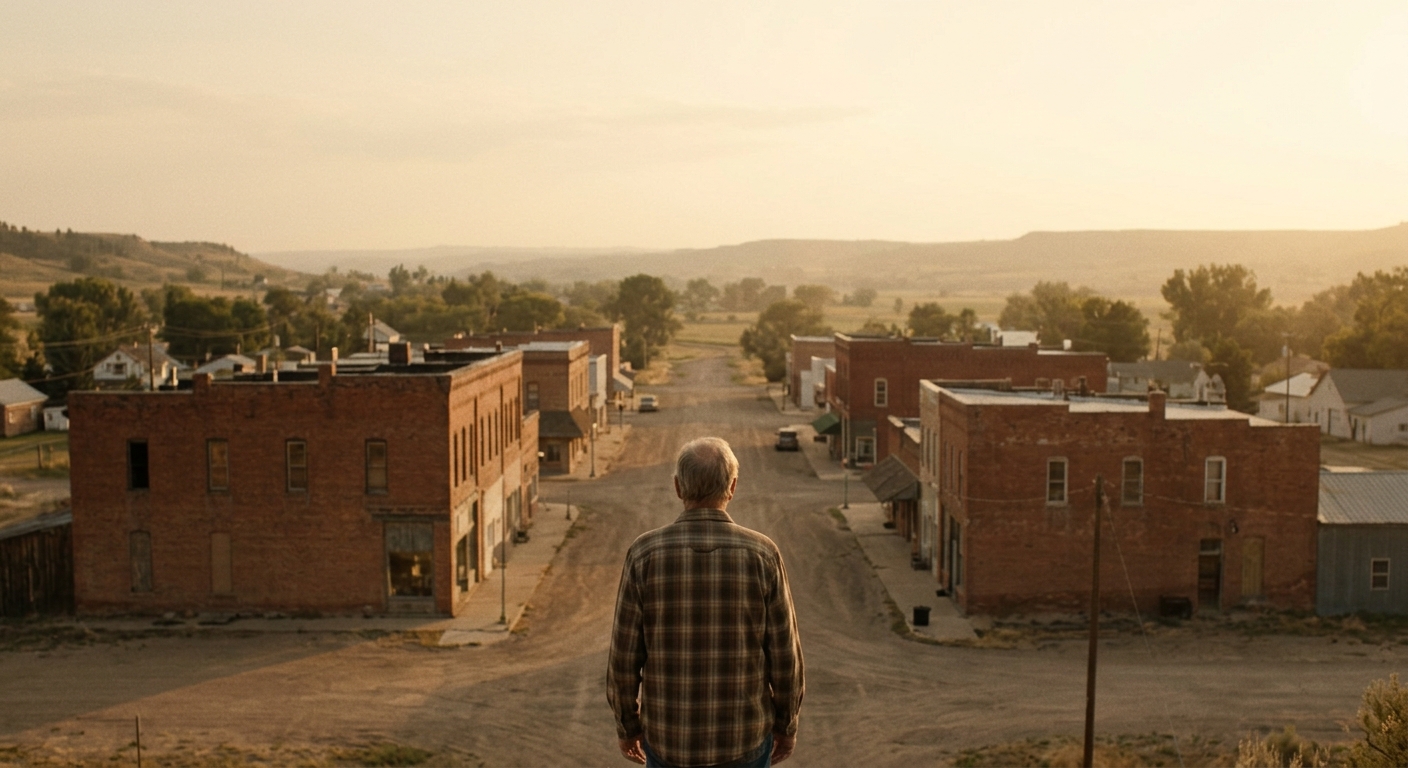
By 2011, Nyssa, Oregon had all the hallmarks of a place the world had left behind. Storefronts sat empty along the main strip. Young people had long since packed their bags for Portland or Boise. The population had dipped below 3,000, and local farmers were watching their yields shrink with every passing season as pollinators vanished from the surrounding fields.
It was the kind of slow, quiet death that rural America has grown uncomfortably familiar with. No dramatic disaster, no single catastrophic event. Just the gradual exhale of a community losing its reason to exist.
Then the bees came back. And somehow, impossibly, so did everything else.
The Collapse Nobody Talked About
To understand what happened in Nyssa, you first have to understand what was lost. For decades, the Treasure Valley region of eastern Oregon was a thriving agricultural corridor. Onions, sugar beets, corn, and clover filled the fields. Beekeepers from across the Pacific Northwest would bring their hives to the valley each spring, and the symbiotic relationship between farmers and pollinators kept the whole ecosystem humming.
But starting in the early 2000s, colony collapse disorder began decimating hive populations across the United States. Nyssa was not spared. Local beekeeper Marcus Hollenbeck, who had kept bees on the same plot of land as his grandfather, watched nearly 70 percent of his colonies die off between 2004 and 2009.
“I’d go out in the morning and open a hive and just find nothing,” Hollenbeck recalled in a 2019 interview with the Malheur Enterprise. “Not dead bees. Just nothing. They were gone. And I had no idea why.”
Without sufficient pollinators, crop yields fell. Farmers made less money. Fewer people could afford to stay. The ripple effect was swift and brutal.
One Woman’s Stubborn Bet on the Future
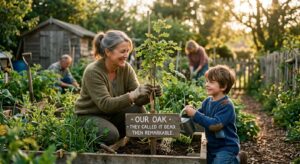
In 2012, a retired school principal named Ruth Caldera moved back to Nyssa after 20 years in Corvallis. She had grown up there, and when her mother passed away and left her a small parcel of land on the edge of town, Ruth faced a choice: sell it or do something with it.
She chose to do something with it.
Ruth had read about urban beekeeping programs that were revitalizing neighborhoods in Detroit and Cleveland, and she wondered, with characteristic stubbornness, whether something similar might work in a rural context. She contacted Oregon State University’s extension program, attended a weekend beekeeping workshop, and ordered her first two nucleus colonies in the spring of 2013.
Her neighbors thought she had lost her mind. Her daughter called twice a week to express concern. Ruth set up her hives anyway.
“I wasn’t trying to save the town,” she said during a community panel in 2021. “I was just trying to do something that felt alive. I needed to feel like the land could still give something back.”
What Happened Next Surprised Everyone
Within two seasons, Ruth’s small apiary was producing more honey than she could use. She started selling jars at the local farmers market, and people noticed the difference in quality. The clover honey from Nyssa had a depth of flavor that commercial varieties couldn’t replicate, and word began to spread through foodie circles in Portland and beyond.
But the more significant change was happening underground, quite literally. With pollinators returning to her parcel, the surrounding fields began to respond. Neighboring farmer Delia Orozco noticed her onion yields improving for the first time in years. Another farmer, whose alfalfa had been struggling, reported a 30 percent increase in seed set.
Ruth invited other local landowners to host hives. By 2015, a loose cooperative of eight beekeepers had formed under the name Treasure Valley Bee Guild. OSU’s extension office got involved, offering free consultations and disease screening. A local high school started an elective beekeeping class, which immediately filled to capacity.
7 Ways the Bees Changed the Town
- New revenue streams for struggling farmers: Honey sales and pollination service contracts added supplementary income that helped farms stay solvent during difficult growing seasons.
- A reason for young people to stay: The beekeeping cooperative created genuine entrepreneurial opportunities for residents in their 20s and 30s who previously saw no future in town.
- Tourism, of all things: Nyssa began hosting an annual Honey and Harvest Festival starting in 2016, drawing visitors from across the region and generating significant spending for local businesses.
- Ecological restoration: As the bee population grew, landowners began planting native wildflower corridors, which in turn attracted butterflies, beneficial insects, and migratory birds that had not been seen in the area for years.
- Community cohesion: The guild’s monthly meetings became some of the most well-attended gatherings in town, bridging divides between longtime ranching families and newer Latino farmworker communities.
- A new identity: Nyssa, once known primarily for sugar beet processing, began marketing itself as Oregon’s Honey Town, a rebranding that brought genuine civic pride back to a place that had forgotten it was worth being proud of.
- A model for other towns: Representatives from at least four other struggling rural Oregon communities have visited Nyssa to study the cooperative model and consider replicating it.
The Science Behind the Story
What Ruth stumbled into intuitively, ecologists have since confirmed with data. Pollinators are what biologists call a keystone species in agricultural ecosystems. Their presence or absence has disproportionate effects on the health of the entire system, far beyond what their small size might suggest.
Dr. Liana Presnall, an entomologist at Oregon State who has studied the Treasure Valley recovery, puts it plainly: “When you restore a pollinator population, you are not just helping one species. You are essentially rebooting the operating system of the landscape. Everything runs better.”
The Nyssa case has become a minor case study in regenerative agriculture circles, cited as an example of how grassroots, community-led ecological intervention can produce measurable economic and social benefits. A 2022 report from the OSU extension office estimated that honey sales and increased crop yields attributable to the cooperative’s work had added roughly $2.3 million in cumulative economic value to the Nyssa area over a decade.
Ruth, Ten Years Later
Ruth Caldera is 74 now. She runs 22 hives and still does most of the work herself, though she jokes that her knees have lodged a formal complaint. Her honey is sold in two Portland specialty grocery stores and ships to customers in six states. She has mentored more than 40 new beekeepers, several of whom are now running their own small operations.
When asked what she would say to someone else looking at a struggling community and wondering if one person’s small action can make a difference, she pauses for a long moment before answering.
“I think we spend too much time waiting for someone with a plan. The bees don’t have a plan. They just go out every day and do the one small thing they know how to do, and somehow, it adds up to something enormous. Maybe people work the same way.”
A Town That Remembered How to Thrive
Nyssa has not been transformed into a booming metropolis. That is not the point, and Ruth would be the first to say so. Challenges remain: the school district still faces budget pressures, broadband access is inconsistent, and the opioid crisis has touched lives there just as it has in rural communities across the country.
But something has shifted in the town’s relationship with its own future. There is a farmers market that draws a real crowd on Saturday mornings. There is a high school student named Tomás who has already pre-sold his first harvest of wildflower honey before his hives have even produced it. There is a Honey and Harvest Festival with a waiting list for vendor booths.
And there is a retired school principal who went out one spring morning with two small boxes of bees and a stubborn refusal to accept that things could not get better.
It turns out, sometimes that is all it takes to start a revival.