🎧 Listen to this story
Narrated by Kore · 7,811 characters
The hospital hallways went quiet around eight in the evening. Visitors drifted toward the elevators, the daytime bustle of rounds and carts and phone calls softened, and the neonatal unit took on a hush that Dana had come to know better than any room in her own house. That was the hour she lived for. That was the hour she got to hold her son.
Dana’s son Theo arrived at 29 weeks, weighing just over two pounds. She had planned a calm birth, a nursery painted in soft sage, a hospital bag packed with her favorite blanket. Instead she got an emergency, a blur of masks and monitors, and a baby small enough to rest in the length of her forearm. What she did not plan on was how the next three months would rebuild her from the inside out.
The Chair in the Corner
Every NICU has one: a vinyl recliner tucked beside an incubator, scuffed from the elbows of a thousand exhausted parents. Dana’s chair sat beneath a dimmed lamp, next to a window that faced the parking structure. At dusk, the glass turned the color of weak tea, and then of slate, and then it simply reflected her own tired face.
The nurses taught her kangaroo care, the practice of holding a baby skin to skin against the bare chest. For the first few weeks she was only allowed short sessions, a precious hour or two when Theo’s vitals were stable enough. But as he grew stronger, the sessions stretched. By the time he was out of the woods, she was rocking him for hours each evening, long after the hallway lights dimmed to their nighttime glow.
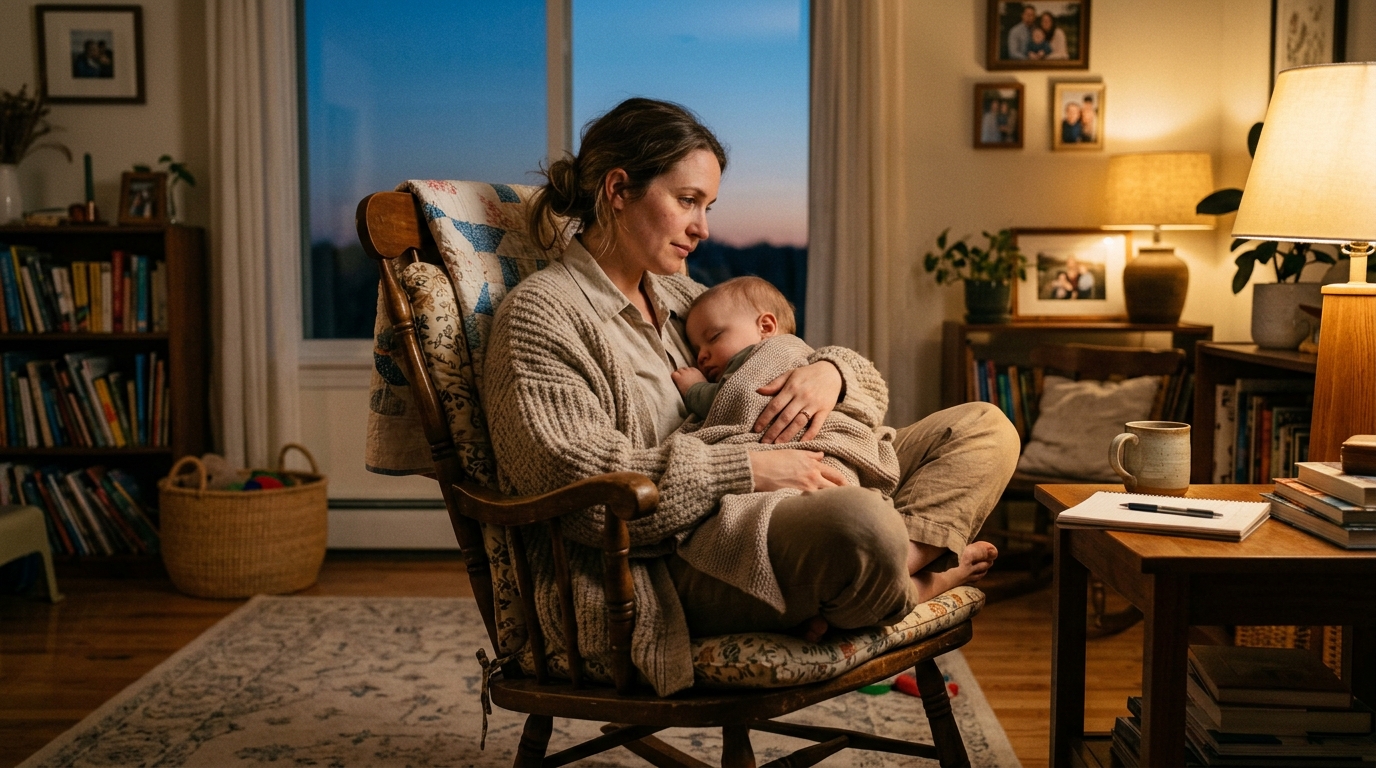
She did not set out to make it a ritual. It simply became one. Every night, after the last feeding of her shift, she would settle into the chair, unbutton her shirt, and place Theo against her heart with a blanket draped over them both. Then she would rock.
What the Research Says About Holding
Dana was not imagining the change she felt. A growing body of research supports what mothers have intuited for generations. Skin-to-skin contact with premature infants has been linked to steadier heart rates, more stable body temperatures, better sleep cycles, and improved breastfeeding outcomes. For the baby, it can be profoundly regulating.
But the benefits are not one-directional. Studies have found that mothers who practice regular kangaroo care often show lower levels of stress hormones such as cortisol, along with reduced symptoms of anxiety and postpartum depression. Holding a baby against the chest appears to trigger the release of oxytocin, sometimes called the bonding hormone, which can calm the nervous system and ease the grip of fear.
In other words, the chair was healing two patients at once.
The Slow Unclenching
Dana described the early weeks as living with a fist closed inside her chest. Every beep from a monitor sent her pulse racing. Every change in Theo’s breathing felt like a verdict. She slept in fragments, ate standing up, and carried a quiet, constant dread that she tried not to name.
The rocking changed something. At first she had to force herself to sit still. Her mind raced through to-do lists and worst-case scenarios. But the rhythm of the chair was patient, and so was her son. Back and forth, back and forth. Slowly, her breathing began to match his. Her shoulders, perpetually hiked toward her ears, started to drop.
She noticed the changes in small, almost secret ways:
- Her hands stopped trembling by the second week of evening sessions.
- She began falling asleep more easily once she got back to her temporary room.
- The sound of the monitors faded from alarm into background music.
- She started humming without realizing it, old lullabies her own mother had sung.
- The dread loosened its grip, not gone, but no longer in charge.
The Evening Is Where the Healing Happened
Dana says something about the hour mattered. During the day, the unit was a place of tasks: doctors, tests, decisions, paperwork. The evening was different. The lights dimmed, the machines hummed lower, and for a little while there was nothing to fix or fight. There was only a mother and her child and the creak of the chair.
She often thinks about how the stillness of that hour gave her permission to feel. In the busy daylight she had been brave and efficient. In the quiet she could finally cry, laugh softly at Theo’s tiny sighs, or simply sit in wordless gratitude. Evening gave her grief a place to land and her hope a place to grow.
The nurses noticed it too. One night shift nurse told her, gently, that she had never seen a parent’s whole posture change the way Dana’s did when she picked Theo up. It was as if the day’s armor slid off the moment he was in her arms.
A Body That Remembered How to Rest
There is a physical story here as well. Mothers of premature infants often carry their stress in their bodies: tight jaws, aching backs, shallow breathing, disrupted sleep. Dana was no exception. But after weeks of nightly rocking, her body began to remember a different way of being.
She learned to breathe from her belly instead of her throat. She learned to let her weight sink into the chair. She learned that rest was not a luxury or a betrayal of her vigilance, but a way of being more present for Theo. The same stillness that soothed him was restoring her.
She also found that her milk supply, which had dwindled under the weight of stress, began to steady. Her mood lifted in ways she could not have forced. Even her relationship with her partner softened, because she was no longer spending every conversation braced for the next crisis.
Ninety Nights Later
Theo came home on a gray Tuesday in the spring, weighing six pounds and wearing an outfit that still swallowed him whole. Dana carried him out of the hospital the way you might carry something made of glass and light.
That first night at home, she did something unexpected. She sat in the rocking chair in the nursery, the one with sage green walls she had painted months earlier, and rocked him again. Not because he needed it, but because she did. The ritual had become part of who she was.
She still rocks him most evenings, even now that he is a sturdy, curious toddler who would rather chase the cat than sit still. Some nights he lets her. He leans his head against her chest, and she feels the same quiet settle that carried her through ninety nights in a hospital corner.
What We Can Take From Dana’s Evenings
You do not need a NICU to learn what Dana learned. Her story offers gentle lessons for anyone moving through a hard season:
- Stillness is not idleness. Sitting quietly with someone you love can be the most powerful thing you do all day.
- Give your evenings a ritual. A repeated, soothing practice tells your nervous system it is safe to rest.
- Let comfort flow both ways. When we care for someone, we are often healed in the caring.
- Make room for the feelings you postponed. The quiet hour is when they finally arrive, and that is okay.
- Healing is slow, and that is fine. Ninety nights of small, steady comfort can change a whole life.
The Chair Still Creaks
Dana kept one small thing from the hospital: the soft blanket the nurses draped over her and Theo on those long evenings. It sits folded at the foot of his bed now, worn thin and smelling faintly of both of them.
When the house goes quiet and the day finally lets go, she sometimes stands in the doorway of his room and listens to his steady breathing. She remembers the girl she was, frightened and clenched, who thought she was only there to keep her son alive. She did not know that the chair, the dusk, and the small warm weight against her chest were quietly keeping her alive too.
Tonight, as the light fades where you are, consider finding your own version of that chair. Hold someone close, or simply hold still. Let the evening do its slow, gentle work. You may be surprised by how much it has been waiting to give you.