🎧 Listen to this story
Narrated by Kore · 6,934 characters
There is a hayfield on the edge of Marlow Creek that nobody owns on purpose. The farmer who held the deed passed away eleven years ago, his children live three states away, and the county has never quite gotten around to doing anything with it. So the grass grows tall, the creek runs along the western edge, and every June, just after the sun slips behind the ridge, the field begins to blink.
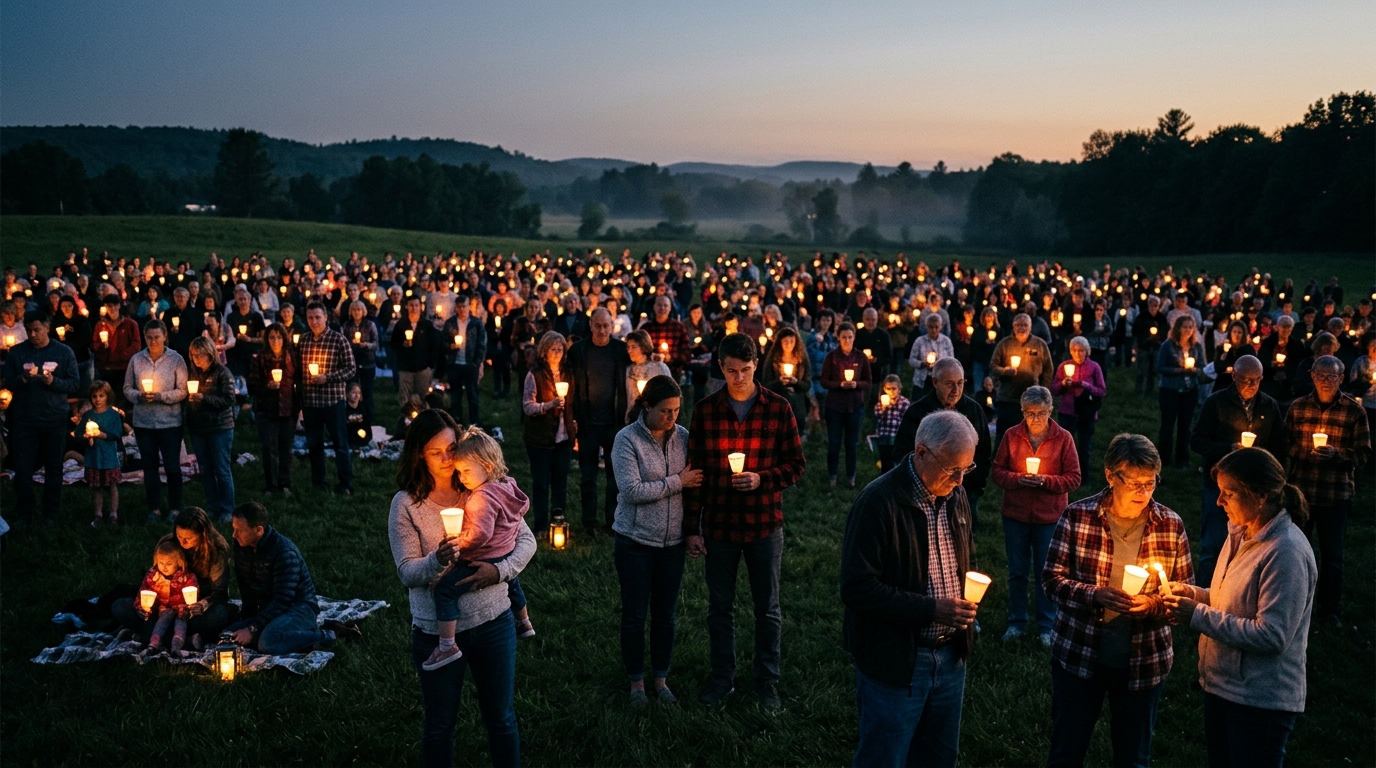
It starts small. One flash near the fence line. Then another, low in the grass. Within a quarter of an hour, thousands of fireflies are rising in slow, silent waves, and the people of Marlow Creek are standing at the edge of the field in folding chairs and on old quilts, saying very little. Locals call it the Evening Gathering. There is no flyer, no committee, no schedule. People just know.
How a Quiet Habit Became a Town Tradition
Ask ten residents how it began and you will get ten slightly different answers, but they all circle back to the same story. Eleven summers ago, a woman named Ruth Ellery lost her husband of forty-four years. In the weeks after the funeral, the house was full of casseroles and condolences, and then one day it was suddenly, terribly quiet.
Ruth told a neighbor later that the worst part of grief was not the mornings or the afternoons. Those she could fill with errands and phone calls. It was the hour after dinner, when the dishes were done and the light went soft and there was nothing left to do but feel it all. One evening in June she could not stand the silence of her kitchen, so she walked down the lane with a thermos of tea and sat on the old stone wall beside the hayfield.
The fireflies came up around her like a slow exhale. She sat there for an hour. The next night she came back. By the end of that week, a neighbor named Dale had joined her, then a young couple with a baby who would not settle, then a retired teacher who said she had not been outside after dark in years.
“Nobody said why they came,” Ruth recalls. “Nobody had to. We were all carrying something. The field just let us set it down for a while.”
What Grief Looks Like at Dusk
If you stand at the back of the gathering on a good night, you will notice something that is hard to describe in a headline. The crowd is not somber exactly. It is gentle. Children whisper because the adults are whispering. An older man lifts his grandson onto his shoulders so the boy can see the highest flashes. Someone passes a thermos down the row without a word.
Many of the people there are grieving something specific: a spouse, a parent, a child, a lost job, a farm sold off, a diagnosis that has changed everything. But the field does not ask anyone to explain. It simply offers the same small miracle to everyone at once, and for a little while that shared attention feels like a kind of company.
The Unspoken Rules of the Evening Gathering
Over the years, without anyone writing anything down, a handful of customs have taken root:
- Phones stay in pockets. The glow of a screen interrupts the field, and everyone knows it, so lights are kept low and conversation lower.
- Nobody walks into the grass. The fireflies lay their eggs in the soil and the larvae live there for up to two years, so the town keeps to the mowed edge and lets the field be.
- Newcomers are welcomed without questions. If you arrive alone, someone makes room on a quilt. If you leave early, no one asks why.
- The last light is honored. When the flashing finally fades, people sit a moment longer in the dark before standing, a pause that has become almost ceremonial.
The Science Behind the Glow
The wonder of the field has an explanation, though knowing it only deepens the feeling. Fireflies are not flies at all but beetles, and their light is a chemical reaction in their abdomens, one of the most efficient forms of illumination in nature, producing almost no heat. Each species flashes in its own pattern, a private language of timing and rhythm used to find a mate in the dark.
The show at Marlow Creek peaks for only a few weeks each year. Adult fireflies live just a short time once they emerge, which means the lights people gather to watch are, in a sense, a brief and borrowed gift. That fragility is part of what moves visitors. The field will not do this forever, and neither will any of us, and somehow that makes the evening feel more precious rather than sadder.
Fireflies around the world are in decline, threatened by habitat loss, pesticides, and light pollution. A dark, unmowed, chemical-free field like this one has become a rare refuge. Without ever meaning to, the people of Marlow Creek have become its guardians.
A Town That Learned How to Sit With Sorrow
Dale, who first joined Ruth on the wall, put it simply when asked what the Gathering means to him. He lost his brother the same spring Ruth lost her husband, and for months he could not talk about it. “I did not have the words,” he says. “But I could sit beside someone else who did not have the words either. That turned out to be enough.”
That may be the quiet lesson of the field. Grief does not always need to be fixed, explained, or even spoken aloud. Sometimes it needs a place to rest and a few hundred small lights to keep it company. The town did not set out to build a healing ritual. They just kept showing up at dusk, and the showing up did the rest.
How to Find Your Own Evening Light
You do not need a firefly field to borrow the wisdom of Marlow Creek. The heart of the tradition is simple and portable. If you are carrying something heavy, consider these gentle practices:
- Choose one fixed time at day’s end. The hour after dinner is often the loneliest. Give it a purpose, even a small one, like a walk or a seat on the porch.
- Go outside, even briefly. The shift from indoor light to open sky tells the body that the day is finished and it is allowed to soften.
- Invite someone without explaining. Company without conversation is a underrated comfort. Ask a neighbor to sit with you and leave it at that.
- Protect a dark place. Turn off an unnecessary porch light or let a corner of your yard grow wild. You may be offering shelter to something small and glowing.
- Let the pause happen. When the evening quiets, stay a moment longer than feels necessary. That is often where the settling begins.
The Last Light of the Night
On the final night of last June’s show, Ruth was there as always, her thermos tucked beside her, a little slower on the walk down than she used to be. A girl of about seven sat on the stone wall next to her, someone Ruth had never met, there with a grandmother who had recently lost her own husband. The girl watched the field for a long while, then whispered, “Do they know we’re here?”
Ruth smiled in the dark. “I like to think so,” she said. “I like to think that’s why they keep coming back.”
Then the last few lights drifted up over the creek and went out, one by one, and the whole town sat in the quiet together, in no hurry to go home.