🎧 Listen to this story
Narrated by Kore · 6,271 characters
There is a particular hour on a hospital ward that nurses talk about in lowered voices. It arrives somewhere between dinner trays and the night shift handover, when the daylight fades from the windows but the fluorescent tubes overhead keep blazing as if it were noon. For years, nobody questioned it. Hospitals were bright because hospitals had always been bright. Then one winter, a small medical center decided to ask a simple question: what if the building itself knew when evening came?
The Question Nobody Had Asked
The idea began with a night charge nurse who had worked the same sixth-floor recovery unit for nineteen years. She noticed a pattern she could not unsee. Patients who arrived in the morning seemed to settle, but by early evening, many grew restless, confused, or tearful. Older patients in particular would drift into a fog the staff called sundowning, a restless agitation that tends to arrive as daylight leaves. The harsh overhead light did not help. It seemed to tell every sleeping body that the day was still going, long after the sky had said otherwise.
She brought her observation to the unit manager, expecting a polite shrug. Instead, the manager pulled up a stack of research she had been quietly collecting. Human beings run on an internal clock tuned to light. Bright light in the evening can suppress melatonin, the hormone that helps the body prepare for sleep. Hospital patients, already stressed and in pain, were being denied the one natural signal that tells the brain it is safe to rest.
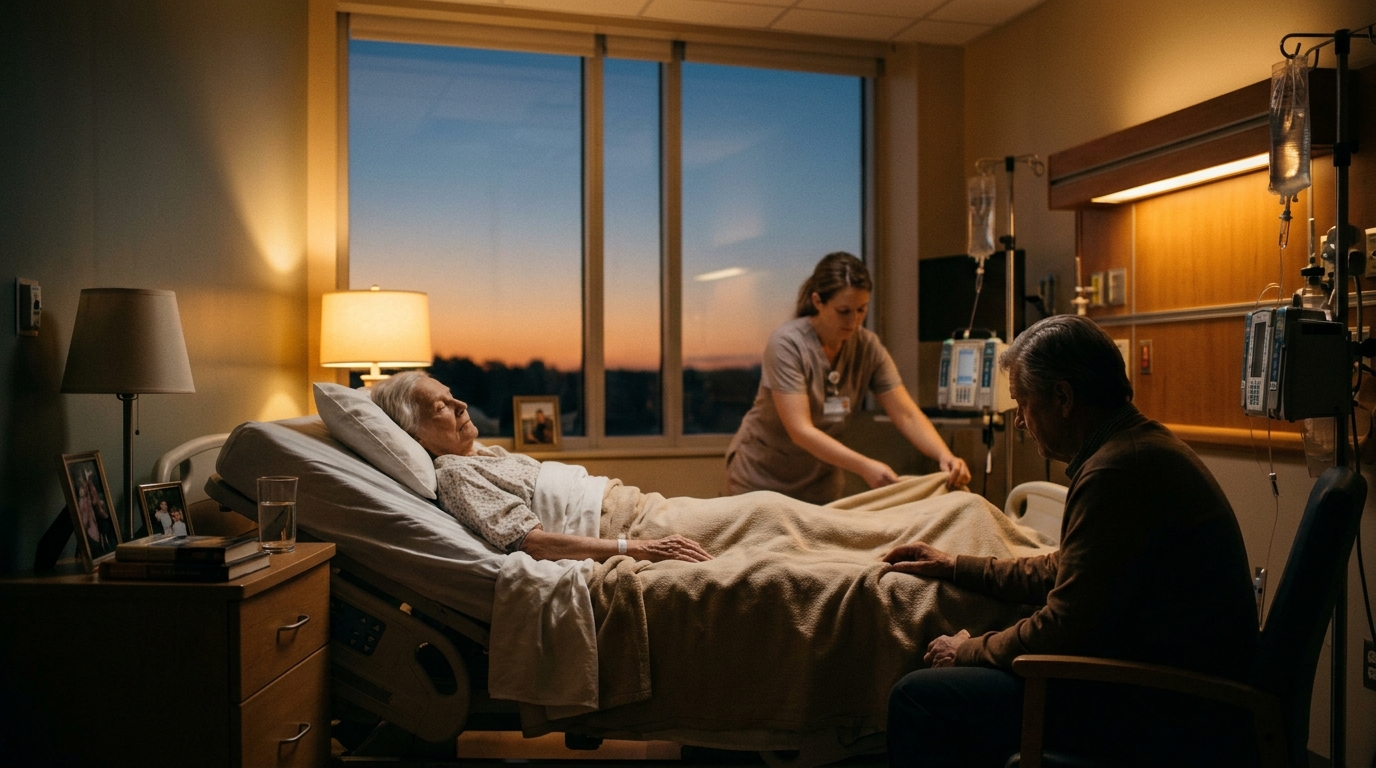
So the hospital tried something modest. Starting at sunset, the lights in patient corridors and rooms would soften in stages, shifting from cool white to a warm amber glow over about ninety minutes. Overhead lights would dim. Hallway noise would be encouraged to fall with them. Nothing dramatic, nothing expensive. Just a building learning to exhale.
What Changed in the First Weeks
The staff expected small improvements at best. What they noticed instead came slowly, then all at once.
- Sleep arrived earlier. Patients reported falling asleep faster and waking less often through the night.
- Evening agitation eased. Nurses described fewer episodes of confusion and restlessness among older patients as dusk deepened.
- Requests for sleep aids dropped. Several staff members observed that fewer patients asked for sedatives to get through the night.
- The mood on the ward shifted. Conversations grew quieter. Visitors lingered more gently. Even the staff seemed less frayed by the end of a shift.
None of these changes arrived with a ribbon-cutting. They showed up in the small details of ordinary nights, the kind of details only the people awake for them tend to notice.
A Night Nurse Remembers
One nurse, who had spent years walking those corridors after dark, described the difference this way. Before the change, the ward at night felt like an airport terminal, a place where nobody was meant to stay. After, it felt like a house where someone had turned down the lamps because they wanted you to rest.
She remembered an older gentleman recovering from surgery who had been sleepless and anxious for three nights running. On the fourth evening, as the hallway glow turned amber, she found him sitting up in bed, watching the light change against the wall. He told her it reminded him of evenings on his porch decades ago, when his wife would bring out tea and they would watch the day fold itself away. He slept through until morning.
She did not claim the lighting cured anything. But she believed, and the unit’s records seemed to agree, that it gave his body permission to do what it already wanted to do.
The Science of a Gentler Evening
The human body keeps time by light. Special cells in the eye sense brightness and send signals to the brain’s internal clock, which in turn manages sleep, hormones, temperature, and alertness. When evening light stays harsh, that clock gets confused. Sleep arrives late and breaks easily.
Hospitals are challenging places for this rhythm. Lights glow all night, monitors beep, and routines run on the schedule of the institution rather than the body. Researchers who study healing environments have long noted that poor sleep slows recovery, raises stress, and can worsen pain. Restoring even a rough version of a natural light cycle is one of the gentlest interventions available.
It is worth being honest about what such a change can and cannot do. Dimmer lights are not a medicine, and results will vary from ward to ward and patient to patient. But the underlying principle is simple and kind: a body that is allowed to feel evening is a body better able to rest.
What We Can Take Home With Us
You do not need a hospital budget to borrow this idea. Many of us live under the same relentless brightness, scrolling and working and worrying long past the hour the sky has gone quiet. Consider a few small evening rituals inspired by that sixth-floor ward:
- Soften your lights at sunset. Switch off the harsh overhead bulbs and use a lamp or two instead.
- Begin winding down an hour early. Let the last stretch of the day be slower than the rest.
- Lower the volume, not just the light. Quiet is part of what tells the body it is safe.
- Sit with the changing sky. Even five minutes of watching the day fade can help the mind release its grip.
- Offer someone else a gentler evening. Check on a neighbor, a tired parent, a friend having a hard season.
The Quiet Lesson at the End of the Hall
What stays with me about this story is how ordinary the solution was. No breakthrough device, no miracle drug. Just a group of caregivers who paid attention to the hour when people seemed most vulnerable and asked how the space around them could be a little kinder.
There is a lesson in that for the rest of us as the day winds down. So much of healing, in hospitals and in homes, happens not in the dramatic moments but in the quiet ones, when someone lowers the lights, lowers their voice, and lets the evening do its gentle work.
Tonight, when the sun slips below the rooftops, you might try it too. Turn down the glare. Let the room go amber. Sit for a moment in the soft dark and let yourself be tired in the good way. Somewhere, on a sixth floor, a corridor is glowing warm, and someone is finally sleeping.