🎧 Listen to this story
Narrated by Kore · 7,067 characters
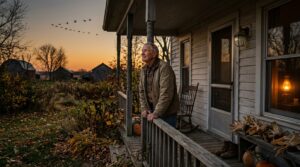
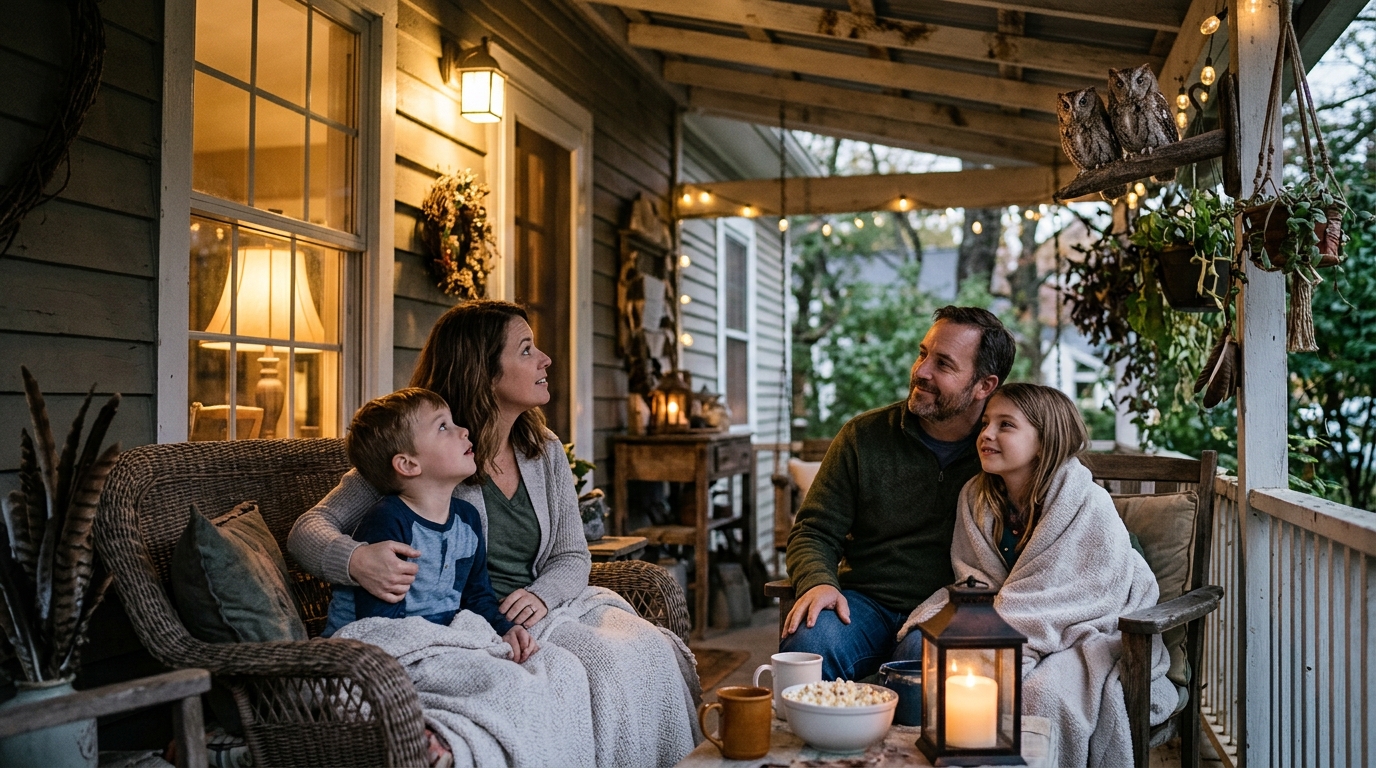
There is a particular hour on the Whitlock farm when the world seems to exhale. The tractor has been parked, the dishes are done, and the sky behind the old hay field turns the color of weak tea and peach jam. Marguerite Whitlock calls it the hinge of the day, the moment when daytime lets go and night takes hold. And for the last six years, that hinge has opened with a sound most people would never think to call a lullaby: a long, rasping, ghostly screech from the rafters above her porch.
It is, she will tell you, the best sound in the world.
The Tenants Nobody Invited
The Whitlocks did not set out to become a host family for wildlife. In the spring of their second year on the property, Marguerite’s husband Dale noticed small pale pellets collecting on the porch boards, gray, tidy, and oddly fascinating. He assumed it was a rodent problem. Then one evening, as the family sat out with iced tea, a pale, heart-faced shape drifted out from beneath the eave and glided over the yard without making a single sound.
A barn owl had moved into the gap between the porch roof and the old stone wall, and it had brought a mate.
Dale’s first instinct, he admits, was practicality. Owls leave a mess. Owls are loud. But their daughter Junie, who was seven at the time, had already pressed her nose to the window screen and whispered, in a voice that settled the matter: “They’re the neighbors, Dad.”
A Sound Like No Other
Barn owls do not hoot. That is the first thing the Whitlocks learned, and it surprised them. Instead of the cartoon whoo most of us imagine, barn owls produce a drawn-out, shivering screech, equal parts eerie and tender once you know who is making it. The young make a hissing, snoring sound that carries across the yard in the early evening, a rhythmic wheeze that Junie, now thirteen, describes as “the world’s smallest, sleepiest accordion.”
Over time, the family stopped hearing the sounds as strange and began hearing them as signals. Here is how the evening ritual unfolds on their porch, in the order it always seems to happen:
- Dusk, around sundown: The adult owls stir. A soft rustling comes from the eave as they stretch and shake out their feathers.
- Twilight: The first screech rolls out, long and quivering, a kind of roll call before the hunt.
- Nightfall: The silent glide begins. One owl departs over the hay field while the other stays near the nest.
- Deep evening: The soft, snoring chorus of the owlets settles into a steady rhythm, the sound the family has come to think of as the end of the day.
What Marguerite Learned in the Quiet
Marguerite will be the first to admit she was not a calm person when the owls arrived. She worked two jobs in the early years, managing the farm’s books by day and a part-time shift at the county clinic. Her evenings were a blur of obligations and unfinished lists. Bedtime felt like another task to survive.
Then she started sitting on the porch for ten minutes after the kids were down, just to listen.
“I was exhausted and wired at the same time,” she says. “The owls became my cue to stop. They don’t care about my to-do list. They’ve got a whole night of work ahead of them, and they do it without hurry. Something about that taught me to slow down.”
It became a practice. Every night, she’d step outside, wait for the first screech, and let her shoulders drop. She began to notice how the owls moved through their own routines with an unbothered patience. The night did not rush them. They did not fight the dark. They simply lived in it, as though darkness were home.
The Gift of Being Unobserved
One of the things Marguerite treasures most is that the owls ask nothing of her. They are not pets. They do not need feeding. The family has made a firm rule never to shine lights on the nest or approach the eave, since barn owls are sensitive to disturbance. The relationship works precisely because it is a quiet one: mutual, distant, respectful.
“There’s a lesson in that too,” she says. “You can love something and still let it be wild. You don’t have to hold it.”
The Quiet Work Owls Do
There is a practical side to the story, and Dale is quick to mention it. A single barn owl family can eat an astonishing number of rodents in a season, often well over a thousand. For a working farm with a grain store, that is no small thing. The Whitlocks noticed fewer mice in the barn within the first year. They used far less pest control. Without ever asking, they had gained a night crew.
Farmers across many regions have long understood this partnership. Some build nesting boxes specifically to welcome barn owls onto their land, trading a safe place to raise young for a free and tireless form of pest management. The Whitlocks eventually installed a nesting box in the barn as well, giving the owls a second option and keeping the porch eave a little cleaner.
Growing Up Under the Same Roof as an Owl
For Junie, the owls have been a constant backdrop of childhood. She has kept a small notebook since she was nine, recording the date of each first screech of the season, the number of owlets she can hear, and the nights the adults seem unusually restless. It is not a scientific log, but it is a devoted one.
“Sometimes I can’t sleep, and I just listen,” she says. “If I hear them, I know everything’s okay. It means the night is working the way it’s supposed to.”
That sentence, simple as it is, may be the quiet heart of the whole story. In a world that feels loud and uncertain, there is something profoundly steadying about a sound that returns every night, no matter what the day contained.
A Few Gentle Lessons from the Porch
When you ask the Whitlocks what the owls have given them, the answers come slowly, the way answers do at the end of a long day.
- Rituals anchor us. A small, repeated moment of stillness can reorganize an entire evening, and an entire mood.
- Not everything needs to be fixed or owned. Some of the best things in life are meant to be witnessed from a respectful distance.
- Strange does not mean unwelcome. The screech that might alarm a stranger became, to this family, the sound of safety.
- The night is not the enemy. Darkness, they have learned, can hold as much life as daylight, if you are willing to listen.
Before You Turn In
On the evening I visited, the light was fading fast, and the hay field had gone silver at its edges. Marguerite poured a second cup of tea, and we sat in silence, which felt like the right way to begin.
Then it came: a long, trembling cry from just above our heads, answered a moment later by a softer, rasping reply. Marguerite smiled without looking up.
“There they are,” she said. “Right on time.”
If you have a porch, a window, or even just a quiet corner of your evening, consider what might be waiting to be heard there. It may not be an owl. It may be rain on a roof, a neighbor’s wind chime, the settling of an old house. But somewhere in the dusk, something is probably keeping its own gentle schedule, reminding you that the day is done, and that it is allowed to be.
Goodnight, to the owls above the porch, and to you.