
🎧 Listen to this story
Narrated by Vindemiatrix · 7,570 characters
A Message Sent to the Wrong Person Changed Everything
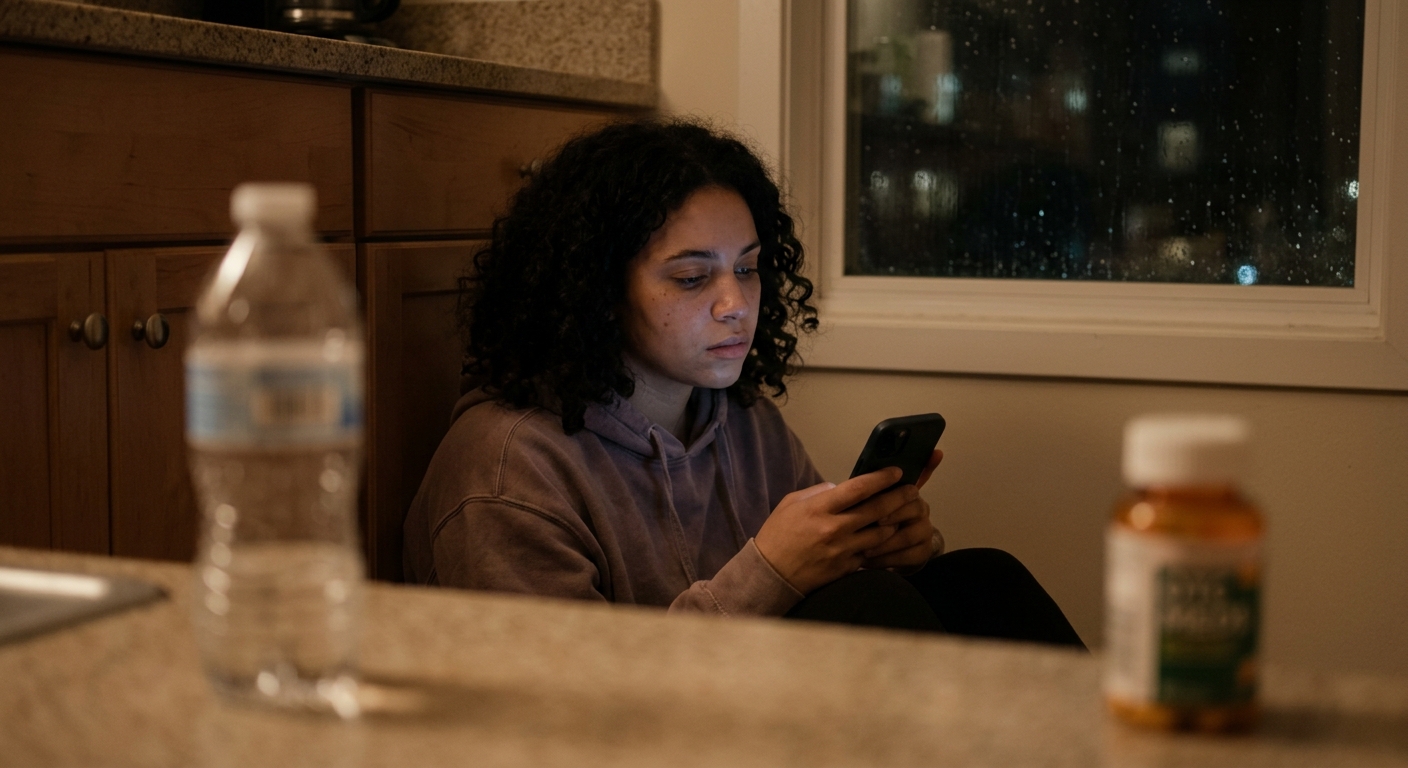
It was a Tuesday night in October when Marisol Vega typed out what she believed was a message to her sister. Her hands were shaking. She had already made up her mind. She had written a note, taken it down, written it again. The apartment was quiet in the way that only feels possible when someone has decided they are done fighting.
She hit send. And then she waited for her sister to respond, half-hoping she would say something that would change her mind, half-convinced nothing could.
Instead, a reply came from a number she did not recognize. A stranger named Daniel had received her message by accident. One digit off in her contact list. A simple, ordinary mistake that became anything but ordinary.
What happened next is the kind of story that does not feel real until you sit with it long enough to understand that sometimes the universe works in ways that defy every logical explanation we reach for.
The Text That Started a Conversation
Marisol’s message was not dramatic. It did not announce her intentions outright. It said, simply: “I don’t think I can do this anymore. I’m so tired of pretending everything is okay.”
Daniel, a 34-year-old teacher from a city three states away, saw the message pop up on his phone while he was grading papers. His first instinct was to type back “I think you have the wrong number” and move on. But something made him pause.
“I almost just ignored it,” Daniel later told a local news outlet. “But there was something about the way it was written. It didn’t feel like a joke. It felt heavy. And I thought, what if this person really needs someone right now?”
So instead of correcting the mistake and closing the conversation, Daniel wrote back: “Hey, I’m not sure if you meant to send this to me, but I’m here if you want to talk.”
Four words that cost him nothing. Four words that cost him a few seconds of his evening. Four words that Marisol says saved her life.
What Happened During Those Hours
They talked for three hours. A stranger and a woman who had been invisible to herself for longer than she could remember. Daniel did not try to fix anything. He did not offer solutions or statistics or hotline numbers right away. He just asked questions and listened to the answers.
He asked her what she loved to do when she was younger. She told him she used to paint. He asked if she still painted. She said she had stopped years ago. He asked why. She started to cry.
“He didn’t treat me like I was broken,” Marisol recalled in an interview shared by a mental health advocacy group. “He treated me like I was a person who was having an incredibly hard time. There’s a big difference.”
By the end of their conversation, Daniel had gently encouraged her to call a crisis line and to text her actual sister. She did both. Within the hour, her sister was at her door. Within the week, Marisol had made an appointment with a therapist, her first in nearly four years.
The Science Behind Why Connection Works
Stories like Marisol and Daniel’s are not just emotionally powerful. They are backed by a growing body of research that points to human connection as one of the most effective buffers against suicidal crisis.
Studies from the American Foundation for Suicide Prevention and other organizations consistently show that:
- Feeling heard and seen, even briefly, can interrupt the tunnel vision that accompanies suicidal ideation
- Social connection, even with strangers, activates the brain’s reward pathways and can reduce feelings of isolation
- Simple, open-ended questions like “Are you okay?” or “Do you want to talk?” can be more effective than advice-giving during a crisis
- People in crisis often do not reach out directly because they fear being a burden. Indirect or accidental contact removes that barrier
What Daniel did intuitively, therapists spend years training to do deliberately. He created a low-pressure space. He met her where she was. He did not panic, and he did not project.
Daniel’s Perspective: “I’m Just a Regular Person”
In the months after that October night, Daniel was approached by a journalist wanting to write about what happened. He was reluctant. “I don’t think of myself as a hero,” he said. “I just didn’t look away. That’s all I did.”
And yet, that framing is exactly what makes his story so important. He was not a trained counselor. He was not a first responder. He was a tired teacher on a weeknight who chose to pause instead of scroll past.
“I think about how easy it would have been to just type ‘wrong number’ and go back to grading,” he said. “And I can’t let myself think about that for too long.”
When asked if he and Marisol had stayed in touch, he smiled. “We check in sometimes. She sent me a photo of a painting she finished last spring. It was incredible. She’s incredible.”
What We Can All Learn From This Story
This is not a story about destiny or miracles, though it may feel like one. It is a story about a choice. A small, quiet, human choice made in a moment that could have gone a hundred different ways.
Here are some of the lessons that ripple out from what happened between Marisol and Daniel:
1. Showing Up Does Not Require Expertise
We often tell ourselves we are not qualified to help someone in emotional pain. We worry about saying the wrong thing. We fear making it worse. But research and real-world stories like this one suggest that presence matters more than perfection. You do not need a degree to listen.
2. Small Gestures Carry Enormous Weight
Daniel’s message was six words. Six words that communicated: you are worth responding to. In a crisis, that can be everything.
3. Asking Is Not Prying
Many people worry that asking someone directly about their mental state will plant ideas or invade their privacy. Mental health professionals overwhelmingly disagree. Asking someone if they are okay, if they are safe, if they want to talk, is an act of care, not intrusion.
4. You May Never Know the Impact You Have
Daniel almost did not respond. How many moments like this pass by every single day, moments where one person might have paused and chose not to? The invisible weight of those unlived choices is worth sitting with.
5. Recovery Is Not a Single Moment
Marisol’s story did not end with that text conversation. She went to therapy. She had hard days. She had relapses and breakthroughs and everything in between. The text was a bridge, not a destination. But bridges matter enormously when someone is standing at the edge of one.
If You Are Struggling Right Now
If any part of Marisol’s story feels familiar, please know that you are not alone in that feeling. Exhaustion is real. Invisibility is real. The weight of pretending is real.
You do not have to reach out to the right person. You just have to reach out.
- 988 Suicide and Crisis Lifeline: Call or text 988 (US)
- Crisis Text Line: Text HOME to 741741
- International Association for Suicide Prevention: https://www.iasp.info/resources/Crisis_Centres/
And if you are not in crisis but you know someone who might be, consider being the person who pauses. Consider being the Daniel in someone else’s story. The cost is a few minutes of your time. The return is something that cannot be measured.
A Painting, a Text, and a Life That Continued
Last spring, Marisol finished a large canvas she had been working on for several months. It is mostly blue, she says, but not a sad blue. The kind of blue that comes just after a storm, when the light is trying to get back in.
She sent a photo to Daniel. He saved it to his phone.
It is still there.