
🎧 Listen to this story
Narrated by Aoede · 7,844 characters
The Trip I Had Been Planning for Two Years
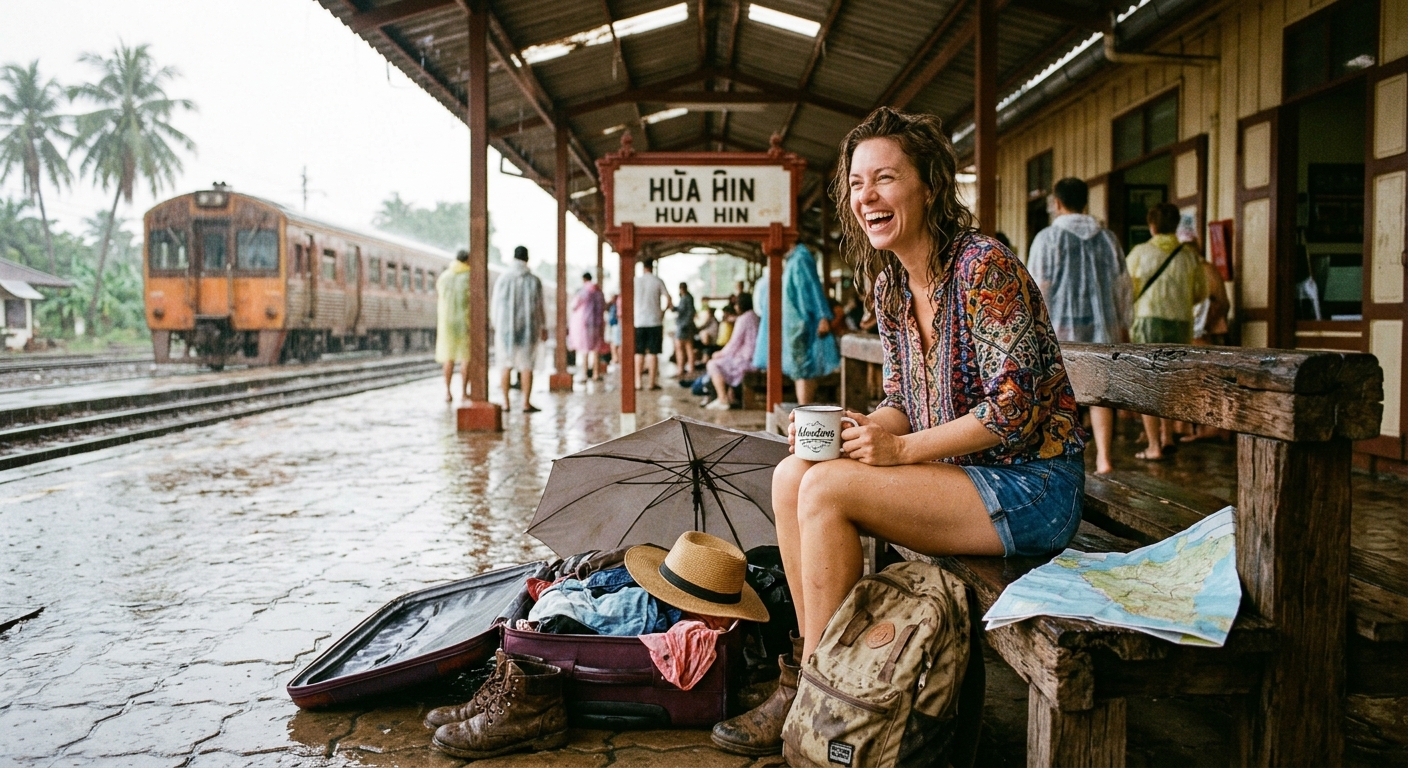
Let me set the scene. It is July. I am standing in the middle of a rain-soaked street in Lisbon, Portugal, holding a soggy map that has basically dissolved in my hands, my phone is dead, my luggage has been lost somewhere between Chicago and Madrid, and the “charming boutique hotel” I booked eight months ago has somehow given away my reservation. I have exactly 47 euros in cash, a backpack with a broken zipper, and the creeping, humiliating suspicion that I have absolutely no idea what I am doing.
This was supposed to be my dream vacation. Two years of saving. Spreadsheets. Pinterest boards. A color-coded itinerary that my friends lovingly called “unhinged.” I had planned every hour of fourteen days across Spain and Portugal, and by day three, virtually every single thing had gone wrong.
I want to tell you about what happened next, because it genuinely changed me. Not in a cliche, inspirational-poster kind of way. In a real, quiet, sometimes uncomfortable way that I am still sorting through two years later.
When the Plan Collapses, So Does the Illusion
Here is something nobody tells you about being a planner: the plan is not really about the destination. The plan is about control. It is about the comfortable illusion that if you think hard enough, prepare thoroughly enough, and anticipate every variable, life will cooperate with you.
Standing in that Lisbon street, I had to confront the fact that life does not cooperate. It just moves. And for the first time in a very long time, I had no choice but to move with it instead of ahead of it.
I found a small cafe, ordered the cheapest thing on the menu, and sat down to figure out what to do. A woman at the next table noticed my expression, which I can only imagine looked somewhere between panic and grief, and asked in lightly accented English if I was okay. I told her, briefly and probably with too much detail, what had happened.
She laughed. Not unkindly. She laughed the way someone laughs when they recognize something deeply familiar.
“The best thing that ever happened to me,” she said, “was a flight I missed in 2009. I ended up staying in that city for three years.”
Seven Things That Terrible Trip Taught Me
1. Discomfort Is Not the Same as Danger
In those first panicked hours, my brain kept sending distress signals as though I were in genuine peril. I was not. I was inconvenienced, frustrated, and embarrassed. Learning to separate real danger from mere discomfort was a lesson I had apparently needed for thirty-one years and had been successfully avoiding.
2. Asking for Help Is a Skill, Not a Weakness
I had always prided myself on being self-sufficient. Independent. The person other people called when things went wrong. But in a foreign city with no working phone and no reservation, I had to ask strangers for help repeatedly. And here is what I found: people mostly want to help. The hostel owner who squeezed me into a tiny room. The local man who walked me six blocks to the nearest phone charging cafe. The couple who shared their restaurant recommendation because they could see I was overwhelmed. Letting people in was not a failure. It was, somehow, the whole point.
3. The Itinerary Was Robbing Me of the Actual Trip
On my best-planned days in past travels, I had rushed through museums to hit the next item on the list, eaten at tourist traps because they were “on the way,” and taken photos of places I never actually looked at. Without my itinerary, I wandered. I sat in a plaza for two hours watching pigeons and an old man playing chess by himself. I ate at a place with no English menu by pointing at what the person next to me had ordered. Those moments are the ones I remember most vividly.
4. Your Reaction Is the Only Variable You Control
I cannot overstate how much energy I spent in those first twenty-four hours being angry. At the airline. At the hotel. At myself for not having backup plans. At the rain. None of that anger changed a single thing. What shifted everything was the moment I decided, consciously and with some effort, to treat the situation as an adventure rather than a catastrophe. Same circumstances. Completely different experience.
5. Failure Teaches Texture That Success Cannot
Every success I have had has felt, in some sense, like confirmation. Confirmation that I am capable, that I made good choices, that the path I am on is correct. But the Lisbon disaster taught me something textured and complicated. It taught me that I could lose everything I had planned and still be okay. Better than okay, actually. That knowledge has a weight and a substance that no success has ever given me.
6. Presence Is Something You Have to Practice
Without a plan to execute, I was forced to be present. Just present. In the moment, in the city, in my own body. It felt uncomfortable at first, like a muscle I had not used. But by the end of the trip, I was noticing things I would have walked past without a second glance. The sound of fado music drifting through a narrow alley. The particular blue of azulejo tiles in afternoon light. The way a city feels different at 6am than at noon. Presence, I realized, is not a personality trait. It is a practice.
7. The Stories Worth Telling Are Never About Things Going Right
I have told the story of that trip more times than any other travel story I have. Nobody wants to hear about the time everything went according to plan. They want to hear about the dissolved map, the dissolved hotel reservation, the cafe woman who laughed, the hostel with the too-small bed and the too-wonderful rooftop view. Our best stories almost always begin with something going wrong.
What I Brought Home That Was Not in My Luggage
My suitcase eventually showed up, by the way. On day nine of fourteen. I had already bought cheap local clothes that I liked better than anything I had packed, which felt like its own kind of metaphor.
What I actually brought home was harder to name. A loosening of something tight. A slightly higher tolerance for uncertainty. A new and genuine appreciation for the kindness of strangers, which turned out to be far more available than I had previously believed.
I also brought home a friendship. The woman from the cafe, Miriam, and I have stayed in touch. We met for coffee when she visited Chicago the following spring. She told me she still thinks about the look on my face that day, that particular expression of someone whose plan has just been defeated by reality. She said it reminded her of herself and that was why she spoke to me.
“We recognize each other,” she said. “The ones who grip too hard.”
The Lesson That Keeps Unfolding
I want to be honest: I did not immediately emerge from that trip transformed and serene. I came home tired, a little emotionally raw, and had two solid weeks of mild anxiety about travel in general. Growth is not always clean or immediate.
But something had shifted. When things go sideways now, and they do, I have a reference point. I have been in the street with the dissolved map. I have asked strangers for help and been surprised by their generosity. I have eaten food I could not name and loved it. I have sat still long enough to actually see something.
My successes have taught me what I am capable of when everything goes right. That vacation taught me what I am capable of when everything goes wrong. And in the longer arc of a life, the second lesson is the one that has proved more useful on more ordinary days.
So if you are in the middle of a ruined plan right now, if the itinerary has dissolved in the rain and you are standing somewhere unfamiliar feeling something between panic and grief, I want you to know: this might be the part of the story you tell the most later. Hold on. Look around. Let someone help you. The city is still there. So are you.