🎧 Listen to this story
Narrated by Kore · 7,587 characters
There is a particular kind of silence that settles over a small town around nine o’clock at night. Porch lights click on. Dishes get stacked in the drainer. Somewhere, a dog circles three times and lies down. And in a modest farmhouse at the edge of Alder Creek, a man named Walt Brennan sets his boots by the back door, laces loosened, the way he has done every evening for thirty years.
Walt is a volunteer firefighter. He has never been paid a dollar for it. And in three decades of service, through blizzards, through two broken ribs, through his daughter’s wedding reception, he has not missed a single call.
This is a story about what that actually means, and what it costs, and why the quietest hours of the evening are where it really lives.
The Math of a Promise
When people first hear the claim, they assume it is an exaggeration. Surely a man cannot answer every single page for thirty years. But the department’s records tell the story plainly. Since 1994, Alder Creek Volunteer Fire Company has dispatched roughly 4,100 calls. Walt’s name appears on the response log for every one.
Not every call needed him on a truck. Some were medical lifts, some were fallen trees across a county road, some were false alarms that turned out to be burnt toast. But each time the pager sounded, Walt was either rolling toward the station or already there.
Let that settle for a moment. Over four thousand times, a quiet farmhouse became a flurry of motion in under ninety seconds.
What Evening Looks Like for Someone on Call
Ask Walt what the hardest part of the job is, and he does not mention fire. He mentions dusk.
“Daytime, you’re busy, you don’t think about it,” he told me, sitting on his porch steps as the sky went the color of a peach. “But when the sun goes down and everybody else is relaxing, there’s a part of you that’s still listening. You can’t fully put it down. You learn to rest with one ear open.”
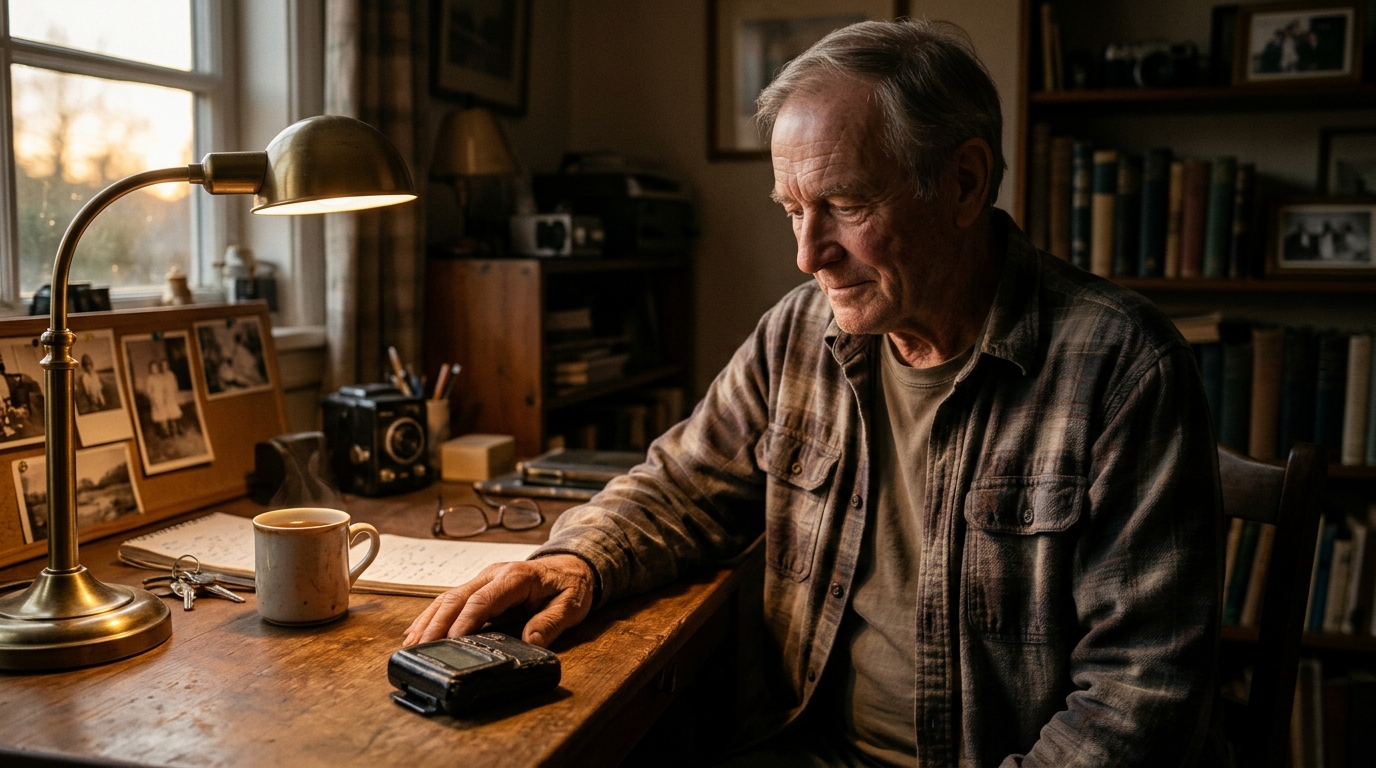
It is a strange kind of peace, the rest of a person who is never entirely off duty. He eats supper with the pager on the table. He reads the paper with it clipped to his belt. He has learned to sleep lightly, to wake at the faint electronic chirp before it becomes a full alert.
His wife, Marguerite, calls it “the third person at our dinner table.” She says it without bitterness. “You make room for it. It’s part of the family.”
The Rituals That Carry Him Through
Over the years, Walt has built small habits that help him stay ready without burning out. They are not dramatic, but they say a lot about how a person sustains a lifetime of showing up:
- Boots by the door. Every night, laces open, socks tucked inside. Ten seconds saved can matter.
- A short evening walk. Down to the fence line and back, no phone, just the sound of the fields settling.
- One thank-you note. He keeps a notebook where he writes down one thing he is grateful for before bed, even on rough days.
- A quiet check on the truck. If he is within range, he swings by the station to make sure the equipment is ready for the next call.
The Nights That Tested the Streak
Anyone can keep a promise when it is easy. The streak was built on the nights when it was not.
In February of 2003, a blizzard buried Alder Creek under three feet of snow. The pager went off at 2:40 in the morning for a chimney fire on Hollis Road. Walt’s truck would not start. So he strapped on snowshoes and covered the two miles on foot, arriving winded and half frozen, to find the crew already hauling hose. “You’re late,” the chief joked. Walt just grinned and started pulling gear.
In 2011, he fractured two ribs falling off a hay wagon. He told no one. When the pager sounded the next evening, he went, and he stayed on the ground crew, hauling water instead of climbing ladders, until the fire was out. His doctor, when he finally visited, was not amused.
And then there was the wedding. His daughter Ellie’s reception, a warm June evening in 2015, string lights glowing over a tent in the backyard. Halfway through the first dance, the pager chirped. A barn fire, six miles out. Walt kissed his daughter on the forehead, whispered something no one else heard, and was gone.
“I was angry for about ten minutes,” Ellie admitted. “Then I looked around and realized half the guests were already tearing up. Because they understood. That’s who he is. And he came back for the last dance, still smelling like smoke. Best dance of my life.”
Why Nobody Is Paid, and Why It Matters
Volunteer fire departments protect nearly seventy percent of the land area in the United States. In small towns like Alder Creek, there is no full-time crew waiting at the station. There are neighbors. A schoolteacher, a mechanic, a dairy farmer, a retired nurse. When the alarm sounds, they leave their suppers, their beds, their kids’ recitals, and run toward the thing everyone else is running from.
Walt has trained hundreds of hours without compensation. He has taught fire safety to generations of schoolchildren, some of whom are now volunteers themselves. He has held the hands of strangers on the worst night of their lives. He has carried a toddler out of a smoke-filled kitchen and handed her, wide-eyed and unharmed, back to her mother.
“People ask why I do it for free,” he says. “I tell them it isn’t free. I get paid in a way you can’t put in a bank. I get to be the person who showed up.”
What the Town Understands at Night
There is an unspoken comfort in Alder Creek that residents rarely talk about. Everyone knows that if something goes wrong in the dark hours, if a candle tips over, if a space heater sparks, if a heart stutters, someone is already pulling on boots.
A woman named Dorothea Pruitt, eighty-one, lives alone on the north end of town. “I sleep better knowing Walt’s out there,” she told me. “Not because I think anything will happen. Just because I know that if it does, he’s coming. That’s a gift you don’t know how to thank someone for.”
Lessons From a Man Who Doesn’t Think He Has Any
Walt would be the first to wave off the idea that he has wisdom to share. But a few things he said on that porch, as the crickets started up and the last light bled out of the sky, are worth carrying home:
- Reliability is a form of love. Showing up consistently, without applause, is one of the deepest ways to care for people.
- You don’t have to be extraordinary. “I’m no hero. I’m just the guy who answers the phone.”
- Rest with one ear open. You can be at peace and still be ready. The two are not enemies.
- Small habits hold up big promises. Boots by the door. A walk at dusk. A notebook of thanks. The big things are built from the small.
The Last Light of the Day
As I got up to leave, the porch light flickered on and a moth began its slow orbit around it. Walt stood, stretched, and glanced at the pager on his belt, a small, scuffed, unremarkable thing that has governed his life for thirty years.
“Quiet night so far,” he said. “Hope it stays that way.”
That is the part that stays with me. A man who has run toward emergencies four thousand times, and what he hopes for most is a night where nothing happens at all. A night where everyone is safe, and he gets to sit with his wife and watch the stars come out.
Tonight, as the day winds down and your own house goes quiet, consider the people whose evenings are never fully their own. The ones listening, even now, for the sound that calls them out into the dark. They are in every town, on every road, with their boots by the door.
And if you see one, say thank you. They probably won’t expect it. They’ll just nod, adjust the pager on their belt, and keep listening.