🎧 Listen to this story
Narrated by Kore · 6,839 characters
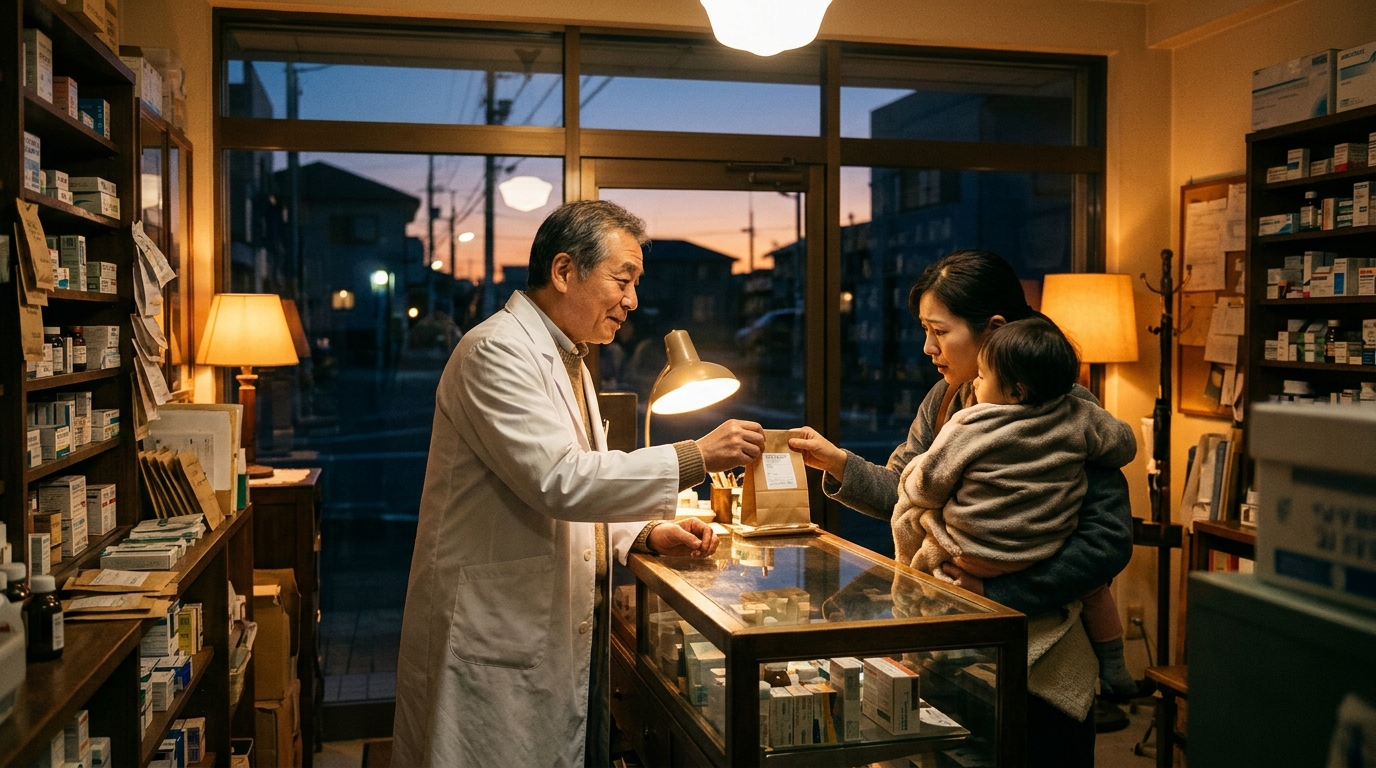
There is a particular kind of quiet that settles over a small town at nine o’clock on a weeknight. The shops along Main Street have gone dark. The hardware store, the bakery, the bank, all of them have pulled their shades and gone home to supper. But at the corner, past the old bus stop, one window still glows amber against the dusk.
That window belongs to Marguerite Alvarado’s pharmacy, and the light has been burning well past closing time for almost eleven years.
The Night That Changed Her Hours
Marguerite did not set out to become the person a town leans on after dark. She bought the pharmacy from a retiring owner with a plan that was perfectly sensible: open at eight, close at six, be home for dinner. For the first two years, that is exactly how it went.
Then came a cold November evening. She had locked up, driven halfway home, and realized she had left her reading glasses on the counter. She turned the car around. When she pulled into the lot, a man was standing at the dark front door with a small child wrapped in a blanket, his hand cupped against the glass as if he could will it open.
His daughter had a fever that would not break. The next pharmacy was forty minutes away. He had been standing there for ten minutes, working up the nerve to knock on the window of a business that was clearly closed.
Marguerite unlocked the door. She measured the right dose, explained exactly how to give it, and stayed on the phone with the man’s wife until the fever started to ease. The child was asleep on a chair by the register when they finally turned off the lights.
“I remember driving home that night,” Marguerite told me, “and thinking about how many times that must have happened before, and I just never knew. People who needed something at seven or eight o’clock and found a locked door. They would have gone home and worried through the night.”
What Evening Looks Like From Behind the Counter
The next week, she changed her schedule. The pharmacy now opens its doors again in the evening, from seven until about ten, with a hand-lettered sign taped beside the main entrance: If the light is on, we are open.
It is a different world after dark. The daytime rush of routine refills and insurance questions gives way to something quieter and more human. The people who come in at night are rarely there by choice. They are there because something went wrong, or because worry would not let them sleep.
Marguerite has learned to recognize them as soon as they walk through the door:
- The new parents with the look of people who have not slept in days, clutching a thermometer and a dozen questions they feel silly asking.
- The night-shift workers whose only free hour falls when everyone else has gone to bed.
- The caregivers, often a spouse or a grown child, picking up a prescription for someone who cannot be left alone.
- The lonely, who sometimes just need to hear a kind voice and use a small purchase as an excuse to find one.
She does not rush any of them. In the evening hours, she says, the pace of the whole building slows down to match the pace of a worried heart.
The Regular Who Needed More Than Medicine
There is an older gentleman I will call Mr. Okonkwo, who came in every Thursday evening for nearly three years. He picked up the same two prescriptions and always bought a single peppermint. For a long time, the conversation never went beyond the weather.
One Thursday he lingered. His wife of fifty-one years had passed that spring, and the evenings, he admitted, were the hardest part. The house was too quiet once the light faded. He had been timing his visits to the pharmacy so that he would have something to do, somewhere to be, at the hour when the silence felt heaviest.
Marguerite did not offer advice. She pulled a stool out from behind the counter, and he sat for forty minutes while she restocked shelves and he talked about his wife’s garden. Now there are two stools. A few other regulars have found their way to the second one.
“Medicine fixes what it can,” she said. “But half of healing is just being seen by another person at the end of a hard day.”
The Quiet Math of Showing Up
It would be easy to romanticize all of this, and Marguerite is quick to puncture the romance. The late hours cost her money. She is tired more often than she lets on. Some nights, no one comes at all, and she sits in the hum of the refrigerated shelves, doing paperwork and wondering if it is worth it.
Then, she says, someone comes. And it is always worth it.
She keeps a small notebook behind the register, not of names or private details, but of moments. A line or two each night. Over the years it has become a kind of evening ledger of the town’s small emergencies and quiet relief:
- A grandmother’s missed insulin, caught in time.
- A college student who needed an inhaler during a midterm all-nighter.
- A man who just wanted someone to confirm that his chest pain was probably heartburn, and who left with an ambulance ride instead, because she insisted.
That last one, she mentions quietly, is the entry she reads most often.
What the Evening Teaches
When I asked her what she has learned from eleven years of staying open after everyone else has gone home, she thought about it for a long moment while the neon sign in the window buzzed softly behind her.
“The day is loud,” she said. “Everyone is performing, hurrying, pretending they have it handled. But at night, the pretending falls away. People tell you the truth at night. They tell you they are scared, or lonely, or that they do not know how they are going to get through the week. And all you have to do is be there, with the light on, and not make them feel foolish for asking.”
It is a lesson that applies far beyond a pharmacy counter. Most of us will never stock shelves or fill prescriptions, but all of us have some version of that lit window to offer. A phone left on the nightstand for a friend who might call. A porch light for someone coming home late. A text at nine o’clock that simply says, How are you, really?
Closing Up for the Night
At ten o’clock, Marguerite begins her last routine of the evening. She counts the drawer, straightens the shelf where the thermometers hang, and wipes down the counter where so many worried hands have rested. Then she turns the sign in the window and pauses, hand on the switch, as she always does.
She says she waits a few extra seconds, just in case. In eleven years, she has been surprised more than once by a late knock.
Tonight, as the town settles into sleep, take a moment to think about the people who keep their lights on for the rest of us. They are rarely celebrated. They do not ask to be. But somewhere out there, in a window glowing amber against the dark, someone is waiting just in case you need them.
And maybe, in your own quiet way, you can be that light for someone too.