🎧 Listen to this story
Narrated by Kore · 6,465 characters
There is a particular hour on the coast when the water turns the color of old pewter and the sky gives up its last warm light. Most of us are inside by then, shoes kicked off, dinner dishes soaking in the sink. But for a small number of people, that hour is when the real work begins.
This is a story about one of them. It is told the way he told it to a visiting reporter and a handful of fishermen over several quiet evenings on a windswept headland, and it is shaped by the one thing he said he never skipped: the evening radio check.
The Keeper at the End of the Road
Walter Brennan, whom everyone calls Walt, has tended the same stretch of coastline for almost thirty-one years. He arrived in his late forties, newly widowed, with two suitcases and a vague idea that a place with a view and no neighbors might help him breathe again.
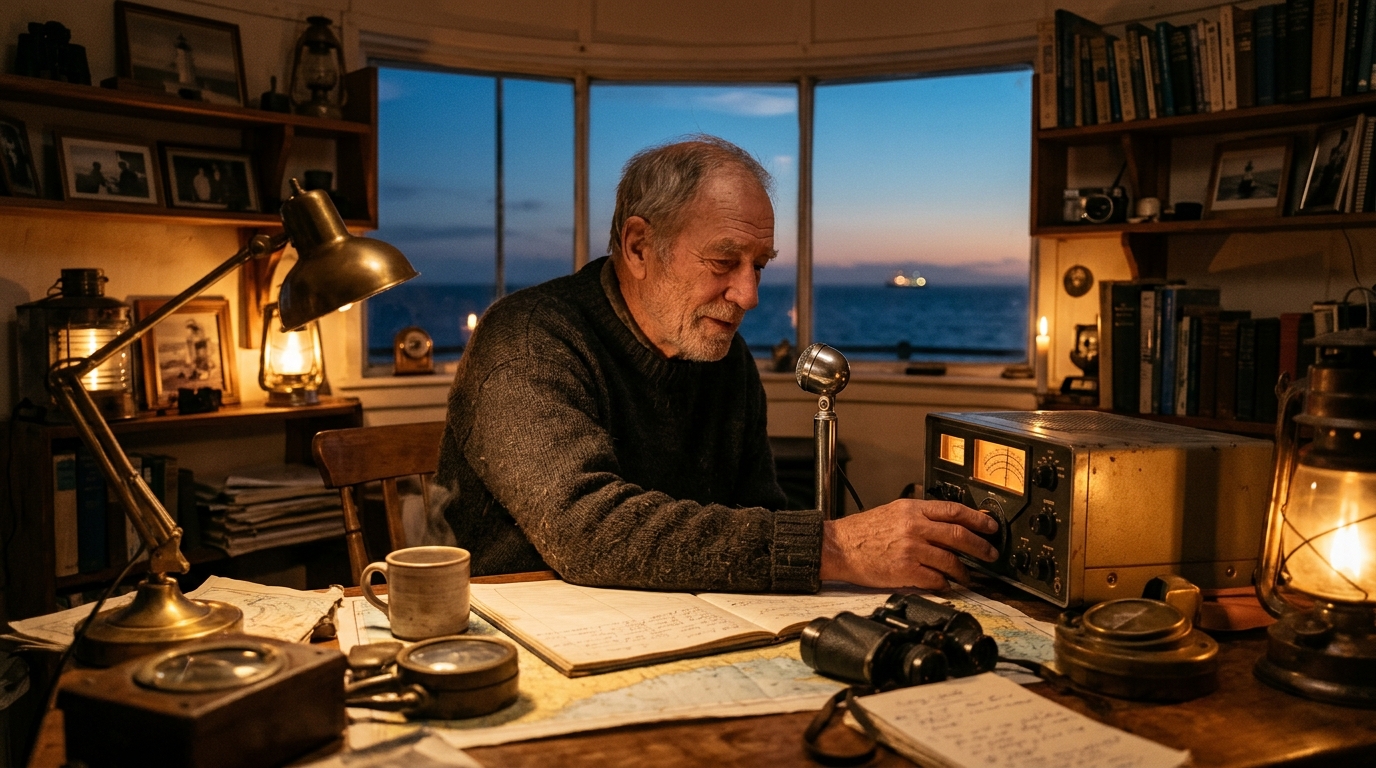
The lighthouse itself is automated now, as most are. A computer decides when the lamp turns and when the fog signal sounds. By any modern measure, Walt’s job is mostly to maintain the grounds, log the weather, and keep the old keeper’s cottage from falling into the sea. But he does one thing no machine requires of him. Every evening, as the light fades, he picks up the radio and speaks to whoever is out there.
“The light tells them where the rocks are,” Walt says. “But a voice tells them somebody’s paying attention. Those are different kinds of safe.”
How a Habit Became a Lifeline
It began by accident. In his second winter, a lobsterman named Dougie Pell radioed in a garbled complaint about a fouled propeller line as dusk settled in. Walt, who had little else to do, stayed on the channel for forty minutes, talking him through the tide table and the safest approach to the harbor mouth.
The next evening, Dougie called again, just to say he had made it in. Then another boat checked in. Then another. Within a year, a loose network of fishermen, delivery skippers, and weekend sailors had folded Walt’s evening call into their routines without ever formally agreeing to it.
Here is what Walt’s radio check usually covers:
- The coming night’s wind direction and any shift expected after midnight
- Where the fog bank is sitting and how fast it is moving
- The state of the tide at the harbor entrance
- A simple, unhurried question: “Everybody accounted for tonight?”
That last question, he insists, is the whole point. The weather he could post on a board. The question is how people know they are not alone out there.
The Night the Voice Mattered Most
Every long-serving keeper has a night they carry with them. Walt’s came on a raw October evening some years back, when a small sailboat failed to answer the roll call.
It was a young couple on their first long passage, and they had radioed in earlier that week, a little nervous, asking about the approach. When their usual reply did not come, Walt did not shrug it off. He tried the channel again. Then again. He climbed the tower stairs, all one hundred and four of them, and swept the horizon with binoculars as the last light bled from the water.
He spotted them eventually, drifting off the rocks with a dead engine and a mast light that had gone dark. He raised the coast guard, kept the couple talking by radio when their handheld battery was nearly spent, and stayed at the window until the rescue boat reached them well after midnight.
“They told me later,” Walt says, “that the worst part was not the fear. It was the silence. And then, out of the static, a voice they recognized saying, ‘I’ve got you. Stay with me.'”
What the Evening Teaches
Walt does not think of himself as a hero. When pressed, he shrugs and says the work is simple, and that it mostly happens when other people are winding down. Dusk, he has come to believe, is when people feel most alone and most in need of reassurance. The day’s tasks are done, the dark is coming, and the mind starts to wander toward its worries.
He keeps a small ritual that bookends his evenings. After the final radio check, he makes a pot of tea, sits at the kitchen table, and writes a single line in a worn notebook: the name of every boat that called in, and one small thing he noticed about the night. A flock of gulls settling on the breakwater. A particularly clear line of stars. A voice that sounded tired, or cheerful, or new.
He has filled more than a dozen of these notebooks. Some of them, he admits with a rueful smile, are the closest thing he has to a family album.
Why Small Constancy Matters
It is easy to imagine that important work is loud, dramatic, and visible. Walt’s life suggests otherwise. The thing that has helped the most people over three decades is not a daring rescue. It is the plain reliability of a voice at the same hour every night.
There is a lesson in that for the rest of us, no lighthouse required. Consider how much of the good in the world comes from being steadily, quietly present:
- The neighbor who checks in at dusk. A porch light left on, a quick wave, a “you doing alright?” that costs nothing and means a great deal.
- The parent who sits on the edge of the bed. Not to fix anything, only to be there while the day’s worries settle.
- The friend who always answers. Not because the call is urgent, but because they have made themselves reliably reachable.
Being the Light Someone Can Steer By
Walt often says the lamp is the easy part. Anyone can build a bright beam. The harder, more human thing is to be the steady presence behind it, the person who notices when someone has gone quiet and cares enough to call out into the dark.
A Reflection for Your Own Evening
As you wind down tonight, you might ask yourself a question Walt asks every evening: “Is everybody accounted for?” Is there someone in your life who has been drifting a little far from shore, someone whose usual message did not arrive today? A short text, a quick call, a few kind words offered into the static can be the difference between feeling lost and feeling found.
Walt is in his late seventies now. He has talked, half-seriously, about handing the evening call to a younger neighbor one day. But when you ask whether he will ever truly stop, he gets quiet and looks out at the darkening water.
“Somebody’s always out there,” he says. “As long as somebody’s out there, somebody ought to answer.”
The lamp turns. The tide pulls at the rocks. And somewhere past the breakwater, a sailor reaches for the radio, listens through the hiss, and hears, as always, the last friendly voice before dark.