🎧 Listen to this story
Narrated by Kore · 6,769 characters
When the river finally retreated from the town of Millbrook Hollow, it left behind mud, ruined furniture, and a silence that people described as louder than the flood itself. The usual advice came quickly. Clear the roads. Reopen the shops. Get the children back to school. Get the days running again.
But a retired schoolteacher named Odalys Prentiss noticed something the official recovery plans had missed. The days, strangely, were manageable. People had work to do, and work is its own kind of medicine. It was the evenings that were breaking everyone.
The Hour Nobody Planned For
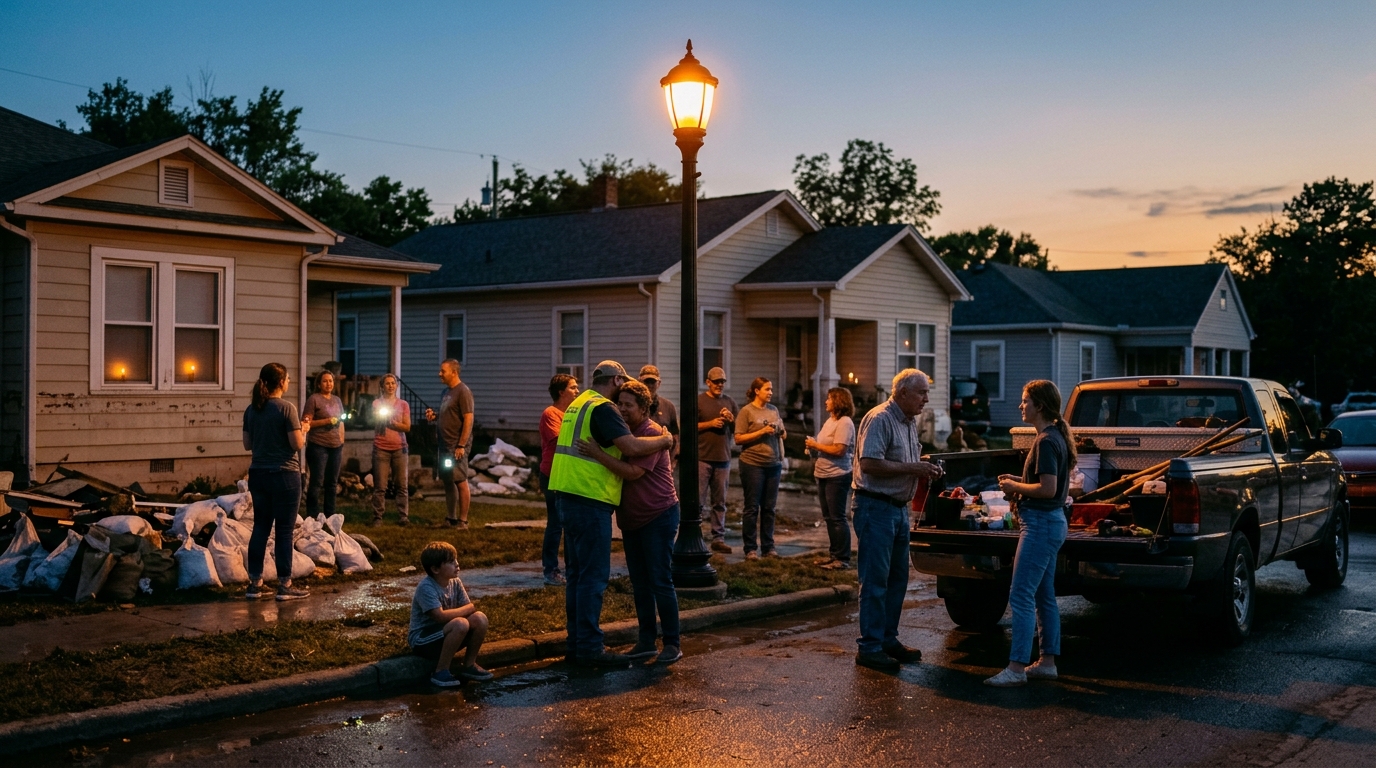
Every resident I spoke with for this story told a version of the same thing. During daylight, the town hummed with purpose. Volunteers hauled debris, neighbors shared generators, and casseroles appeared on porches like small miracles. Then the sun dropped behind the ridge, the power stayed off, and the whole valley went dark.
Without streetlights, porch lights, or the glow of a television through a neighbor’s window, the town became a place people were afraid to walk through. Families who had lost everything sat alone in the dark with nothing to do but replay the water rising. Several told me the same quiet confession: they dreaded sunset more than they had ever dreaded the flood.
“In the daytime you can be busy,” Odalys told me. “At night you have to be with it. And nobody should have to be with it alone, in the dark.”
The Idea That Sounded Almost Too Small
Three weeks after the water receded, Odalys stood up at a folding-chair town meeting held in the gymnasium of the one building that had stayed dry. The agenda was long: road repair, insurance paperwork, water testing. She asked to speak for two minutes.
Her proposal was simple. Before the bakery reopened, before the hardware store restocked, before the school reopened its doors, she wanted the town to rebuild its evenings. Light first. Then gathering. Then the slow business of everything else.
Some people thought it was sentimental. A few thought it was a distraction from the real work. But a man named Teodoro Vance, who ran the town’s small electrical supply shop, quietly raised his hand and said he had forty solar lanterns in the back that the water had never reached.
How the Nights Came Back, Step by Step
What followed was not a grand project. It was a series of small, deliberate choices, each one aimed at making the hours after sunset feel safe, warm, and shared again. Here is how it unfolded:
- The Lantern Line. Teodoro’s solar lanterns were hung along Main Street on salvaged fence posts, then along the side streets, then up the hill to the older neighborhoods. Within two weeks, a trail of soft light connected nearly every surviving home.
- The Porch Promise. Every household was asked to keep one light on, even a flashlight in a window, from sundown until ten. It meant that anyone walking home could see a living, glowing street.
- The Dusk Table. In the gymnasium, volunteers set out long tables every evening at six. No program, no speeches. Just hot soup, mismatched mugs, and chairs.
- The Quiet Hour. After the meal, the lights dimmed to a single row of lanterns and people could talk, or simply sit. Nobody was required to say anything.
What Happened at the Dusk Table
The first night, eleven people came. By the end of the first month, it was often over a hundred. I asked several regulars what drew them back, and the answers were remarkably consistent.
A woman named Marisol Duquette, who had lost her kitchen and most of her photographs, said the table gave her something the daytime never could. “In the day, everyone asks what you need,” she said. “At the dusk table, nobody asks. You just sit, and someone passes you bread, and you realize you are still a person who belongs somewhere.”
An older fisherman who had barely spoken since the flood began telling stories about the river as it used to be, before it turned. Children who had stopped sleeping through the night started falling asleep with their heads on their parents’ shoulders, lulled by the low murmur of grown-ups talking.
Why the Evening Mattered So Much
There is something about the end of the day that strips us down. The distractions fall away, the to-do lists lose their grip, and whatever we have been outrunning catches up. For a town in grief, that hour can feel like a cliff edge.
But it can also be a doorway. Odalys understood that the same stillness that makes the evening frightening also makes it tender. When people gather in soft light with nothing to prove, they let their guard down. They cry without apology. They laugh at something small and are surprised by how good it feels.
The town did not heal because the roads were repaved, though they were. It did not heal because the shops reopened, though they did. It healed because, every evening, a hundred neighbors chose to sit in the glow of borrowed lanterns and remind each other that the night was survivable.
The Slow Return of the Ordinary
Once the evenings felt safe, something shifted. People had more energy for the days. They slept better, and rested people rebuild faster. Teodoro told me the repair work accelerated noticeably once the lantern line was lit, which he credited not to the lights themselves but to what they made possible.
The bakery reopened in the fourth month. The school reopened in the fifth. By the following spring, the town had restored almost everything the flood had taken, but nearly everyone agreed that the dusk table had done the deepest work.
A Reflection for Your Own Evening
You may never live through a flood, but most of us know the particular heaviness that arrives when the day goes quiet. The worries we held at arm’s length all afternoon come close at night. Millbrook Hollow offers a gentle lesson for those hours.
If your evenings feel hard, consider this: you do not have to fix everything at once. You can start by making the dark a little softer. Turn on one light. Set one extra place at the table. Sit with one other person and say nothing at all. Sometimes the whole work of healing begins with a lantern on a fence post and a bowl of soup passed from one pair of hands to another.
Tonight, Try This
- Switch on one warm light before the sun fully sets, and let the room glow rather than glare.
- Reach out to someone you have been meaning to check on, even with a single line.
- Let yourself rest in the quiet without filling it. The stillness is not your enemy.
The lanterns still hang along Main Street in Millbrook Hollow. Nobody has taken them down, though the power returned long ago. When the sun slips behind the ridge each evening, they glow on their own, a row of small, steady lights that tells every passerby the same thing: you made it through the dark, and you did not do it alone.