🎧 Listen to this story
Narrated by Kore · 6,553 characters
There is a particular kind of silence that settles over an apartment building around nine at night. The televisions murmur low, the hallway lights hum, and somewhere a pipe knocks in the wall. For Danielle Reyes, a 26-year-old mother of one, that silence had become the loudest sound in her life.
This is the story of the night that silence broke, told the way she told it to me: slowly, with long pauses, and with a cup of tea going cold between her hands.
The Weight of the Last Day
Danielle had worked as a dental office receptionist until her hours were cut in the spring. By summer, she was picking up weekend shifts at a diner, and by fall, she was behind on rent by two months. The notice taped to her door was polite but firm: pay the balance of $1,840 by the end of the day, or the process of leaving would begin.
She had spent that final day doing everything a person does when they are quietly drowning. She called her sister, who could spare sixty dollars. She sold a bookshelf online for forty. She asked her landlord for one more week and heard the kindest possible version of no.
By evening, she had $212 and a four-year-old named Mateo who wanted to know why Mama kept looking at the clock.
The Hour Nobody Prepares For
She told me the worst part was not the fear. It was the pretending. She made grilled cheese for dinner, cut the sandwiches into triangles the way Mateo liked, and sang the same off-key song while she washed the dishes. She did not want her son to learn what dread looked like on his mother’s face.
After he was in bed, she sat on the kitchen floor with her back against the cabinet, because the chairs felt too formal for what she was about to feel. And she let herself cry, the quiet kind, the kind you do with a hand over your mouth so the walls do not hear.
A Knock at Dusk’s Last Edge
It was just past nine when someone knocked. Not loudly. Three soft taps, the way you would knock if you did not want to wake a sleeping child.
Danielle wiped her face and opened the door a few inches, chain still on. In the hallway stood an older woman she recognized only vaguely, someone from the end of the corridor on the second floor. Gray cardigan. A paper grocery bag held against her hip.
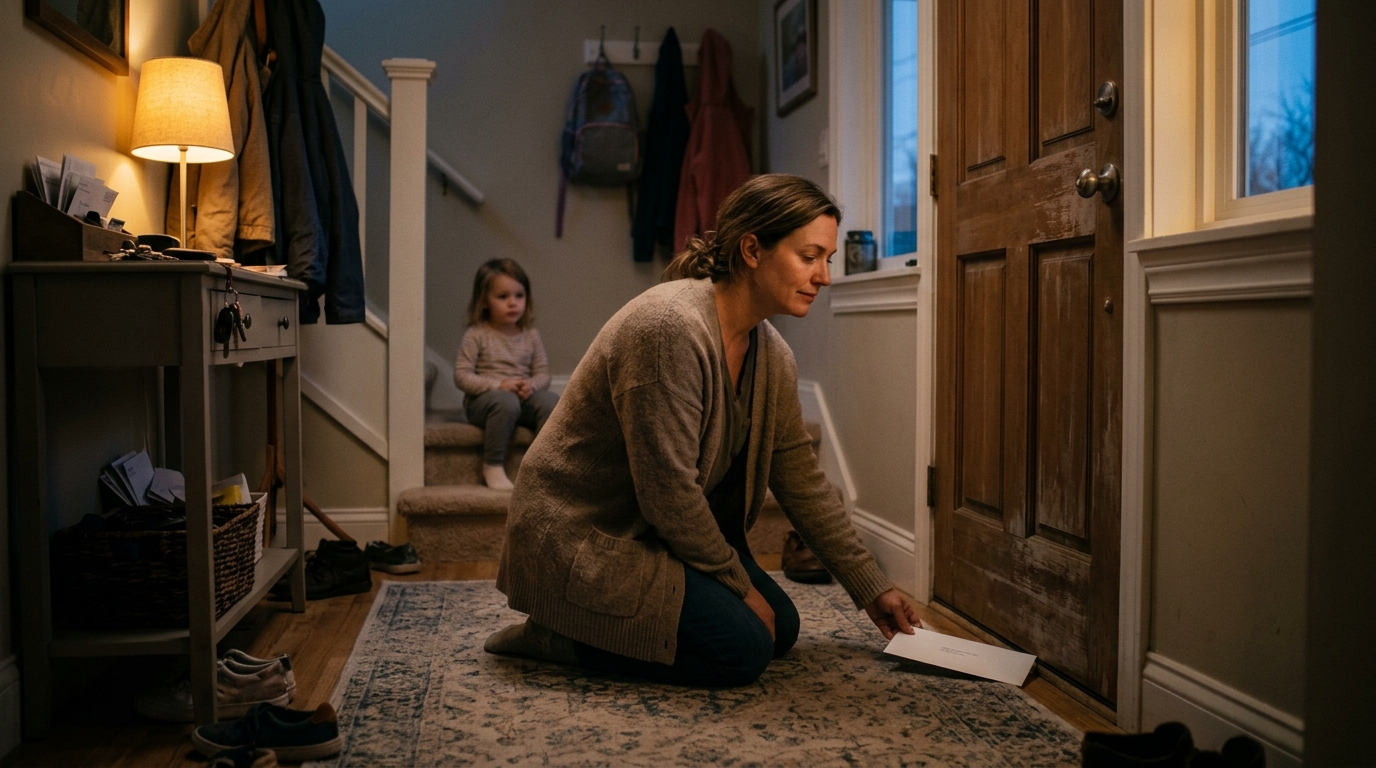
The woman did not come in. She did not ask a single question. She simply said, “I heard you through the vent last week. I am so sorry. I hope this helps,” and set an envelope on the threshold. Then she nodded once and walked back down the hall, her slippers whispering on the carpet.
What Was Inside
Danielle waited until the footsteps faded before she opened it. Inside was a cashier’s check for $1,628, exactly the amount she was short, and a small folded note in careful handwriting.
I was where you are once, a long time ago. Someone I never learned the name of paid my electric bill and left before I could thank them. Please do not try to repay this. Just keep the porch light on for someone else someday.
She read it three times. Then she sat down on the floor again, but this time she was not crying the same way.
Why Evening Is When Kindness Lands Hardest
I keep thinking about the timing of it all. Daytime is full of noise and obligation, and our worries get shuffled in among a hundred small tasks. But evening strips that away. When the light goes soft and the world quiets, whatever you have been carrying comes right up to the surface.
That may be why the kindest acts often arrive at dusk. It is when people are most honest with themselves, and most open to being helped. Someone who has held it together for twelve hours finally has nowhere left to put the weight down.
- Evening lowers our guard. The performance of coping ends when the door closes.
- Evening makes us listen. It was the stillness of the building that carried Danielle’s sorrow through the vent in the first place.
- Evening invites reflection. Both women, years apart, remembered their own hardest nights while the day was winding down.
The Morning After, and the Years Since
Danielle paid her rent first thing the next morning. The property manager, who had expected an eviction filing, simply stamped the receipt and said, “Well. That is a relief for everyone.”
She went looking for the woman to say thank you, but the apartment at the end of the second-floor hall was dark, and a neighbor mentioned she traveled often to visit family. When they finally did cross paths weeks later, in the laundry room, the woman waved off the gratitude with a smile and asked about Mateo instead.
Danielle found steadier work that winter, at a medical billing office with real hours and health coverage. She never repaid the money, because she was asked not to. Instead, she did something that felt truer.
The Porch Light
Her building has no porch, so she improvised. Every evening, she keeps a small lamp glowing on the windowsill beside her front door, a quiet signal to her own heart that she is still the kind of person who notices. Last spring she paid a young man’s overdue grocery tab at the corner market. In the summer she left a bag of school supplies outside a neighbor’s door. She never signs anything.
What This Story Asks of Us
Stories like this are easy to admire and just as easy to file away. But I think the real invitation is smaller and closer to home than a cashier’s check. It is the act of listening through the vent. It is noticing that the hallway has gone too quiet. It is the willingness to knock softly.
If you are winding down your own day as you read this, consider these gentle questions before you turn out the light:
- Who in my life has been unusually quiet lately?
- What small thing could I leave on a doorstep, literally or figuratively, without asking for credit?
- Whose kindness once found me on a hard night, and have I passed it forward yet?
You do not need a large sum or a grand gesture. Sometimes the whole gift is simply paying attention, and then acting before the moment slips away.
A Last Thought Before Sleep
Danielle told me that the note is now taped inside a kitchen cabinet, right where she can see it when she reaches for Mateo’s cup in the morning. The handwriting has started to fade a little at the folds.
“I think about her every night,” she said. “Not because I owe her. Because she showed me what a person can be to a stranger.”
Somewhere tonight, a lamp is glowing in a window. Somewhere, someone is sitting on a kitchen floor, certain they are alone. Maybe the best thing we can do as the day closes is to keep our own porch lights on, and keep our ears open, in case someone needs a soft knock at the door.