🎧 Listen to this story
Narrated by Kore · 8,477 characters
The community pool at the edge of town closes to the public at 8:45 each evening. By nine, the lifeguards have flipped the chairs, the lane ropes are bobbing in the quiet, and the water settles into a glassy stillness that looks almost like a held breath. For the last two years, that is when Marisol Vega arrives.
She is thirty-four now. Three years ago she was a competitive distance runner with a marathon qualifying time and a calendar full of races. Then came a icy-road collision on a January morning, a spinal cord injury at the T10 level, and a doctor’s careful, practiced sentence that began with the words, “I want to be honest with you.”
This is the story of what she did with the hours after that sentence, and why the best of those hours turned out to be the ones at the end of the day.
The Day the Running Stopped
Marisol remembers the first weeks mostly as noise. Machines. Footsteps in the hallway. Therapists who were kind in a way that made her want to scream. She had spent her whole adult life defining herself by motion, by the rhythm of her own feet on pavement, and suddenly her body felt like a house she no longer had the keys to.
“People kept telling me to be grateful I was alive,” she says. “And I was. But nobody tells you that you can be grateful and furious at the exact same time.”
Her rehabilitation team recommended aquatic therapy early on. In water, they explained, the body carries less of its own weight. Muscles that cannot fire on land sometimes find a way to engage when buoyancy takes the burden off. It was a clinical suggestion, delivered in a clinical tone. Marisol nodded politely and privately decided she would hate it.
The First Night in the Water
Her physical therapist, a soft-spoken man named Teodoro who had worked with spinal injuries for nearly two decades, suggested something unusual. Instead of cramming the pool sessions into a busy daytime schedule full of other appointments, why not try the late slot, the one after the facility emptied out?
“He said the water feels different at night,” Marisol recalls. “Quieter. Like it forgives you more.”
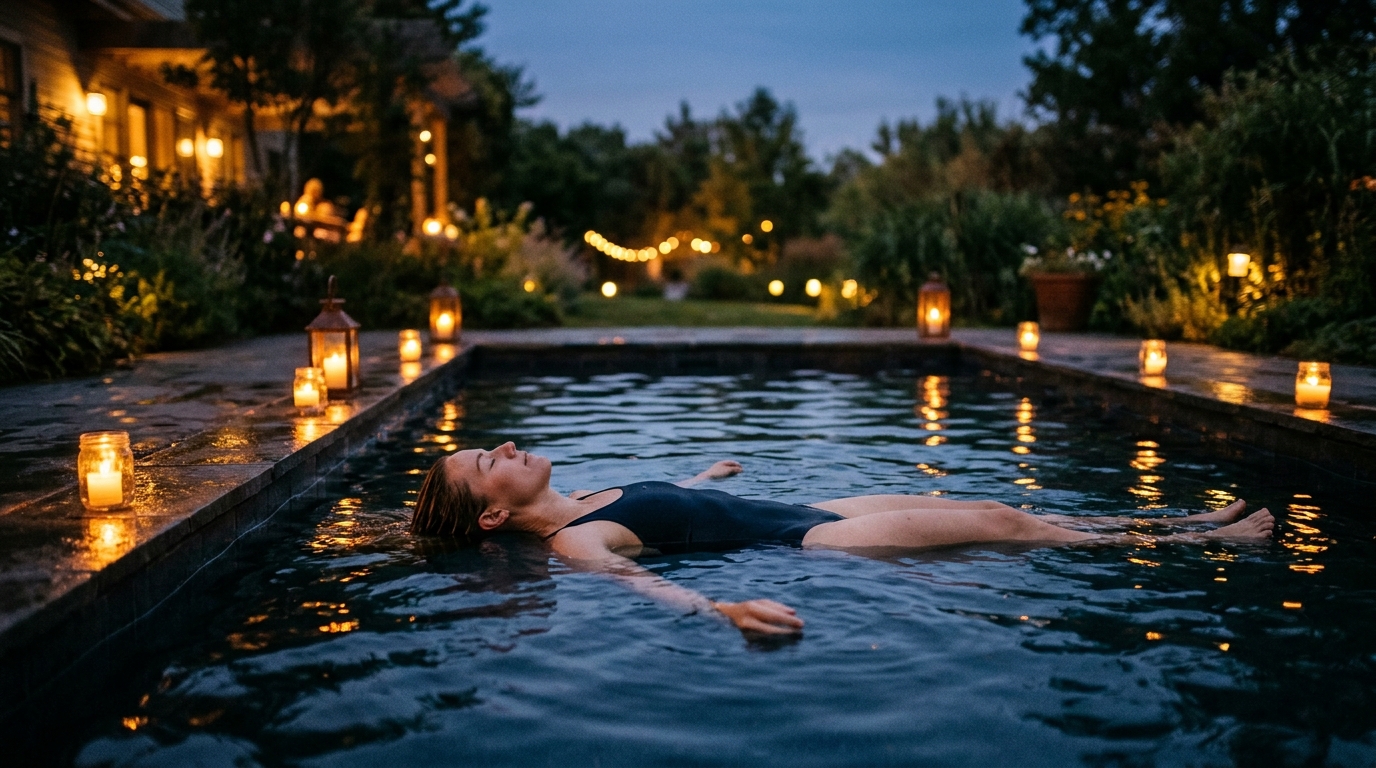
She did not believe him until the first session. The overhead lights were dimmed to a low amber glow. The echoing splashes and shouts of daytime swimmers were gone. It was just her, Teodoro, and a pool that held still around her like cupped hands.
When he lowered her into the water, something loosened in her chest before anything loosened in her legs. For the first time in months, she was not being lifted, strapped, transferred, or moved by someone else. She was simply floating.
“I cried,” she says. “Not because it hurt. Because it was the first time my body felt like mine again.”
What a Nightly Ritual Actually Built
Progress in spinal cord rehabilitation is rarely dramatic. It is measured in millimeters, in the flicker of a muscle that was silent yesterday, in the difference between two repetitions that looks invisible to everyone but the person doing them. Marisol learned to love the invisible.
Her routine, developed over many months with Teodoro, eventually settled into a rhythm she could recite from memory:
- Ten minutes of weightless stillness. She floated on her back, breathing slowly, simply letting the water hold her before asking anything of her body.
- Core activation drills. Gentle engagement exercises in chest-deep water, where buoyancy made tiny movements possible.
- Arm and shoulder swimming. Long, slow laps using her upper body, rebuilding the strength she would need for everyday independence.
- Assisted standing practice. Supported by the water and a railing, she practiced bearing weight through her legs, even if only for seconds at a time.
- A final minute of nothing. Every session ended the same way, with her floating, eyes closed, doing absolutely nothing at all.
That last step was Teodoro’s rule, and she resisted it at first. Rest felt like surrender to a woman who had trained through injuries and called it discipline. But slowly she understood that the stillness was not the opposite of effort. It was part of it.
The Lesson the Evening Taught Her
There is a particular kind of honesty that arrives at the end of a day. The distractions have thinned out. The to-do list has stopped shouting. What remains is just you, and whatever you have been carrying since morning.
For Marisol, the nine o’clock hour became a kind of daily accounting, though not the harsh kind she once practiced as an athlete, where every missed split time was a small verdict. Instead it was gentler. In the amber light, floating beneath a ceiling of soft shadows, she began asking herself a new question each night: What did my body do today that it could not do last month?
Sometimes the answer was large. The week she held a supported stand for forty seconds, she wrote the number on her bathroom mirror. Sometimes the answer was almost nothing, a slightly easier transfer, a shoulder that ached a little less. She learned to count both.
“I used to think strength meant pushing harder,” she says. “Now I think strength is being able to float in the dark and trust that tomorrow is coming anyway.”
The Community That Gathered at the Edge of the Water
Something unexpected happened around the second winter. A night custodian named Ines, who cleaned the locker rooms after closing, began lingering by the pool door. She never said much at first. She would nod, wave, and slip back to her work.
Then one evening she left a thermos of hot tea on the bench with a small note: For after. The cold gets in your bones.
It became a quiet tradition. Ines brought tea. A retired swim coach who volunteered on weeknights started showing up to offer technique pointers for upper-body strokes. A teenage lifeguard named Dario stayed late to run the pool lights and, eventually, to practice his own distance training in the lane beside her. None of it was planned. It simply grew, the way kindness often does when people share the same quiet hour.
“The pool turned into this tiny village,” Marisol says, smiling. “A village that only exists after dark.”
Where She Is Now
Marisol has not run a marathon since the accident, and she is honest that the road back to running, if there is one, is uncertain. But she has done something she once would have considered impossible. She trained for and completed an open-water swim race last summer, finishing a one-mile course using the arm strength she rebuilt in that dim, quiet pool.
When she came out of the water and the small crowd cheered, she looked for Teodoro first. He was standing at the edge, arms folded, trying and failing to look unemotional.
“He told me later it was the first race he had ever cried at,” she laughs.
She still swims at nine o’clock, most nights. Not because she needs to prove anything anymore, but because the habit became a home. The water, the amber light, the silence after a long day: these are the things that gave her body back to her, and she is in no hurry to leave them.
Gentle Takeaways for Your Own Evening
You do not need a pool or a medical crisis to borrow a little of Marisol’s wisdom. Here are a few ideas worth carrying into your own end of day:
- Ask a gentler question. Instead of auditing what went wrong, ask what your body or mind managed today that was hard a month ago.
- Protect one quiet hour. Healing and clarity often live in the part of the day when the noise drops away.
- Count the invisible wins. Progress is rarely loud. Notice the small, silent improvements.
- End with stillness. Give yourself one minute of doing nothing before you close the day. Rest is part of the work.
- Let people into your evening. Sometimes a thermos of tea left on a bench is all the encouragement a tired person needs.
A Closing Thought as the Lights Go Down
When Marisol finishes her last minute of floating, Dario flips the pool lights off, one bank at a time, until only the faint glow from the exit sign remains. The water goes dark and still, holding the quiet of everything that was attempted and everything that was survived.
She stays a moment longer than she needs to, listening to the faint drip of a faucet somewhere in the dark.
“People think rebuilding is about the big, heroic moments,” she says. “Mine was a thousand ordinary nights in the water, learning to believe I was still me.”
Tonight, as your own day winds down, perhaps that is worth sitting with. Not the grand gestures. Just the quiet, faithful return to the thing that helps you heal, one gentle evening at a time.