🎧 Listen to this story
Narrated by Kore · 7,448 characters
There is a particular hour in a children’s hospital that does not exist anywhere else. The visitors have gone. The cartoons have been clicked off. The machines hum their steady, patient hum. And somewhere down the corridor, a voice begins, soft at first, as if testing the air.
This is the story of that voice, and of the small ritual that has quietly changed how the nights feel on one pediatric floor. It is told here the way it was told to us: in pieces, by the people who live inside it.
The Hour Nobody Plans For
Nurses will tell you that the hardest part of a hospital day is not the emergency. It is the transition. The long stretch between the last dose of medicine and the first real sleep, when a frightened child lies in a bed that is not their own, listening to the unfamiliar sounds of a place that never fully rests.
Daytime is crowded with distraction. Doctors rounding, therapy dogs visiting, relatives bringing coloring books. But evening strips all of that away. What remains is a small person, a dim light, and the question every child asks in some form: Am I safe? Is someone out there?
It was exactly this gap that a retired music teacher named Marguerite noticed the first time she came to volunteer. She had signed up to do crafts. Instead, she found herself standing at the end of a long hallway at dusk, watching a night nurse rock a restless toddler, and she began, almost without thinking, to hum.
How It Began
Marguerite did not set out to start a tradition. She says so herself, a little embarrassed by the attention.
“I was just tired and a little sad,” she explained to the floor coordinator later. “I hum when I’m sad. It was a lullaby my mother used to sing, nothing fancy. And a little girl in the nearest room said, from behind her door, ‘Do that again.'”
So she did. The next evening, a nurse asked if she might come back. By the end of that week, the doors along the corridor had been propped open just a few inches, an invitation without a word spoken. Children who could not sleep began to wait for it.
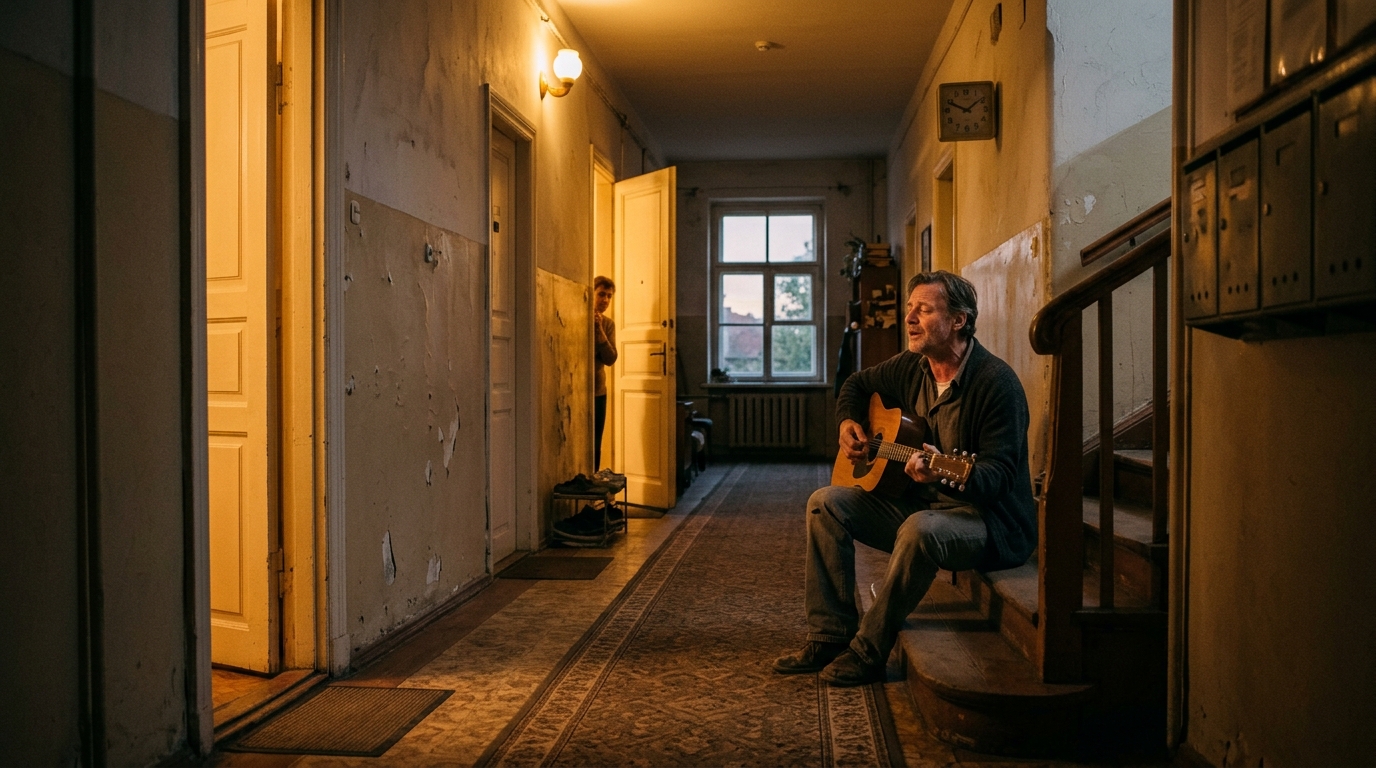
Now, around 8:45 each night, she walks the length of the hallway and settles into a low chair near the middle. She sings for about fifteen minutes. Then she stands, tucks the chair back against the wall, and goes home.
What the Singing Actually Looks Like
It is not a performance, and that is the whole point. Marguerite does not face a room or ask for applause. She sings to the hallway itself, letting the sound drift through those cracked doors like warm air.
Her small, unwritten rules, as the staff describe them:
- Keep it low. The volume is always just above a whisper, never enough to startle a child who has finally drifted off.
- No requests, but plenty of welcome. The songs are old and gentle: folk tunes, hymns without the words, melodies from a dozen lullaby traditions.
- Never enter uninvited. If a child wants her closer, a nurse leaves the door wider. Otherwise, she stays in the hall.
- End the same way every night. The final song is always the same slow tune, so the children learn that when it finishes, the day is truly over.
That last rule matters more than it sounds. A predictable ending is its own kind of comfort. Children in the hospital have lost control over nearly everything: their schedules, their meals, their own bodies. A song that always ends the same way gives them one thing they can count on.
A Night One Nurse Will Not Forget
A charge nurse who has worked the floor for over a decade shared one evening that stays with her.
A boy of about seven had been admitted for a long treatment and had not slept more than an hour at a stretch in days. His parents, exhausted, had finally gone to the family lounge to rest. He was alone in the room, wide awake, gripping the blanket.
“I could see him from the desk,” she recalled. “He wasn’t crying. That’s what worried me. He was just staring at the ceiling, very still, the way kids go when they’re trying to be brave.”
Then the singing started down the hall. She watched his grip loosen on the blanket, one finger at a time. By the third song, his eyes had closed. By the end, he was breathing the slow, deep breath of real sleep.
“I’ve given a lot of medicine in my career,” she said quietly. “I’ve never seen anything work quite like that.”
Why Evening Is When Healing Often Happens
There is real science tucked inside this small kindness. Soft, predictable sound can lower heart rate and ease the body’s stress response, which helps children rest. And rest is not a luxury in a hospital. It is part of the treatment itself.
But the staff will tell you the deeper reason is simpler. Evening is when the loneliness arrives. The noise of the day fades, and a child is left alone with their thoughts. A gentle voice in the hallway says what words sometimes cannot: You are not alone. Someone is here. The night is safe.
Many of us know this feeling from our own lives. The worries we outrun all day tend to catch up with us at bedtime. We lie in the dark and the mind turns over every unfinished thing. A hospital hallway at night is that feeling, magnified, for the smallest people in the building.
The Ripple Through the Floor
What surprised everyone was how far the ritual spread. It did not stay with the children.
Parents, sitting in recliners beside narrow beds, began to listen too. Several have said it was the first time all day they felt their shoulders drop. One father admitted he had not cried in weeks until he heard a lullaby drifting through the door at the end of a long, terrifying day.
The night staff, too, found their own pace shifting. Charts get a little gentler at 8:45. Voices drop. There is an unspoken agreement that for fifteen minutes, the floor belongs to the song.
Other volunteers have since taken up their own quiet evening offerings: a man who reads aloud softly from a picture book near the nurses’ station, a woman who simply walks the halls with a basket of warm blankets. Marguerite never asked for any of it. It grew the way kind things do, from one small example.
What We Can Take Home With Us
You do not need a hospital or a lovely voice to carry something from this story into your own evening. A few gentle ideas:
- Create one small ritual to close your day. It could be a song, a cup of tea, a page of a book. Let it end the same way each night.
- Offer presence without demanding a response. Marguerite never asks the children to talk or thank her. Sometimes the kindest thing is simply to be near.
- Leave the door a little open. For the people in your life who are struggling, an invitation without pressure can mean everything.
- Notice the quiet hours. Evening is when many people feel most alone. A short message, a call, a light left on can reach someone at exactly the right moment.
The Last Note
When the final slow tune ends each night, Marguerite stands, pushes her chair back against the wall, and walks toward the elevator. She does not wait to see who has fallen asleep. She does not need to.
Behind her, the hallway settles into its deepest quiet. The machines keep their steady hum. A few doors remain open, just a crack. And in a dozen small rooms, children who were afraid an hour ago are drifting toward morning, carried there by a stranger who simply decided that no one should have to face the night without a song.
Tonight, as the day winds down around you, perhaps you can be that voice for someone. Or perhaps you can simply be the one who listens, and lets the quiet in.