🎧 Listen to this story
Narrated by Leda · 8,170 characters
A Tiny Quilt, a Massive Heart
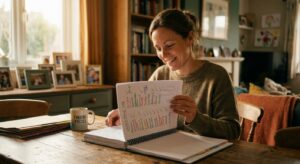
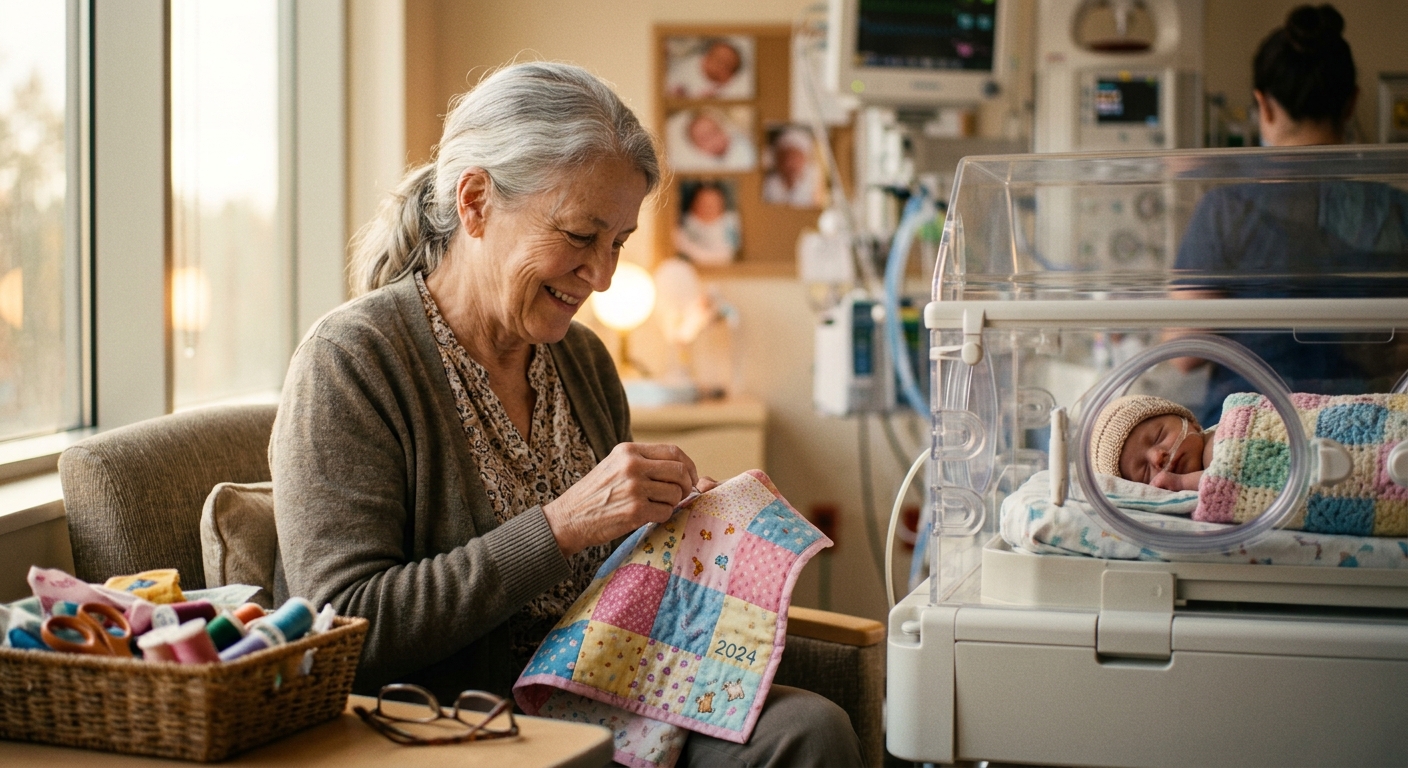
Walk into the neonatal intensive care unit at Memorial Regional Hospital in Hollywood, Florida, on any given day, and you will notice something unusual tucked around the smallest patients in the room. Not a standard hospital blanket, stiff and white and impersonal. Instead, soft squares of color, hand-stitched with care, patterned with stars and animals and little geometric shapes in cotton pastels. Each one is unique. Each one was made by the same pair of hands.
Her name is Dorothy Hensley, and for 25 years, she has made a quilt for every single baby admitted to the NICU. Premature infants, full-term babies born with complications, tiny fighters who spend their first weeks of life connected to monitors and breathing tubes. Every one of them gets a quilt. Every single one.
At 74 years old, Dorothy does not consider what she does particularly remarkable. “I just sew,” she says with a laugh, waving off the question as if someone had asked her why she bothers to breathe. But the nurses who have worked beside her for decades, the parents who still keep those quilts folded in memory boxes, and the now-grown children who were once those NICU babies would tell you something very different.
How It All Began
The story starts in 1999, when Dorothy’s granddaughter was born ten weeks early. She weighed just under two pounds. Dorothy, then 49 and recently retired from a career in bookkeeping, drove two hours to sit in that NICU waiting room every day for six weeks. She watched her daughter go in and out, watched the nurses work with quiet efficiency, watched other families pace the same hallway she paced.
“What struck me most,” Dorothy recalls, “was how clinical everything looked. Which makes sense, of course. It’s a hospital. But those babies, some of them so small you couldn’t believe they were real, they were surrounded by machines and plastic. And I thought, what can I do? I’m not a doctor. I’m not a nurse. But I can make something warm.”
Her granddaughter, Emma, came home healthy. Dorothy came home with a mission. She made her first batch of twelve quilts and brought them to the NICU with a note asking if the nurses would be willing to give them to families. The head nurse called her back the next day and said, simply: “Can you make more?”
The Numbers Behind the Love
Twenty-five years is a long time to sustain any volunteer effort. But when you sit down with the actual numbers, Dorothy’s commitment becomes almost incomprehensible in the best possible way.
- Estimated quilts made: Over 3,200 individual quilts since 1999
- Average time per quilt: 4 to 6 hours of cutting, piecing, and hand-finishing
- Fabric donated or purchased: Thousands of yards, sourced from local fabric drives, donations, and her own pocket
- Volunteers she has trained: 14 people over the years, forming what she calls her “sewing circle,” though she remains the most prolific by far
- Days she has missed: A handful, during her own surgery recovery in 2014 and when her husband passed in 2018. She returned to sewing within two weeks both times.
The math alone is staggering. But Dorothy will redirect any conversation about numbers back to the babies. “Every quilt is for a specific baby,” she says. “I always ask the nurses, what do we have this week? A girl or a boy? Do we know anything about the family? Sometimes I make something specific. Sometimes I just make what feels right.”
What the Families Say
Tracking down families whose babies received Dorothy’s quilts is not difficult. Many have found her over the years, through the hospital’s social media pages, through word of mouth, through nurses who quietly kept her contact information for exactly this purpose.
Marcus and Theresa Powell received a quilt for their son, Jaylen, who was born at 28 weeks in 2011. Jaylen is now 13 years old, plays soccer, and is, by his parents’ account, relentlessly healthy and “impossible to keep still.” The quilt, navy blue with small yellow stars, sits in a cedar chest in the Powell family’s living room.
“I remember the nurse bringing it in and I just lost it,” Theresa says. “Not in a sad way. In a ‘someone out there cares about my son’ way. We didn’t know if Jaylen was going to make it those first few weeks. Having something handmade, something that took someone’s actual time and attention, it mattered more than I can explain.”
That sentiment, that a handmade object carries emotional weight that mass-produced comfort items simply cannot, is echoed by nearly every family who has spoken about Dorothy’s work. There is a difference, they say, between receiving something purchased and receiving something made. One is a transaction. The other is a relationship, even if you never meet the person on the other end of it.
The Sewing Circle That Grew
Dorothy works primarily alone, in the sunroom of her house in Pembroke Pines, surrounded by fabric bins organized by color and a sewing machine that she has had serviced so many times the repair shop owner jokes he could fix it blindfolded. But over the years, she has drawn in others.
Her neighbor Ruth joined in 2007 after her own grandchild spent time in a different NICU. A retired schoolteacher named Gerald, who had never sewn a day in his life before age 68, learned after seeing a local news segment about Dorothy and showing up at her door. “He made some very lopsided quilts at first,” Dorothy says with genuine affection. “But he got the hang of it.”
The group, which fluctuates between eight and fourteen active members depending on the season, meets on Tuesday evenings at Dorothy’s house. They bring their own machines, their own fabric when they can, and a potluck dish. The conversation ranges from grandchildren to politics to the best way to press a seam. The quilts get made. The babies get warmth.
What Dorothy Has Learned in 25 Years
When asked what a quarter century of this kind of giving has taught her, Dorothy pauses for a long moment before answering. Her answer is worth hearing in full.
“I’ve learned that kindness doesn’t have to be complicated. People think they need to do something big, something organized, something with a website and a nonprofit status. But I’m just a woman with a sewing machine and some fabric. The doing is the important part. Not the planning, not the recognition. Just the doing.”
She has also learned, she says, that giving something away regularly keeps you from hoarding it emotionally. “I could spend my time worrying about my own aches and pains, my own losses. Lord knows there have been plenty. But when you have a Tuesday night commitment, when you know there’s a baby waiting for something warm, it puts your own stuff in perspective pretty quickly.”
The Legacy Stitched into Every Square
Dorothy has no plans to stop. Her hands, she acknowledges, are not what they were at 49. She wears compression gloves some mornings. She takes more breaks than she used to. But the quilts keep coming, week after week, handed off to the NICU nursing staff in a plain canvas tote bag with a handwritten note tucked inside for each one.
Those notes are something the nurses have kept secret for years, only recently sharing them publicly with Dorothy’s permission. Each note says something simple. “You are wanted here.” “The world is glad you came.” “Someone made this for you, just for you.”
For a baby too small to read, too young to understand, the note is really for the parents. And the parents, without exception, keep them.
Emma, the granddaughter whose early arrival started all of this, is now 25 years old. She works as a pediatric nurse. She did not choose that path because of her grandmother’s quilts, she says, but she also cannot quite separate the two things in her mind. “Growing up knowing that my grandmother went back to that hospital and kept giving back, year after year, it just shaped how I think about what you owe the world,” she says. “You owe it something. You owe it the best version of what you can give.”
Dorothy Hensley has been giving that version, stitch by stitch, for 25 years. And somewhere tonight, in a NICU crib, a baby who does not yet know her name is sleeping under something she made.