🎧 Listen to this story
Narrated by Kore · 6,207 characters
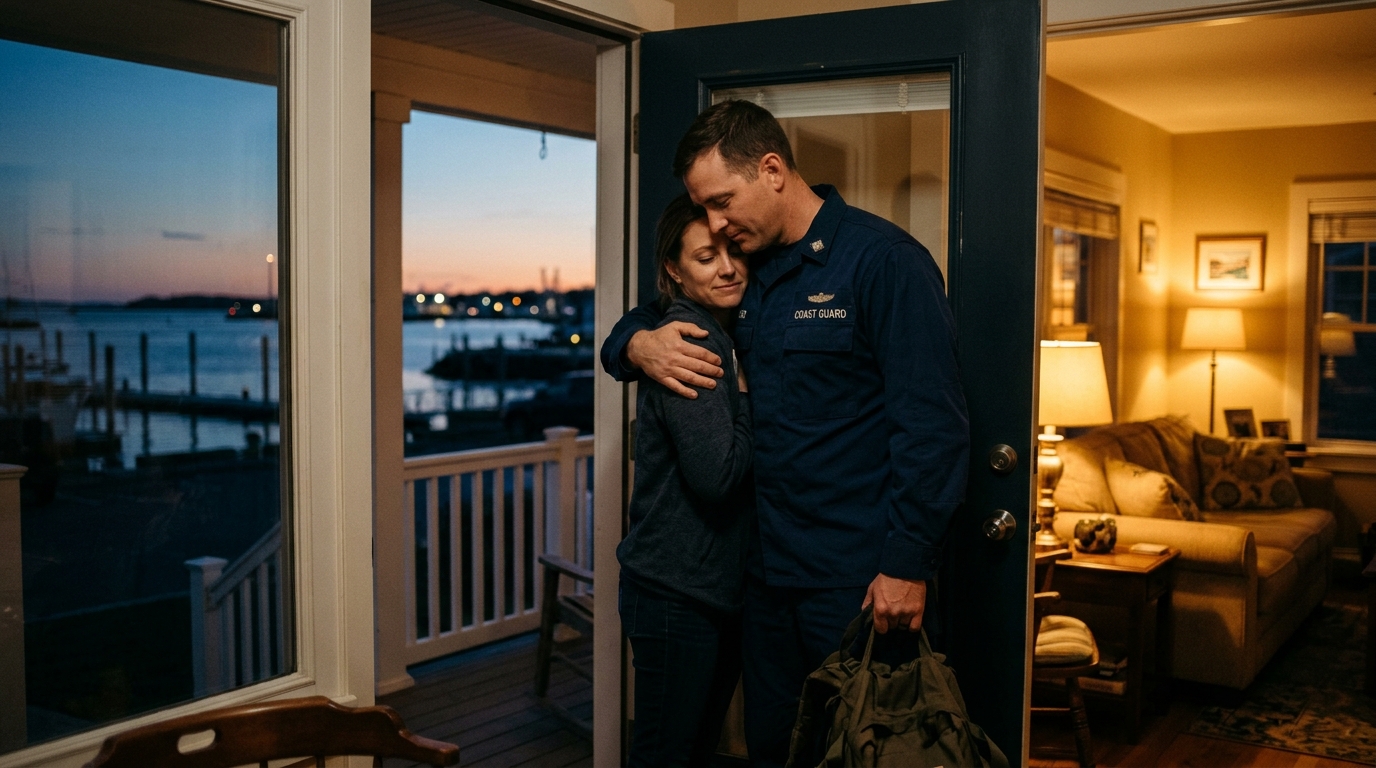
There is an hour on the coast when the gulls go quiet and the harbor lights flicker on one by one. Most of us call it the end of the day. We close laptops, pour tea, and let our shoulders drop. For Chief Petty Officer Daniel Reyes, it is often when the real work begins.
Over a career spanning nearly two decades, Reyes has pulled twelve strangers out of cold, black water after dark. Twelve people who, by every ordinary measure, should not have been found. This is a story about the man who found them, and about what the stillness of evening taught him about patience, humility, and the quiet weight of a life saved.
The Hour Most of Us Spend Winding Down
Reyes tells people he never expected to love the night shift. In his early twenties, he dreaded it. Dusk meant the world shrinking down to the reach of a searchlight, the horizon dissolving into ink, and the radio crackling with calls no one wants to hear.
But somewhere in his fifth year at a small coastal station, something shifted. He began to notice that the evening carried its own kind of attention. The noise of the day drained away. The harbor traffic thinned. Every sound became information: the slap of a wave against a hull, the distant bell of a buoy, a voice carrying farther than it should across still water.
“People think the dark makes everything harder,” he says. “It does. But it also makes you listen in a way daylight never asks you to. When the world gets quiet, you hear what matters.”
The Calls That Come After Dark
Night rescues have a particular character. A kayaker misjudges the tide and drifts past the point of no return. A fisherman falls overboard when no one else is on deck. A teenager climbs out onto a breakwater to watch the sunset and is swept off by a wave nobody saw coming. The water does not announce itself as dangerous at dusk. It looks calm, golden, even inviting.
Reyes says the most common thread in his twelve rescues is not recklessness. It is ordinary people who simply ran out of daylight.
Some of the Ones He Remembers
- The retired schoolteacher whose small sailboat lost its engine as evening settled in. Reyes found her by following the faint glow of a phone screen she had been holding above her head for nearly two hours.
- The two brothers who went out to scatter their father’s ashes at sunset and were caught by an incoming fog bank. They had no lights and no idea how far they had drifted.
- The young man who went into the water on purpose, on a night Reyes still rarely discusses in detail. He says only that he spoke to him the whole time, and that the young man later sent a card that now sits in his locker.
Reyes does not keep a scoreboard, though the number twelve comes up whenever someone asks. “I don’t count them because I’m proud,” he says. “I count them because each one is a person I’ll never forget.”
What the Quiet Taught Him
Ask Reyes what the job has given him, and he does not talk about medals. He talks about what he learned in the stillness between calls, those long evening hours when the station is silent and the water is just water.
Three Lessons That Settle In After Dark
- Calm is a skill, not a mood. A frightened person in the water mirrors the voice of whoever reaches them. If he sounds steady, they believe they will make it. He practices this tone the way a musician practices scales.
- Nobody is a stranger for long. When you are holding someone’s hand over the side of a rescue boat at nine at night, the word stranger loses its meaning very fast.
- Gratitude is quiet. The people he pulls out rarely say much in the moment. They shake, they cry, they apologize. The thank-yous come later, sometimes years later, in letters that arrive on ordinary afternoons.
The Evening Ritual
When a shift ends, Reyes follows a small ritual he has kept for years. He walks the dock alone, lets his eyes adjust to the dark, and stands for a few minutes listening. Not for emergencies. Just listening.
“It’s my way of saying thank you to the water,” he explains. “It gives me a lot of hard nights, but it also gives me a reason to be here. I don’t want to leave without acknowledging that.”
On the nights when a rescue goes well, he sits on the edge of the dock afterward with a thermos of coffee and watches the lights across the bay. On the nights when it does not, he sits there too, and the quiet does the work that words cannot.
The Letters
In a worn metal box at the station, Reyes keeps the notes that rescued people have sent him over the years. Some are a single line. Some run for pages. One is written in crayon by a child whose father he pulled from the water on a freezing November night.
He reads them sometimes in the evening, when the building is quiet. “It reminds me that the work doesn’t end when the boat comes back to the dock,” he says. “These people go home. They hug their kids. They get another sunset. That’s what the dark was for.”
What We Can Take From It
Most of us will never stand on the deck of a rescue boat at night. But there is something in Reyes’s story that belongs to every evening. It is the idea that the end of the day is not just an ending. It can be a time of attention, of gratitude, of noticing who might need us.
Maybe it is a neighbor whose light has been off too long. Maybe it is a friend you have been meaning to call. Maybe it is simply the practice of pausing at dusk and asking: who is out there in the dark tonight, and what small thing could I do?
A Small Evening Practice
- Spend five quiet minutes outside as the light fades, with no phone.
- Think of one person who might be having a harder evening than you.
- Send a message, make a call, or simply hold them in your thoughts.
- Before bed, name one thing the day gave you that you did not earn.
Reyes would probably shrug at being turned into a lesson. He is, by his own account, just a guy who likes coffee and calm water. But on the nights when someone in trouble sees a searchlight cutting across the waves toward them, he is the difference between an ending and a beginning.
So tonight, when the light goes soft and the day lets go of you, remember that somewhere along a dark coastline, someone is keeping watch. And maybe, in your own small way, you can keep watch too.