🎧 Listen to this story
Narrated by Kore · 7,295 characters
At 2:47 in the morning, Marguerite Adeyemi-Lowe did what she had done for roughly 3,650 nights in a row. She looked at the ceiling, counted the cracks in the plaster she had long ago memorized, and wondered whether she would ever sleep through a night again.
She was fifty-three. She had tried the pills, the herbal teas, the blackout curtains, the white noise machines, the weighted blankets, the meditation apps with their gentle voices. Some things helped for a week. Nothing lasted. By the time she walked into a small community sleep clinic on the edge of her town, she had stopped expecting rescue. She just wanted someone to take her seriously.
What happened next surprised her, and, by the clinic’s own admission, surprised the staff too. This is the story of how a habit so small it almost felt silly became the thing that finally unlocked a decade of sleeplessness.
The Appointment She Almost Cancelled
Marguerite nearly did not go. She had been burned by hope before. Each new specialist promised answers, and each left her with a prescription and a pamphlet. She sat in the parking lot for twenty minutes with the engine off, watching the late afternoon light turn amber against the clinic windows.
Inside, the intake nurse, a calm man named Desmond, did something no one had done before. He asked her about her evenings, not just her nights.
“Tell me what happens between the time you finish dinner and the time you get into bed,” he said.
She blinked. “Nothing. I clean up. I check my email. I scroll my phone. I get ready for bed.”
“And how do you feel when you get into bed?”
She thought about it honestly for the first time in years. “Like I am still at work. Like my mind is a room with all the lights on.”
What the Clinicians Noticed
The clinic’s lead sleep specialist, Dr. Priya Raghunathan, had been quietly collecting patterns for years. Her observation was simple and a little unfashionable: many of the people who struggled most with chronic insomnia had no real transition between their day and their night. They moved from a bright, busy, screen-lit existence straight into a dark, silent bedroom and expected the body to simply obey.
“The brain is not a light switch,” she told Marguerite. “It is more like a ship. It needs a long, slow turn to change direction.”
Rather than add another gadget or supplement, Dr. Raghunathan proposed something almost embarrassingly low-tech. She called it the Closing Hour.
The Unexpected Nightly Habit
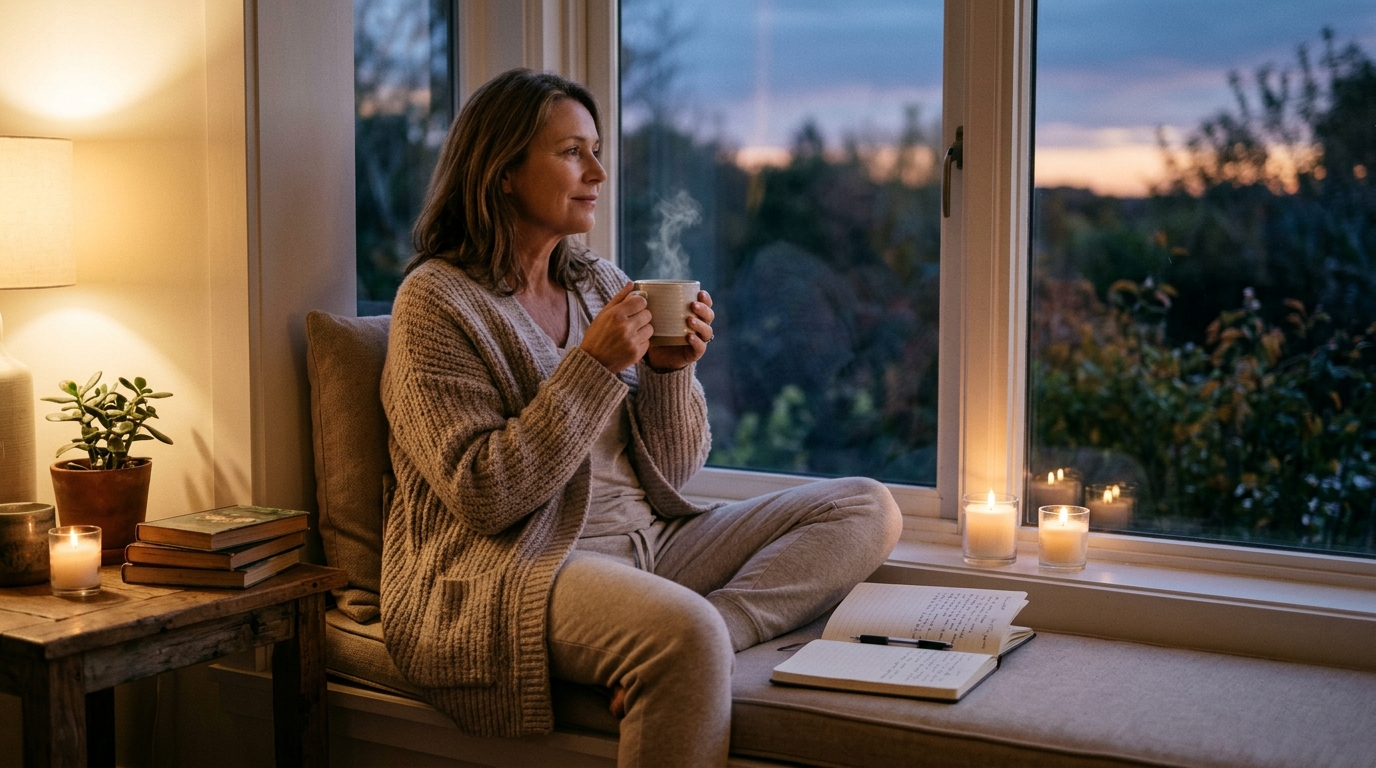
The habit was this: every evening, at roughly the same time, Marguerite would spend the last hour before bed doing one slow, physical, analog thing with her hands, in dim light, with no screen in sight.
That was it. No app. No device. No pills. The only rule was that the activity had to be gentle, repetitive, and something she could not do half-distracted.
Marguerite chose the thing she least expected to choose: she began writing a short, handwritten letter every night, not to send, but simply to close the day. Sometimes it was to a friend. Sometimes to her late mother. Sometimes to no one at all, just a few quiet paragraphs addressed to the evening itself.
Why Handwriting Worked for Her
Dr. Raghunathan later explained that the specific activity mattered less than its qualities. What made it effective came down to a handful of ingredients:
- It was slow. Handwriting cannot be rushed the way typing or scrolling can, which naturally lowered her pace.
- It used dim, warm light. A single lamp replaced the harsh overheads and glowing screens.
- It gave her worries somewhere to go. Writing them down moved them out of her head and onto the page.
- It created a signal. Doing the same thing at the same time told her body that the day was ending.
The First Weeks Were Not Magic
It would be dishonest to say the first nights were transformative. For nearly two weeks, Marguerite wrote her little letters and then lay awake anyway. She almost quit on the ninth night, feeling foolish.
But she kept the appointment with herself. Each evening she turned off the overhead lights at nine, lit the single lamp on her kitchen table, and wrote until her hand felt tired in the pleasant way a hand does after real work.
On the sixteenth night, something shifted. She finished her letter, set down the pen, and noticed that the usual tight hum in her chest had gone quiet. She climbed into bed. The next thing she knew, sunlight was on the pillow.
She had slept six uninterrupted hours. She cried in the shower the next morning, not from sadness but from a disbelief so large it had nowhere else to go.
A Dusk Ritual, Not a Cure-All
Marguerite is careful not to oversell it, and so is the clinic. Dr. Raghunathan is quick to say that insomnia has many causes, that some people need medical treatment, therapy, or investigation of underlying conditions, and that no single habit works for everyone. Anyone struggling with long-term sleeplessness should speak with a healthcare professional.
But she also believes the evening itself has been neglected in how we think about sleep. We obsess over the bedroom and the mattress and the temperature of the room, and we forget that sleep begins hours earlier, in the quality of how we let the day go.
There is something quietly beautiful in that idea. The hour before bed becomes less a countdown to unconsciousness and more a small ceremony of release.
The Stillness After the Noise
Marguerite describes her evenings now with a tenderness she never had for them before. When the light outside fades to the deep blue of early dusk, she feels something almost like gratitude. The day’s noise settles like sediment in water. The emails stop mattering. The unfinished tasks wait without accusing her.
“I used to dread the evening,” she says. “It was just the runway to another bad night. Now it is my favorite part of the day.”
She keeps her letters in a shoebox under her bed. Some she has reread. Many she has not. She says the point was never the keeping, only the doing.
How to Try Your Own Closing Hour
If this story speaks to you, you do not need a clinic to begin. Here is a gentle way to start:
- Pick a consistent time. Choose an hour before bed and protect it as best you can.
- Dim the lights. Switch off the overheads and use one warm lamp.
- Put the screens away. Leave your phone in another room if you can.
- Choose a slow, analog activity. Handwriting, knitting, sketching, tending a plant, folding laundry mindfully, or reading a paper book all qualify.
- Be patient. Give it at least two to three weeks before judging whether it helps.
- Stay kind to yourself. A bad night does not mean you failed.
What Marguerite Wants You to Know
When asked what she would tell someone lying awake right now, staring at their own ceiling, Marguerite paused for a long moment.
“I would tell them that it is not their fault,” she said. “And that sometimes the answer is smaller and quieter than you think. I spent ten years searching for something dramatic. What I needed was a pen, a lamp, and the willingness to slow down.”
Tonight, as the sky dims and the world exhales, perhaps you might try the same. Turn down one light. Put down one screen. Let the day finish properly before you ask your body to rest.
Sleep, it turns out, is often less about forcing the night and more about gently releasing the day.