🎧 Listen to this story
Narrated by Kore · 7,061 characters
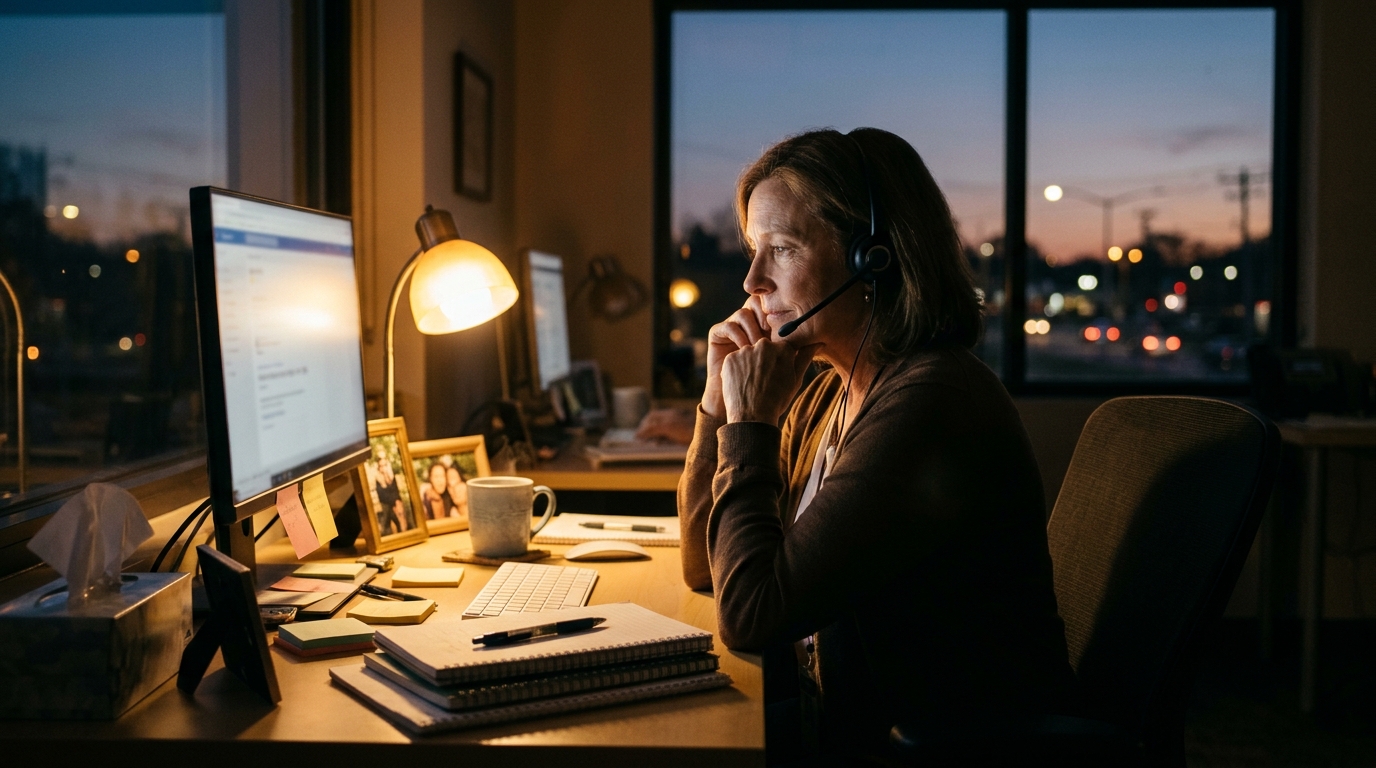
There is a particular moment, somewhere between the last of the afternoon light and the first lamp being switched on, when a house can feel like it is holding its breath. For people in mourning, this moment has a name they rarely say out loud. They just call it the worst part of the day.
This post is a reported look at why that is, and at how one small bereavement support line, staffed largely by volunteers in a converted office above a pharmacy, rebuilt its entire schedule around the answer.
The Pattern No One Planned For
The line began the way many good things begin: with a few people and a borrowed phone. Its founder, a retired hospice nurse named Margit, expected the busiest hours to be the ones around funerals, anniversaries, and holidays. She staffed accordingly, with the heaviest coverage in the middle of the day.
But when the volunteers started keeping simple tally sheets, a quiet pattern emerged. Calls rose slowly through the late afternoon, then climbed sharply just as the sun began to set. By the time most people were reaching for dinner or the evening news, the lines were full.
“We were fully staffed at noon, when the phones were almost silent,” Margit told a local newsletter. “And we were running on fumes at six, when everyone was calling. We had it backwards.”
Why Dusk? What the Grieving Describe
When volunteers began asking callers directly why this hour felt so hard, the answers came back remarkably similar. Grief, it turns out, is partly a creature of routine, and dusk is when routines used to matter most.
The Rhythm of the Missing Person
Many callers described the evening as the time their loved one used to come home, call, or sit across the table. The body keeps a clock the mind cannot reset. A widow described her hands drifting toward a second coffee mug at the same time each evening, years after there was anyone to pour it for. A father who lost a daughter said he still found himself listening for the sound of the front door around five o’clock.
The Day Stops Giving You Things to Do
During the day, even grieving people are carried along by tasks: errands, appointments, small obligations that keep the mind occupied. At dusk those distractions fall away. The world quiets down, the phone stops buzzing, and the loss rushes in to fill the space.
The Dimming Light Itself
Several callers mentioned the light directly. Fading daylight has long been tied to endings in stories and songs, and it seems to land hard on a mind already carrying one. One man said the lengthening shadows in his kitchen made the empty chair feel “louder.”
The Dread of the Long Night Ahead
Perhaps most of all, dusk is the threshold before the night. Callers spoke of a kind of anticipatory dread: the knowledge that hours of sleeplessness and silence stretched ahead, with no one to talk to and nothing to do but remember.
Rebuilding the Line Around the Evening
Once the pattern was clear, the volunteers did something simple and brave: they moved their strength to where the pain actually was.
They shifted their heaviest staffing to the late afternoon and early evening. They trained a new group of volunteers specifically for the dusk shift, many of them people who had lost someone themselves and knew the hour from the inside. They stopped treating the evening as an afterthought and started treating it as the main event.
They also changed how they answered. The old script had been efficient and a little formal. The new approach was softer, built around one idea: the person on the other end does not need to be fixed. They need company at the hardest hour.
What the Dusk Shift Actually Does
- Answers within a few rings. A long wait at this hour can feel like abandonment, so speed matters.
- Asks about the evening itself. Volunteers gently ask what the hour used to hold: who called, who cooked, who sat where.
- Offers presence over advice. There is no rush to solve anything. Sometimes the call is just two people noticing the light go.
- Helps build a small evening ritual. Callers are invited, never pressured, to try something new at the same hour, such as a short walk, a particular song, or a cup of tea made for one.
- Offers a follow-up call. Many callers are asked if they would like to hear from the same volunteer again, so the hour starts to feel less like a cliff.
A Call Worth Remembering
One volunteer, whom I will call Dev, remembers a call that changed how he thinks about the work. A woman in her seventies phoned on a gray evening and said very little for almost a full minute. Dev did not fill the silence. He just stayed on the line.
Eventually she said, “He used to turn on the porch light for me. Every night, for forty years, before I even got home. I came home tonight and the porch was dark.”
Dev did not offer a platitude. He asked her what the porch light had meant to her. She talked for forty minutes. At the end, she said she was going to turn it on herself. It was a small thing, she admitted, but it felt like the right thing.
“That’s the whole job,” Dev said later. “Not taking the sadness away. Just helping someone find one small light to switch on.”
What the Evening Can Teach the Rest of Us
You do not need to run a hotline to take something from this. If someone in your life has lost a person, there is a good chance that dusk is the hour they dread. A few quiet gestures can matter more than any grand offer of help.
- Reach out in the late afternoon, not the morning. A message at four or five o’clock lands exactly where the loneliness begins.
- Keep it small. “Thinking of you this evening” is often better than a long, heavy note.
- Remember the rhythm. If you know when their loved one usually called or came home, that hour is the one to remember.
- Do not rush to comfort. Sitting quietly beside someone is often more welcome than any advice.
- Keep showing up. Grief does not end on a schedule, and the evenings can stay hard long after the casseroles stop arriving.
The Soft Landing at the End of the Day
As the hotline’s volunteers wind down their own evenings, they have a small ritual of their own. When the last call of the dusk shift ends, they step to the window, look at whatever sky is left, and take a minute before heading home. It is not a formal practice. It started when someone noticed how heavy the work could feel and suggested they pause together.
Margit likes to say that the evening is not the enemy. It is simply the hour when the truth is hardest to ignore: that we love people, and that love does not stop just because they are gone. The task is not to defeat the dusk. It is to make sure no one has to sit through it alone.
If tonight finds you in that quiet hour, missing someone, know that you are not strange for feeling it more now than at noon. The light is fading, the house is still, and a great many people are feeling the very same thing. Turn on a lamp. Make the tea. Say their name out loud if you want to. And if you can, reach out to someone, or let someone reach out to you.
The night is long, but the dusk is only an hour, and an hour can be shared.