🎧 Listen to this story
Narrated by Kore · 6,842 characters
At 6:15 on a cool autumn evening, the lights in the front of Hartwell Family Pharmacy go dim. The register is counted, the shelves are straightened, and the sign in the window flips from OPEN to CLOSED. For most small businesses, this is where the day ends. For Daniel Okafor, the pharmacist who has run the place for eleven years, it is where the second half of his day begins.
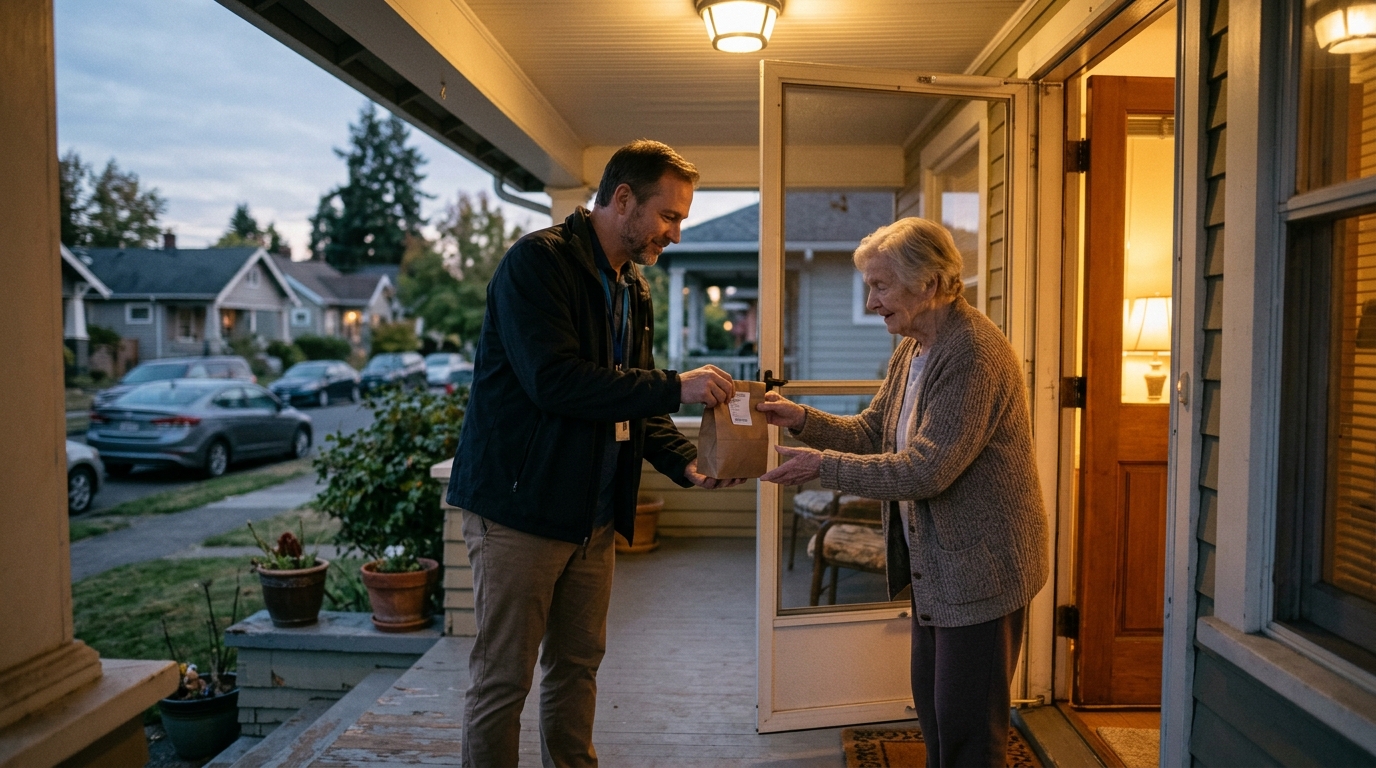
He slips a canvas satchel over his shoulder, tucks a handful of small white paper bags inside, and steps out into the dusk. No van, no delivery app, no fee. Just a man, a bag of medicine, and a list of addresses he can walk to before the streetlights come fully on.
A Habit Born From One Quiet Phone Call
Daniel did not set out to become the neighborhood’s evening messenger. It started with a single phone call, years ago, just as he was locking the door one night.
An elderly woman named Mrs. Albright had called the pharmacy line, which rolled to his cell phone after hours. Her husband needed his heart medication, and she had no way to get across town. The buses had stopped running. Her son lived two states away. She apologized three times in the first thirty seconds of the call, as though needing help were something to be ashamed of.
Daniel looked at the clock, looked at the bag already sitting on the counter, and said the six words that changed the shape of his evenings: “Stay there. I’ll bring it.”
He walked eleven blocks. Mrs. Albright met him at the door in her slippers, and he remembers that she held the little paper bag with both hands, the way you might hold something that could spill. She did not say much. She did not need to.
“I walked home slowly that night,” Daniel told me. “The streets were quiet and the air had that cool, settled feeling. And I remember thinking, this is the best part of my whole day, and it only took twenty minutes.”
What the Evening Walk Actually Looks Like
Daniel is quick to say there is nothing grand about the routine. It is, in his words, “just walking and knocking.” But the details tell a gentler story than that.
- The list is short and written by hand. He keeps a small notebook with names, addresses, and the medicines waiting. Most nights there are three or four stops. Some nights there are none, and he walks home with an empty satchel and a lighter step.
- He sticks to the neighborhood. Every delivery is within about a mile of the shop, close enough to reach on foot before full dark.
- He asks nothing in return. There is no delivery fee, no tip jar, no charge beyond the cost of the prescription itself. When people try to hand him cash, he gently shakes his head.
- He checks in, quietly. At each door, he asks how the person is feeling, whether the new dose is sitting well, whether they have questions. The medicine is only half of what he is delivering.
The Lesson of the Porch Light
Over the years, neighbors have started leaving their porch lights on when they are expecting him. It was never an agreement. Someone simply did it once, and others followed. Now, on any given evening, Daniel can tell where he is headed by the warm yellow glows scattered down the block, like small signals that say: we are here, and we are glad you are coming.
“It makes me feel like part of something older than a pharmacy,” he said. “Like the way a doctor used to carry a bag from house to house.”
Why It Matters More Than It Seems
It is easy to underestimate what a missed prescription can mean. For someone managing blood pressure, diabetes, a seizure disorder, or a chronic infection, a single skipped day can ripple into a hospital visit. Transportation, work schedules, illness, and age quietly stand between countless people and the medicine they need. Often the people most in need are the ones least likely to ask for help.
Daniel has seen this up close. There was a young father working two jobs who could never make it in before closing. There was a woman recovering from surgery who could barely stand. There was an older gentleman who simply did not want to “be a bother.”
“The ones who apologize the most are usually the ones who need it the most,” Daniel said. “So I try to make it so ordinary that no one feels like they owe me anything.”
The Stillness Is Part of the Gift
When I asked Daniel why he does it at night rather than during the day, he paused for a long moment.
“During the day, everything is loud,” he said. “Phones, customers, insurance calls, the whole machine. By evening, it all settles. People are home. They are tired, sometimes scared, sometimes lonely. A knock at the door at that hour means something different. It says: someone remembered you.”
He says the walk itself has become a kind of evening ritual for him too. The satchel gets lighter with every stop, and so does he. By the time he is heading back, the sky has usually turned that deep blue that comes just before dark, and he lets the day finally drain out of his shoulders.
“I used to carry the stress of the shop home with me,” he admitted. “Now I walk it off, one doorstep at a time.”
What We Can Take From a Man With a Canvas Bag
Daniel does not think of himself as a hero, and he winces a little at the word. But his quiet routine carries some gentle lessons worth sitting with before bed tonight:
- Help does not have to be big to be life-changing. Twenty minutes and a few blocks of walking can be the difference between a safe night and a frightening one.
- The best kindness removes the burden of asking. Daniel never waits for people to feel brave enough to request help. He makes it easy to simply accept it.
- Your work can reach beyond your job description. No rule required him to walk those streets. He did it because he saw a need and had the means to meet it.
- Small rituals build community. A porch light left on, a name written in a notebook, a knock at dusk: these are the threads that quietly hold a neighborhood together.
A Closing Thought for Your Own Evening
As the day winds down tonight, consider the small errands of care that might be waiting in your own life. Not a grand gesture, not a project, just one doorstep you could walk to. A text to someone who has been on your mind. A bag of groceries left on a neighbor’s step. A short visit with someone who spends too many evenings alone.
Back on Daniel’s route, the last stop of the night is usually Mrs. Albright’s house. Her husband has passed, but she still has medicine of her own, and the porch light is still on. She still meets him at the door, and these days she offers him a cup of tea. Some evenings he stays for it.
“That’s the part nobody tells you,” he said, smiling. “You think you’re delivering a prescription. But really, you’re just walking toward somebody who is glad to see you.”
The streetlights flicker on. The sign in the pharmacy window stays dark. And somewhere down the block, a small yellow porch light is waiting.