🎧 Listen to this story
Narrated by Kore · 7,501 characters
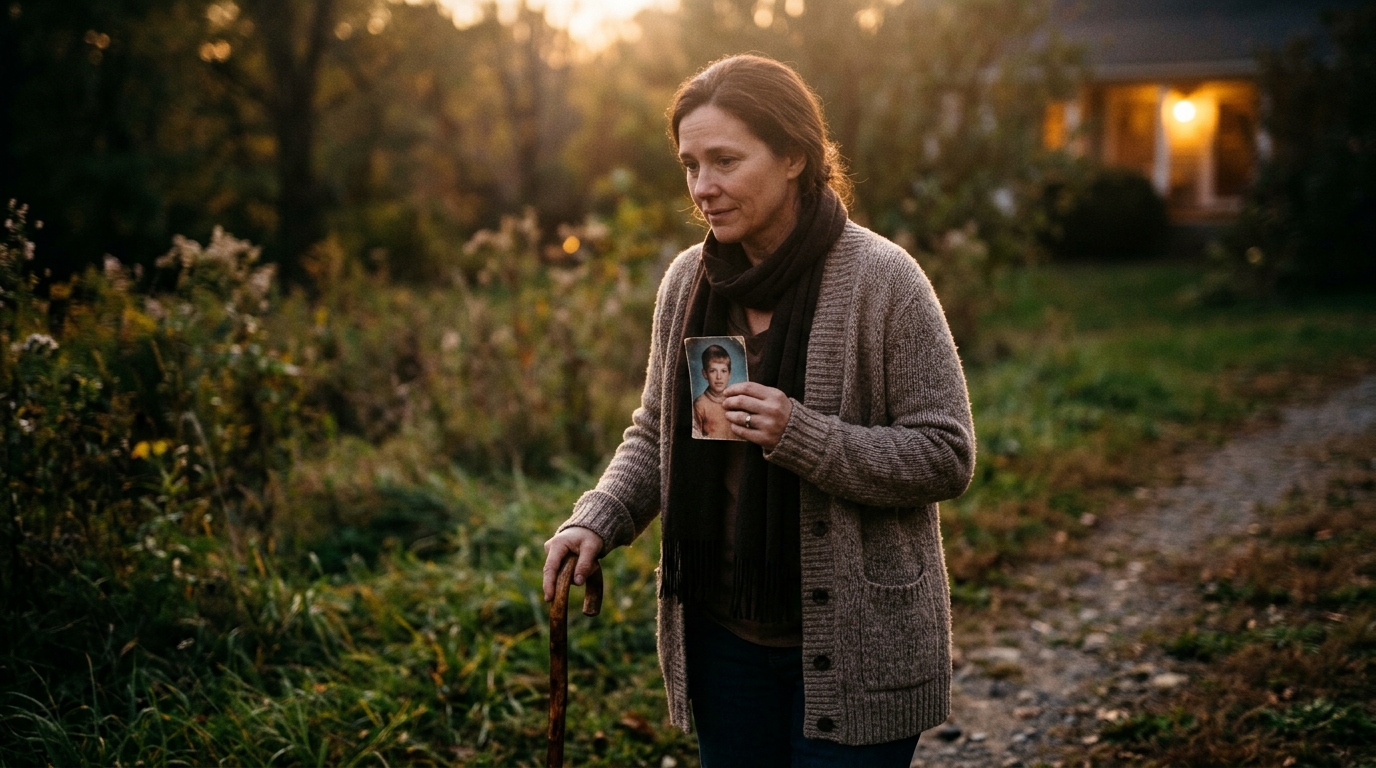
The first evening Dana Whitlock walked around her block, she made it to the mailbox and turned back. It was the first week of October, her son Eli had been gone for four months, and the golden hour light was falling across the maple trees in a way that made her chest ache. She stood at the end of the driveway with her house keys digging into her palm and thought: I cannot do this. Then she thought: but I cannot do the other thing either, the thing where I sit on the couch until it gets dark.
So she walked to the mailbox. And the next night, she walked a little farther.
This is the story of what happened over the following year, told the way Dana told it to me over tea at her kitchen table, with the windows open and the sky turning the color of peaches. She asked me to share it because, in her words, “somebody out there is sitting on a couch right now, and they need to know the mailbox counts.”
The Hour That Used to Belong to Eli
Eli was nineteen when he died in a car accident on a wet stretch of county road. He was a sophomore studying environmental science, a kid who collected rocks, burned every grilled cheese he ever made, and called his mother every day around six in the evening, just as she was starting dinner.
“He’d put me on speaker while he walked back from his last class,” Dana told me. “I could hear the wind and the leaves and him complaining about a professor. That was our hour. Six o’clock. Every single day.”
After the funeral, the house filled with casseroles and cards and then, gradually, with silence. The people who had hovered returned to their own lives, as people must. Dana’s husband, Tom, retreated into the garage and long hours at work. Their daughter, Maren, went back to college three states away. And Dana found that the day moved along fine until about five-thirty in the evening, when the light shifted and her whole body remembered the phone that would not ring.
“Mornings I could manage. Afternoons I could manage. It was the evenings that took me apart.”
The Mailbox
It was her grief counselor, a patient woman named Ruth, who suggested the walk. Not as a cure, Ruth was careful to say, because grief is not a problem to be solved. Just as a way to be somewhere other than the couch when the six o’clock hour arrived.
“She told me, ‘You don’t have to feel better. You just have to put your shoes on,'” Dana said. “I remember being almost angry at how simple it sounded.”
That first walk lasted about ninety seconds. She cried at the mailbox, stood there until her hands were cold, and went back inside. She counted it anyway.
By the end of the first week she had made it to the corner. By the end of the second, she was circling the whole block. Somewhere in the third week, she noticed that she was timing her departure to six o’clock on purpose, claiming Eli’s hour back for herself rather than letting it ambush her.
What the Evening Taught Her
Dusk, Dana discovered, is a forgiving time of day. The world slows down. Porch lights flicker on. People are inside, eating dinner, and the streets belong to dog walkers and kids on bikes and the occasional cat on a fence post.
“At night you can cry and nobody notices. In the morning everyone’s rushing and you feel like you have to perform being okay. But at dusk, everybody’s just winding down. Nobody expects anything from you.”
She began to pay attention to things she had never noticed in twenty years in the same neighborhood. The old man at number 14 who watered his tomato plants every evening in a faded cardigan. The way the streetlights came on in a sequence, one after another, like a slow exhale. A particular crooked oak that held the last of the sunlight in its top branches long after the street below had gone blue.
She started carrying one of Eli’s rocks in her pocket, a smooth gray stone with a white stripe he had pulled from a creek bed when he was eleven. Some evenings she held it the whole way. Some evenings she forgot it was there.
The Neighbors Who Noticed
Grief can make you feel invisible, but the neighborhood had been watching, gently, the way neighbors do.
The man with the tomatoes began lifting his watering can in greeting. A woman walking a beagle started falling into step beside her without asking questions. A teenager named Josh, who lived two streets over and had known Eli from the school bus, stopped Dana one evening in November and said, a little awkwardly, “I just wanted to tell you he once let me copy his chemistry homework. I’m sorry. But he was really nice about it.”
Dana laughed so hard she had to hold onto a fence post. It was the first real laugh since June.
“That’s the thing nobody tells you,” she said. “People are afraid to say your kid’s name. But when somebody does, when they hand you a little piece of him you never had before, it’s like getting a gift from the other side.”
Rebuilding, Honestly
I want to be careful here, because Dana was careful with me. This is not a story where a walk fixes everything. There were evenings she did not leave the house at all. There was a rainy week in February when she stayed on the couch and did not apologize for it. There was a long stretch when she and Tom barely spoke, each carrying grief in a separate room, until a counselor helped them learn to carry it in the same one.
What the walks gave her was not a cure but a foothold. A small, repeatable act that said: I am still here, and I am still moving.
Here is what she says helped most, in her own words:
- Make the commitment tiny. “The mailbox counts. Five minutes counts. Standing on the porch counts.”
- Claim the hard hour. “Pick the time of day that hurts the most and put something gentle in it.”
- Let people in slowly. “Say yes to the beagle lady. You don’t have to talk.”
- Keep something of them close. “The rock in my pocket is my son walking beside me.”
- Skip days without shame. “Tomorrow evening is still coming.”
Forty-One Minutes
Last month, Dana walked her old route and timed it out of curiosity. Forty-one minutes, start to finish, a loop through the neighborhood and down to the little creek at the edge of the park, where she sits on a flat rock and watches the water go amber in the last light.
It is the same creek where Eli found the stone in her pocket.
She and Tom walk it together now on Sundays. Maren comes home for long weekends and takes the loop with them, the three of them moving slowly through the blue hour, saying Eli’s name out loud whenever it comes up, which is often. The neighbor with the tomatoes now has a second chair on his porch, in case anyone wants to sit.
On the anniversary of the accident, Dana walked alone. She stopped at the oak tree with the glowing branches, took the gray stone from her pocket, and held it up against the last of the sunlight.
“I didn’t say anything,” she told me. “I just stood there. And for the first time, the quiet didn’t feel empty. It felt like he was on the line, just listening to the wind.”
A Gentle Thought for Tonight
If you are reading this as the day winds down, maybe with a cup of tea, maybe with a weight on your chest you cannot quite name, consider this a small invitation. You do not have to fix anything tonight. You do not have to be strong or healed or okay.
You only have to put your shoes on. Walk to the mailbox. Let the evening hold you for a few minutes, the way it held Dana, and trust that tomorrow’s walk can go a little farther.
Because the light does fall every evening. And on the hardest days, that is its own quiet kind of promise.